Author

admin

Browsing

Former President Joe Biden defended his use of an autopen during a recent interview, shedding light on his administration’s rationale for the controversial use of the technology.

The interview with the New York Times was centered around his use of an autopen during the last pardons that he made during the end of his administration.

In his final weeks in office, Biden granted clemency and pardoned more than 1,500 individuals, in what the White House described at the time as the largest single-day act of clemency by a U.S. president.

Speaking to the Times on Thursday, Biden said that he ‘made every decision’ on his own.

‘We’re talking about [granting clemency to] a whole lot of people,’ the Democrat said.

However, the Times reported that Biden ‘did not individually approve each name for the categorical pardons that applied to large numbers of people,’ according to the former president and his aides.

‘Rather, after extensive discussion of different possible criteria, [Biden] signed off on the standards he wanted to be used to determine which convicts would qualify for a reduction in sentence,’ the Times’s report read.

Instead of repeatedly asking the president to resign updated versions of official documents, his staff used an autopen to put Biden’s signature on the final version.

Biden’s comments came as Republicans attacked him for his autopen use on a massive number of official documents.

In June, President Donald Trump sent a memo to the Department of Justice directing Attorney General Pam Bondi to investigate the autopen use, and to determine whether it was related to a decline in Biden’s mental state.

‘In recent months, it has become increasingly apparent that former President Biden’s aides abused the power of Presidential signatures through the use of an autopen to conceal Biden’s cognitive decline and assert Article II authority,’ Trump wrote. 

‘This conspiracy marks one of the most dangerous and concerning scandals in American history. The American public was purposefully shielded from discovering who wielded the executive power, all while Biden’s signature was deployed across thousands of documents to effect radical policy shifts.’

Also in June, Trump told reporters that he thought it was ‘inappropriate’ to use an autopen at all, though past presidents have used them.

‘Usually, when they put documents in front of you, they’re important,’ Trump said. ‘Even if you’re signing ambassadorships or – and I consider that important, I think it’s inappropriate.’

‘You have somebody that’s devoting four years of their life or more to being an ambassador. I think you really deserve that person deserves to get a real signature… not an autopen signature.’ 

Fox News Digital’s Breanne Deppisch contributed to this report.

This post appeared first on FOX NEWS
The Trump administration is speeding up its efforts to address a nationwide shortage of Air Traffic Controllers. 

Earlier this year, Transportation Secretary Sean Duffy announced a push to hire 2,000 new controllers by the end of the year. 

Inside the Federal Aviation Administration’s Oklahoma City training site, there is cutting-edge simulation technology that gives trainees a real feel for working in the tower. 

According to the FAA, that technology cuts weeks off the time required for certification. Now, federal aviation officials say they’re on track to reach the goal of 2,000 new controllers by mid-September. 

‘Keying up, telling an aircraft to do something is not something that just comes natural to people…It’s learning that phraseology,’ explained Chris Wilbanks, the FAA’s Vice President of Mission Support. ‘It’s making sure that the pilot completely understands the instruction that you just gave him.’ 

Each trainee starts with a 30-day basics course, followed by six to eight weeks of specialized training in both tower and radar operations. 

You impact people’s lives,’ said Wilbanks. ‘They get on an airplane; they make it to their destination safely. They don’t know who got them there, but it’s you.’ 

The push for more air traffic controllers comes as staffing shortages caused delays earlier this year at busy airports such as Newark, New Jersey. 

‘We just put a brand-new simulation in Newark … We do have our problem spots out there. We keep our eyes on it every day,’ Wilbanks said. 

To help meet the demand, Transportation Secretary Duffy launched the Supercharge Initiative earlier this year. Part of that $12.5 billion boost to FAA infrastructure includes $100 million for training. 

July alone has seen the highest number of academy students in training in FAA’s history, with 550 students expected by the end of the month. 

The FAA reports it has shaved more than five months off the administrative process. Students who scored in the top percentile are now being placed into the academy more quickly. 

‘It’s going to take time to address the nationwide controller shortage, but I’m pleased to see our supercharge initiative is taking off. With our new streamlined hiring process, the best and the brightest candidates are starting their careers in air traffic control faster,’ said U.S. Transportation Secretary Sean P. Duffy in a newsletter sent to FOX early Friday. ‘We’ll continue to leverage opportunities big and small to keep chipping away at the shortage to keep our skies safe.’

This post appeared first on FOX NEWS
President Donald Trump and his team are tackling the messy and bloody world we inherited with historic achievements. Through deftly negotiated truces in the Middle East, Africa and Asia, our recent agreement with NATO and the successful strike on Iranian nuclear facilities, the U.S. is now well positioned to win lasting peace. 

But despite this historic run, tremendous global challenges remain. Russia’s war against Ukraine goes on, and Communist China rattles sabers in the Pacific. 

President Trump needs his full diplomatic team in place, and the time has come to fill the gap at the United Nations with his chosen successor, my friend, fellow veteran, and former House colleague Mike Waltz.

In September, the U.N. will hold its 80th annual gathering of world leaders at the General Assembly in New York, and so that the United States is fully represented, the U.S. Senate should act swiftly to confirm Mike Waltz before their annual August recess.

Mike is the right man for the time we’re living in – and for an America First approach to foreign policy. As I see it, there are six major issues facing the U.N. that Mike will address during his tenure there.

First, the U.N. Security Council must refocus its central mission of settling disputes and brokering deals. No more progressive political signaling.

Second, the U.N. needs to reform its terribly ineffective and toothless ‘peacekeeping’ missions. These security forces sitting on their bases for decades aren’t making dangerous places any safer.

Third, we must counter China in standards-setting bodies. For too long, we have failed to push back on Communist China’s influence. Mike understands the need to be tough with the CCP and I know he will deliver on this front.

Fourth, it is time to dismantle the United Nations Relief and Works Agency for Palestine Refugees (UNRWA) and its $1.2 billion budget. Corruption pervades this sham agency. President Trump has not been shy about calling out other U.N. deficiencies. He pulled the U.S. out of the so-called Human Rights Council and the World Health Organization, and Mike will see to it that we do not engage with such insidious works on his watch.

Fifth, antisemitism itself must be stamped out at the U.N. For too long the corrosive hatred of the Jewish people has festered at the organization. Israel has a right to exist, a right to live free of fear and with peaceful neighbors. 

Finally, it is time to defund foreign aid programs not in line with President Trump’s America First agenda. Woke waste is rampant at the U.N. and the House Foreign Affairs Committee, which I chair, has identified several ridiculous examples. Programs promoting ‘Gender sensitive approaches to addressing the Digital Information Disorder’ and ‘Being LGBTI in the Caribbean,’ for example, need to end and Mike will see that that they do.

Mike dedicated his life to national service. He’s a retired U.S. Army colonel and Green Beret who was awarded four Bronze Stars. He’s spent nearly three decades defending our country on the battlefield and serving the American people in the halls of power. 

The title of Mike’s 2014 book is ‘Warrior Diplomat,’ and at the U.N. it is his understanding of foreign policy that may be his greatest asset. Before joining the Trump administration, he was policy director for two secretaries of defense and was elected three times to Congress, where he served on the Foreign Affairs, Intelligence and Armed Services Committees, as well as the House China Task Force.

Mike is a seasoned operator, a principled America First conservative, and a skilled communicator who is unafraid to take America’s case directly to the world. Mike will be the president’s voice at the U.N. and will faithfully implement President Trump’s agenda while maintaining our historic ‘peace through strength’ philosophy that won the Cold War.

Earlier this year, in an executive order initiating a full review of U.S. involvement in the U.N., President Trump criticized the organization for being more eager to take ideological stances and back our adversaries than to tackle difficult global issues. 

Still, as the president signed the order, he repeated a sentiment he’s expressed frequently since 2017: ‘I’ve always felt that the U.N. has tremendous potential. It’s not living up to that potential right now.’ Realizing that potential will be a big part of Mike’s job as the president’s emissary.

For all its imperfections, the United Nations remains a forum for advancing American interests and challenging our adversaries on the world stage. At this time of global tension and conflict, we need someone smart, tested and clear-eyed representing us there. It’s time to confirm Mike Waltz.

This post appeared first on FOX NEWS
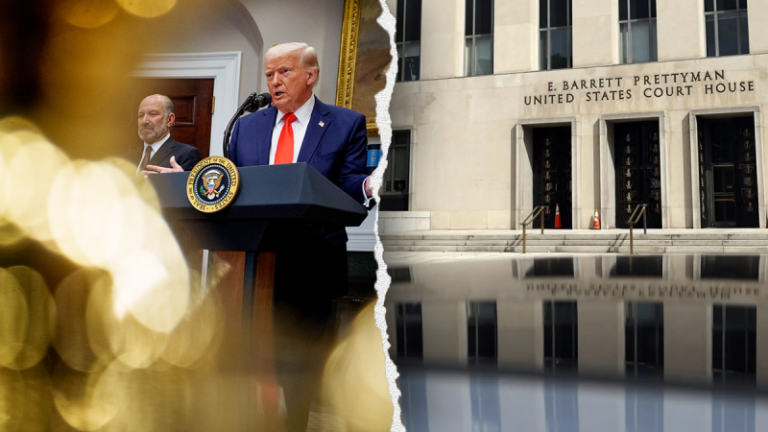
In his 26th week back in the Oval Office, President Donald Trump is expected to make a ‘major announcement’ related to Russia, hold a meeting with the NATO chief, and join a summit in Pennsylvania as America’s race to lead the world on artificial intelligence continues. 

July 13 marks the one-year anniversary of the first assassination attempt on Trump during the 2024 presidential cycle. Trump spent the anniversary at his home in Bedminster, N.J., before traveling with first lady Melania Trump to the FIFA Club World Cup final on Sunday at MetLife Stadium in the Garden State. 

Trump returned to the White House on Sunday evening and is expected to have another whirlwind workweek. 

MEETING WITH NATO CHIEF

Trump will meet with NATO Secretary General Mark Rutte this week following the U.S. president saying last week that the U.S. is selling weapons to its NATO allies for them to be passed along to Ukraine as it continues battling Russia. 

The NATO chief will be in Washington, D.C., on Monday and Tuesday, and will meet with Trump, Secretary of Defense Pete Hegseth and Secretary of State Marco Rubio, according to The Associated Press. Additional details on the meetings, however, have not yet been publicly released. 

Republican South Carolina Sen. Lindsey Graham said on CBS’ ‘Face the Nation’ on Sunday that Ukraine can expect to see an influx of weapons. Russia first invaded Ukraine in February of 2022. 

‘In the coming days, you’ll see weapons flowing at a record level to help Ukraine defend themselves,’ Graham said on CBS’ ‘Face the Nation. 

‘One of the biggest miscalculations Putin has made is to play Trump. And you just watch, in the coming days and weeks, there’s going to be a massive effort to get Putin to the table.’

Trump and Rutte most recently met in the Netherlands in June for a summit, where the NATO chief showed the makings of a blossoming friendship with Trump, including referring to Trump as ‘daddy’ for his handling of the Middle East. 

‘MAJOR’ RUSSIA ANNOUNCEMENT 

Trump teased last week that he would make a ‘major statement’ on Russia in the coming days as the NATO meetings prepare to kick off this week. 

‘I’m disappointed in Russia, but we’ll see what happens over the next couple of weeks,’ Trump told NBC last week. 

‘I think I’ll have a major statement to make on Russia on Monday,’ he added, without elaborating. 

Graham said in his interview on ‘Face the Nation’ on Sunday that ‘a turning point regarding [the Russian] invasion of Ukraine is coming,’ as Congress works to impose new economic sanctions on Russia to help end the war. 

‘For months, President Trump has tried to entice [Russian President Vladimir] Putin to the peace table. He’s put tariffs against countries that allow fentanyl to come in our country, other bad behavior — he’s left the door open regarding Russia. That door is about to close,’ Graham said on Sunday. 

TRUMP HEADS TO ENERGY AND AI SUMMIT

Trump will head to Pittsburgh on Tuesday for Pennsylvania Republican Sen. Dave McCormick’s inaugural Energy and Innovation Summit hosted at Carnegie Mellon University. 

The event is slated to focus on the U.S. power grid, America bid to win the AI race against China, as well as promoting the Keystone State as an ideal resource to help power the country’s future with AI and energy. 

‘The United States needs to win the artificial intelligence fight. We have to stop China, and we have to win this war for dominance in AI. And the way you win the war for dominance in AI is to win the war for energy dominance. That’s why our focus is on producing more here in the United States,’ said Mike Sommers, CEO and president of the American Petroleum Institute who will attend the summit, told Fox News Business of the event. 

‘Over the course of the last few years, energy demand has only gone up by about 2.5% a year. In the next seven years, we expect that energy demand is going to go up by 25%. The question that policymakers have to answer is: ‘Where is that energy going to come from?’ We think it should come from the United States,’ Sommers added. 

The event is expected to attract protesters, with Carnegie Mellon’s president calling on the school community to continue its history of ‘constructively engaging’ with presidencies across the ‘political spectrum.’

‘We have a history of constructively engaging with the federal government and administrations across the political spectrum. We view these opportunities as consequential to elevating and advancing both Carnegie Mellon’s mission and impact, and we bring to those moments the full measure of our expertise, our values and our voice in service to the nation,’ school president Farnam Jahanian said in a letter previewing the event on Sunday. 

Fox News Digital’s Amanda Macias contributed to this report. 

This post appeared first on FOX NEWS
After more than two decades of serving in the U.S. Navy and building government systems, I have witnessed firsthand how millions of dedicated Americans work every day in service of their fellow citizens and the security of our democracy. I have also seen both the immense potential — and frustrating inertia — that plagues public service. An unrealized opportunity exists to connect the U.S. government’s critical missions with the transformative power of commercial technology. 

Consider this: of the world’s 10 largest companies by market capitalization, a staggering eight are American founded. This is no accident; it is a direct result of our nation’s unparalleled entrepreneurial spirit. The critical question, however, is whether our own government is prepared to harness this strategic asset.  

Instead of tapping this engine of innovation, the U.S. government is held captive by its outdated processes. Entrenched legacy vendors have dug their claws in, and this has led to a general resistance to change. As the saying goes, ‘it takes a while to turn a big ship around.’  

That rings true with actual warships and aircraft carriers, but it also applies to how government agencies resist adopting new tools that improve collaboration, efficiency and security. Instead, the U.S. government and its outdated procurement processes cling to existing technology platforms, such as Microsoft’s suite of products that have been compromised time and again by China, which also happens to be one of the company’s most significant business partners. 

Breaking the shackles of ‘vendor lock-in’ — where the government becomes overly reliant on specific vendors even if they underperform — is crucial for fostering a new era of innovation that benefits America. When a company or product fails to perform well in the commercial sector, it’s terminated immediately.  

In the public sector, the company is usually allowed to see out their multi-year contracts and when it’s finally time to negotiate a renewal, all is forgotten. A more competitive public sector landscape, welcoming innovators and startups, can provide fresh perspectives, specialized solutions, and the speed to address rapidly evolving challenges. 

This is not a unique approach. Other nations are adopting this model, attempting to gain an edge over America. For example, China launched a program in 2023, with 39 partners, including Alibaba Cloud and Baidu, to advance computing power and AI.  

Russia subsidizes companies implementing digital transformation; and Iran, despite sanctions, is investing significantly in AI research and building a sovereign AI ecosystem. Our adversaries recognize that commercial tools drive rapid progress and are actively breaking down barriers to catch up to American AI leadership. 

There are understandable reasons for hesitancy. For years, Silicon Valley has been closely associated with the ‘move fast and break things’ mantra, while the U.S. government has looked on with both envy (of the speed and efficiency) and concern (over potential impacts to its services). However, learning from the commercial mindset of agility and a relentless drive for improvement will help it to serve the American public better. The benefits? Reduced waste, greater efficiency and better taxpayer value.  

Nowhere is this approach more critical than in national security. The threats America faces are constantly evolving and leveraging emerging technology to do so. Maintaining our edge requires more than just incremental improvements; it demands continuous access to cutting-edge capabilities.  

Leveraging the R&D engines of American commercial innovation — in areas like AI, cybersecurity, data analytics and resilient infrastructure — is not just advantageous; it’s essential. If Washington fails to leverage this homegrown ingenuity, it does so at our national peril, especially as our adversaries work tirelessly to do just that. 

Other nations are adopting this model, attempting to gain an edge over America. For example, China launched a program in 2023, with 39 partners, including Alibaba Cloud and Baidu, to advance computing power and AI. 

Government agencies tasked with everything from defending the nation to delivering health services need to have immediate access to the latest advancements in AI and data analytics, and they can only do so by leveraging powerful commercial tools with a platform for continuous improvement — an asset for national security and public service. 

AI could be used to accelerate some of the government’s most notorious backlogs, such as the millions of immigration court cases, the accumulation in environmental reviews for energy projects, and pileups in programs like Social Security or Veterans Affairs healthcare. AI can analyze data at lightning speed, helping federal agencies and their partners deliver on mission-critical work at an accelerated pace.  

The urgent need for a more agile, efficient, innovative and secure government is too significant to ignore. This is a pivotal moment. By embracing the discipline, accountability, and innovative spirit of the commercial sector, the U.S. government can unlock new levels of performance and effectiveness. Change is hard. But as adversaries gain on America — or worse, overtake us — change is mandatory.  

This post appeared first on FOX NEWS
President Donald Trump said the United States will be sending Patriot missiles to Ukraine while describing Russian President Vladimir Putin as a leader who ‘talks nice, and then he bombs everybody in the evening.’ 

Trump made the remarks as NATO Secretary General Mark Rutte is planning to meet with the president during a visit to Washington, D.C. Monday and Tuesday. Last week, Trump revealed a new NATO deal that would allow U.S. arms to flow to Ukraine through allied nations. 

‘I’m going to have a meeting with the Secretary General coming in tomorrow. But we basically are going to send them various pieces of very sophisticated military. And they are going to pay us 100 percent for them. And that’s the way we want it,’ Trump told reporters on Sunday. 

‘I haven’t agreed on the number yet, but they’re going to have some. Because they do need protection. But the European Union is paying for it. We’re not paying anything for it. But we will send it, and it’ll be good news for us, we will send them Patriots, which they desperately need,’ Trump added in reference to Ukraine. 

‘Because Putin had really surprised a lot of people. He talks nice, and then he bombs everybody in the evening. It’s a little bit of a problem there, I don’t like it,’ Trump also said. 

Trump said last Thursday that under the new NATO deal, ‘what we’re doing is the weapons that are going out are going to NATO, and then NATO is going to be giving those weapons [to Ukraine], and NATO is paying for those weapons.’ 

The developments came after the Pentagon previously froze some shipments of critical weapons to Ukraine, including Patriot missile interceptors and 155 mm artillery shells.  

The halt was driven by Under Secretary of Defense for Policy Elbridge Colby after a review of U.S. munitions stockpiles that showed dangerously low reserves, Politico first reported in early July. 

Then the Pentagon reversed course about a week later. 

‘At President Trump’s direction, the Department of Defense is sending additional defensive weapons to Ukraine to ensure the Ukrainians can defend themselves while we work to secure a lasting peace and ensure the killing stops,’ Pentagon Spokesman Sean Parnell said. ‘Our framework for POTUS to evaluate military shipments across the globe remains in effect and is integral to our America First defense priorities.’ 

Fox News’ Caitlin McFall, Jasmine Baehr and Jennifer Griffin contributed to this report. 

This post appeared first on FOX NEWS
LONDON/NEW YORK, July 11 (Reuters) – Suppliers to Walmart WMT.N have delayed or put on hold some orders from garment manufacturers in Bangladesh, according to three factory owners and correspondence from a supplier seen by Reuters, as U.S. President Donald Trump’s threat of a 35% tariff on the textile hub disrupts business.

Bangladesh is the third-largest exporter of apparel to the United States, and it relies on the garment sector for 80% of its export earnings and 10% of its GDP. The factory owners all said they expected orders to fall if the August 1 tariffs go into effect, as they are unable to absorb that 35% rate.

Iqbal Hossain, managing director of garment manufacturer Patriot Eco Apparel Ltd, told Reuters an order for nearly 1 million swim shorts for Walmart was put on hold on Thursday due to the tariff threat.

“As we discussed please hold all below Spring season orders we are discussing here due to heavy Tariff % imposed for USA imports,” Faruk Saikat, assistant merchandising manager at Classic Fashion, wrote in an email to Hossain and others seen by Reuters. Classic Fashion is a supplier and buying agent that places orders for retailers.

“As per our management instruction we are holding Bangladesh production for time being and IN case Tariff issues settled then we will continue as we planned here.”

The hold was not decided by Walmart, Saikat told Reuters, but by Classic Fashion itself.

Walmart did not respond to a request for comment.

Bangladesh is currently in talks with the United States in Washington to try to negotiate a lower tariff. Trump in recent days has revived threats of higher levies on numerous nations.

“If the 35% tariff remains for Bangladesh, that will be very tough to sustain, honestly speaking, and there will not be as many orders as we have now,” said Mohiuddin Rubel, managing director at jeans manufacturer Denim Expert Ltd in Dhaka.

Rubel, whose company produces jeans for H&M HMb.ST and other retailers, said he expects clients will ask him to absorb part of the tariff, but added this would not be possible financially. Manufacturers have already absorbed part of the blanket 10% tariff imposed by the U.S. on April 2.

“Only probably the big, big companies can a little bit sustain (tariffs) but not the small and medium companies,” he said.

Retailers have front-loaded orders since Trump returned to the White House, anticipating higher tariffs. Jeans maker Levi’s LEVI.N, which imports from Bangladesh, said on Thursday it has 60% of the inventory it needs for the rest of 2025.

U.S. clothing imports from Bangladesh totaled $3.38 billion in the first five months of 2025, up 21% from the year-earlier period, according to U.S. International Trade Commission data.

Another Dhaka-based garment factory owner said an importer with whom he was negotiating a spring 2026 order of trousers for Walmart asked him on Thursday to wait a week before the order would be confirmed due to the tariff risk.

Hossain said he may look for more orders from European clients to make up for lost orders if the U.S. 35% tariff gets implemented, even if he has to cut prices to stimulate demand.

(Reuters reporting by Helen Reid in London and Siddharth Cavale in New York; Editing by David Gaffen and Matthew Lewis)

This post appeared first on NBC NEWS

President Trump once famously quipped that he could shoot a man on 5th Avenue and his strongest supporters would stay with him. For nearly a decade this has seemed true, but today, the president may have stumbled on the exception, in the sickening form of the Jeffrey Epstein case.

It turns out that Epstein is a major test for Trump in the eyes of his MAGA warriors. They want real answers from this administration, not fumbled document dumps and dismissive comments from the president himself, as we saw this week.

Now, we have FBI Deputy Director Dan Bongino who is apparently threatening to resign over the debacle, if Attorney General Pam Bondi doesn’t go first and a bewildered MAGA base that feels it is being insulted and lied to by its government, again. 

To be sure, Epstein was an awful human being who preyed on poor underage girls for decades, according to testimony from the Ghislane Maxwell trial (which I covered in the courthouse), as well as a wealth of other evidence. But for most Americans, his crimes and suspicious death are a mere curiosity at this point.

It is much, much more for hard-core MAGA. For them, it is nothing less than a test to determine whether or not the Swamp that has lied to our faces for decades is still in control.

This week, Steve Bannon said the only way the Epstein story goes away is if ‘the 5 to 10 to 15 percent of the Trump movement, the Pepes and hardcores,’ finally just say, ‘I’ve had enough of it.’ He added that the basic question is, ‘who is running the country?’

Likewise, at the TPUSA convention in Florida this weekend, which is led by Trump ally Charlie Kirk and is as pure a distillation of the core MAGA movement as exists, my sources tell me that Epstein is very much the top topic of concern.

But why did this curious case of this infamous creep and his private island become a synecdoche for all government lies in the mind of MAGA? In other words, how did Epstein become the symbol of deep government corruption?

For one thing, the notion Epstein was allowed to kill himself inside a federal prison has always strained credulity. From missing video to conflicting medical exams, there have been legitimate questions about how a man rumored to have damaging information on powerful people and ties to the intelligence community could turn up dead in federal custody. While officials assured the nation there was nothing to see, MAGA seethed. ‘Epstein didn’t kill himself’ became not just a meme and a mantra, but a declaration that we’ve been gaslit by our government.

There is also the matter of Bondi seeming to indicate that there was an Epstein client list in a Fox News Channel interview, only to now say it doesn’t exist. She says she was talking about the file writ large, but it didn’t sound that way at the time.

Bongino, in recent weeks, along with FBI Director Kash Patel, told us that a video from the prison is proof positive that this was suicide, but it turns out there was a missing minute of footage, and the video may have been doctored.

This was after Bondi all but hijacked a group of influencers in the spring at the White House, handing out binders purporting to share new bombshell information that turned out to be as exciting as a list of grandma’s baking recipes. 

On top of all of this, we have President Trump himself, visibly annoyed in the White House, this week when asked about Epstein, ‘Are you still talking about this guy…this creep?’ Trump asked. Well, yes, Mr. President, they are.

All in all, the administration’s handling of the Epstein case has been about as transparent as a brick wall, one that appears to be crumbling.

Trump has expressed concern in the past about innocent people being listed in Epstein documents, as happened to attorney Alan Dershowitz and others, and according to Elon Musk, both Trump and Bannon appear in this evidence, though Musk offers no proof of this.

This may be a reasonable concern, but after decades of blatant lies and stalled prosecutions of Epstein, Trump’s hardcore supporters want more than assurances. They want to see the documents. They want to see everything.

And this is a central part of Trump’s appeal, his promise to open up the hood and expose the broken-down, deep-state engine of government. But promises are not enough. Where are the results? When are we going to Fort Knox as promised, for example?

A breathtaking hallmark of the second Trump term has been extreme transparency. The president takes questions almost daily, and answers with candor. Except, it seems, when it comes to Jeffrey Epstein.

For a quarter-century now, the Epstein case has been a combustible cocktail of power, greed, private islands and sexual abuse. It has ushered in both careful examination and wild conspiracy theories, and the only way to separate the two is with complete sunlight onto the evidence.

For President Trump, this may be the first time he is risking the loyalty of his longest, strongest supporters, and for a populist political movement that is pure poison. 

The time to release everything is now, the future of MAGA may depend on it.

This post appeared first on FOX NEWS
A key China ally with presidential ambitions in Peru traveled late last month to California to participate in a sending-off ceremony for a batch of trains donated by the Biden administration, according to reporting by Peruvian news outlets.

Peruvian outlet Justo Medio reported at the time that Lima Mayor Rafael Lopez Aliaga, who is rumored to be considering a run for president of Peru in 2026, was in California late last month to discuss the transport of a batch of CalTrain locomotives, which were donated to Lima by the U.S. government under the Biden administration.  

Nate Picarsic and Emily de La Bruyère, a senior fellow at the Foundation for Defense of Democracies (FDD), recently published a study on Lopez Aliaga’s ‘deep’ financial ties to China through his company PeruRail, which has seen its revenue rise to over $65 million per year due to increased shipments from Minera Las Bambas, a Chinese-owned joint venture counting state-owned mining giant China Minmetals as its majority backer.

The report alleged that China has been ‘cultivating’ Lopez Aliaga for higher office in Peru in hopes of growing its mineral and battery supplies harvesting in South America. The report goes so far as to dub Lopez Aliaga ‘China’s man in Peru.’

‘China’s mining presence in Peru is a direct boon for López Aliaga,’ the report said, giving Beijing ‘a powerful beachhead in Peru.’

The report said, ‘This leaves an influential Peruvian political leader aligned with and linked to China, its resource project, and the broader Belt and Road Initiative of which it is part.’

In the last several years, Chinese investment in South America, and Peru especially, has significantly increased. 

According to NBC News, China invested $1.3 billion in a massive deepwater port in Chancay, Peru, just north of Lima. 

Chinese President Xi Jinping participated in the port’s opening ceremony in 2024, during which he called the port the start of China’s 21st-century maritime Silk Road, according to the outlet.

According to Picarsic, China has also been investing heavily in Lima’s infrastructure, most notably dominating its electricity industry, all of which Lopez Aliaga has been a ‘linchpin’ piece in moving Chinese dominance forward.

Now, with Lopez Aliaga possibly entering Peru’s presidential race, Picarsic explained that this all ‘looks like a telltale sign of China’s handiwork.’

He also called the U.S.’s donation of trains to Peru ‘too little, too late’ to combat China’s growing influence in the region.

‘We’re coming with a donation of some number of decommissioned rail cars. But this guy, who is in cahoots with China, who’s coming to take them and he’s taking them back to run on Chinese rail feeding into a Chinese port, helping to move goods from a Chinese mine.’

Former Secretary of State Antony Blinken participated in a train-donation ceremony last November in Lima, Peru, where he praised the project as an opportunity to ‘strengthen the ties between Peru and the United States’ and said the trains ‘are not just a symbol, but the practical manifestation of possibilities – the possibilities that come when we connect to each other.’

‘This agreement is a testament to the strength and durability of the U.S. and Peru’s longstanding and mutually beneficial relationship,’ he added. ‘I am so proud to have Caltrain be a member of that mutually beneficial relationship.’

This post appeared first on FOX NEWS
FBI Deputy Director Dan Bongino was outraged this week during a closed-door White House meeting about the Department of Justice’s review of Jeffrey Epstein’s sex trafficking case files, according to multiple sources.

Bongino raised his voice during a discussion with White House chief of staff Susie Wiles before storming out of the meeting, according to two sources close to DOJ leadership. Bongino also exchanged heated words with Attorney General Pam Bondi during the meeting, and the whole ordeal has led him to consider resigning from the FBI, another source said.

Another person with knowledge of the meeting disputed the characterization that Bongino yelled at Wiles or Bondi during the sitdown.

However, that person agreed that Bongino was ‘enraged.’ The source said the deputy director was angry about the Epstein memo rollout and what he viewed as Bondi’s ‘lack of transparency from the start.’ The memo, a joint product of the DOJ and FBI, said the two agencies had no further information to share with the public about Epstein’s case, a revelation that sparked fury among the MAGA base. The memo first appeared in Axios over the weekend, and then the DOJ and FBI published it Monday.

Asked about the claim that Bongino yelled at Wiles, a White House official said it was ‘100% false.’ Wiles is a veteran of Florida politics who led Trump’s campaign, and the president has described her as ‘universally admired.’

The fracture in DOJ and FBI leadership spilled into the public on Friday amid fallout from the memo.

The memo stated that the DOJ and FBI concluded their review of Epstein’s files and did not find any information that could lead to charges against anyone new.

Despite Bongino reportedly now breaking with leadership over the memo and weighing resignation, people familiar with the matter said as of Friday that FBI Director Kash Patel and Bondi remained in communication and that Patel is happy with his job.

A DOJ spokesman and an FBI spokesman did not respond to requests for comment.

Bongino, a former Secret Service agent with no prior FBI experience, hosted a popular podcast before Trump tapped him to serve in the No. 2 role at the bureau. On his show, Bongino repeatedly raised alarm over Epstein’s ‘client list,’ saying ‘there’s a reason they’re hiding it’ and that its release would ‘rock the political world.’

But in the memo released on Monday, the FBI and DOJ said they uncovered no such list.

Bongino, Bondi and Patel are all facing blowback over the Epstein files from a faction of their supporters, who say they reneged on repeated vows to open the curtain on details of Epstein’s case.

Epstein, a financier who was known to engage with wealthy, well-known figures, was indicted in 2019 over allegations he recruited dozens of women, including minors as young as 14, and had sexual relations with them or sexually abused them. His associate Ghislaine Maxwell was convicted of conspiring to sexually abuse minors and is serving a 20-year prison sentence. She has an appeal pending.

The DOJ and FBI said in their memo that much of the nonpublic information related to Epstein’s case is under court-ordered seals or contains child pornography and private information about victims.

Before joining the bureau, Patel and Bongino both advanced theories that the government was hiding information about the case, including a supposed ‘list’ of unindicted sexual predators.

The DOJ and FBI’s memo poured cold water on that idea by noting that the agencies found ‘no incriminating ‘client list.”

Deputy Attorney General Todd Blanche said in a statement on X that DOJ and FBI leadership, including Bongino, were in lockstep during the compilation and release of the memo. The idea that ‘there was any daylight’ between the FBI and DOJ was ‘patently false,’ Blanche said.

Bongino was not at work on Friday because he was so upset by the fallout from the Epstein memo, sources said. One said Bongino had not anticipated the backlash from his supporters.

Fox News’ David Spunt and Jake Gibson contributed to this report.

This post appeared first on FOX NEWS