Author

admin

Browsing

This story discusses suicide. If you or someone you know is having thoughts of suicide, please contact the Suicide and Crisis Lifeline at 988 or 800-273-TALK (8255).

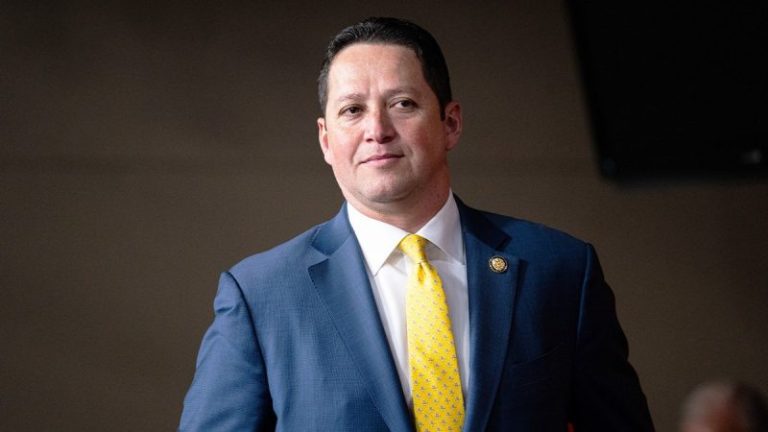
Rep. Tony Gonzales, R-Texas, announced Thursday evening he will not seek re-election amid a House Ethics investigation into an affair he admitted to having with a former staffer.

Gonzales, a married father of 6, admitted to the affair for the first time during an appearance on a conservative talk radio show on Wednesday – a day after advancing to the GOP primary runoff for his congressional district.

‘At 18, I swore an oath to defend our nation against all enemies, foreign and domestic. During my 20 years in the military and three terms in Congress, I have fought for that cause with absolute dedication to the country that I love,’ Gonzales said in a statement.

‘From overcoming the border crisis to taking a stand with my communities after the worst school shooting in Texas’ history, my philosophy has never changed: do as much as you can, and always fight for the greater good,’ he continued.

‘After deep reflection and with the support of my loving family, I have decided not to seek re-election while serving out the rest of this Congress with the same commitment I’ve always had to my district,’ he added. ‘Through the rest of my term, I will continue fighting for my constituents, for whom I am eternally grateful.’

‘I made a mistake, and I had a lapse in judgment, and there was a lack of faith, and I take full responsibility for those actions,’ he said on ‘The Joe Pags Show’ Wednesday night. ‘Since then, I’ve reconciled with my wife, Angel. I’ve asked God to forgive me, which he has, and my faith is as strong as ever.’

The House Ethics Committee also launched an investigation into Gonzales on Wednesday to determine if he engaged in sexual misconduct with a female member of his staff and whether he doled out special favors or privileges as a result.

The former staffer, Regina Santos-Aviles, died after setting herself on fire outside her home late last year.

House GOP leaders called on the embattled representative to drop his re-election bid.

‘The Ethics Committee has announced an investigation into Congressman Tony Gonzales’s conduct, and we urge them to act expeditiously. Congressman Gonzales has said he will fully cooperate with the investigation,’ Speaker Mike Johnson, R-La., and other top Republicans said in a statement this week.

‘We have encouraged him to address these very serious allegations directly with his constituents and his colleagues. In the meantime, Leadership has asked Congressman Gonzales to withdraw from his race for re-election,’ they added.

Gonzales’ departure paves the way for challenger Brandon Herrera to take the nomination. Herrera narrowly edged Gonzales by a 43.33% – 41.73% margin in Texas’ GOP primary for the 23rd congressional district on Tuesday, causing a runoff due to neither candidate earning 50% of the vote.

Herrera called his opponent’s withdrawal from the race the ‘appropriate decision.’

‘I appreciate Tony Gonzales for making the appropriate decision,’ Herrera wrote on X. ‘I look forward to being the voice of TX23 that our district deserves. From the border, to oil theft, water rights, data centers, and many other issues. It’s an honor to be chosen and together we will make Texas proud.’

Gonzales initially said he would not step down in the face of the accusations, telling reporters in late February ‘what you’ve seen is not all the facts.’

Fox News Digital’s Anders Hagstrom and Elizabeth Elkindcontributed to this report.

Related Article

Mike Johnson asks embattled House Republican Tony Gonzales to drop re-election bid
This post appeared first on FOX NEWS

President Donald Trump took Washington by surprise Thursday with his decision to remove Department of Homeland Security Secretary Kristi Noem, but few lawmakers on Capitol Hill questioned his decision. 

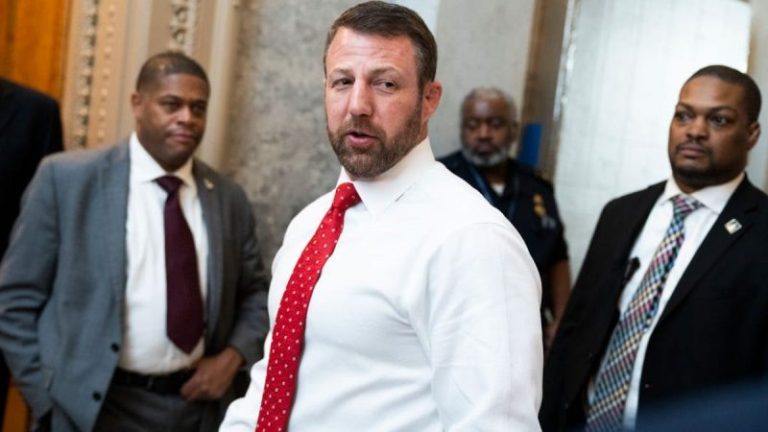
Though Republicans rarely criticized Noem during her tenure, many GOP lawmakers argued Thursday that the secretary’s ouster was the right move. Trump quickly nominated Sen. Markwayne Mullin, R-Okla., a close ally, to head the sprawling agency Thursday afternoon.

‘I think the president is doing what’s necessary to make sure the department is going to be operating effectively,’ Rep. Byron Donalds, R-Fla., who welcomed the news of Mullin’s appointment, said Thursday. ‘It was time.’

Mullin, a 48-year-old lawmaker, is a member of Senate Republicans’ leadership team and previously served several terms in the House of Representatives.

Noem’s time helming DHS was rocked by a series of controversies involving an expensive ad campaign she claimed had Trump’s approval and her widely-panned response to the fatal shootings of two Americans in Minneapolis by federal immigration officers earlier this year.

‘Obviously, it did not go well,’ Donalds added when asked about Noem’s appearance during two hearings on Capitol Hill this week.

Several GOP lawmakers, including Sens. Thom Tillis, R-N.C., and John Kennedy, R-La., tore into Noem during her appearance before the Senate’s judiciary panel on Tuesday. 

Rep. Don Bacon, R-Neb., a moderate lawmaker retiring at the end of his term, echoed Kennedy’s criticism questioning Noem’s prominent role in the costly ad campaign and her ties to recipients awarded contracts.

‘There’s legit concerns. When there was a $200 million advertising [campaign], we should be better stewards of our money,’ Bacon said. ‘I think the president probably saw a need for change.’

DHS has fired back that the massive ad campaign resulted in millions of self-deportations.

Rep. Mike Lawler, R-N.Y., told Fox News Digital Thursday that Noem’s departure would eliminate ‘distractions’ and ‘conflicts’ that erupted at DHS under her leadership.

‘The department needs to be entirely focused on its mission, given the situation in the Middle East right now,’ Lawler said, referring to Operation Epic Fury in Iran. 

Rep. Dan Newhouse, R-Wash., who is not running for reelection, wrote on social media Thursday that a ‘change in leadership at the Department of Homeland Security was long overdue.’

House Democrats, many of whom fiercely criticized Noem’s role in the Trump administration, appeared to agree.

‘She’s done enough damage that the president finally came to his senses,’ Rep. Bennie Thompson, D-Miss., the lead Democrat on the House homeland security panel, said Thursday. 

‘I think it’s the right decision by the president. It’s been a long time coming,’ Rep. Jared Moskowitz, D-Fla., told Fox News Digital.

Moskowitz, who tussled with Noem during her testimony to the House Judiciary Committee on Wednesday, argued that she would go down as the worst DHS secretary in the agency’s two-decade history. He declined, however, to sign on to articles of impeachment circulated by House Democrats.

When asked about Mullin’s appointment, Moskowitz said he wished him good luck. ‘She’s left him a disaster, but obviously I want him to succeed,’ the Florida Democrat said of Noem’s tenure. ‘We should all want that, so let’s give him that opportunity.’

Related Article

Schumer weaponizes Mullin nomination to demand DHS overhaul, says ‘rot’ goes beyond Noem
This post appeared first on FOX NEWS

Sen. Markwayne Mullin, R-Okla., will have at least one Democratic ‘yes’ vote in support of his nomination to become President Donald Trump’s next Department of Homeland Security (DHS) secretary. 

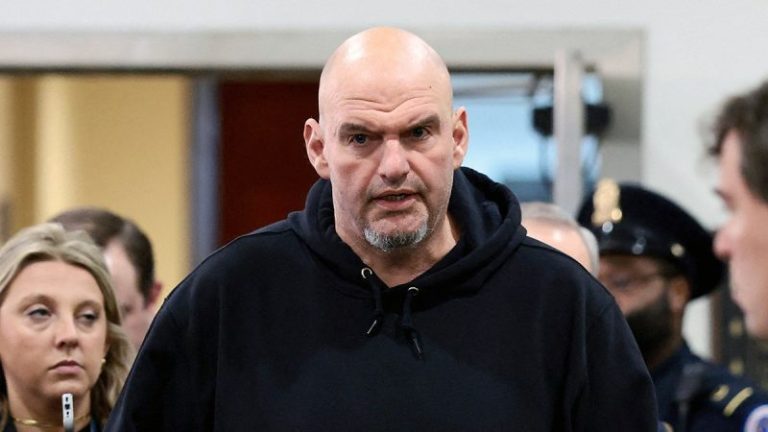
Trump announced Thursday afternoon that he tapped Mullin to replace outgoing DHS Secretary Kristi Noem, who will leave the agency March 31. Sen. John Fetterman, D-Pa., immediately threw his support behind Mullin’s nomination, dubbing the Oklahoma lawmaker a ‘nice upgrade’ compared to Noem. 

Fetterman repeatedly called for Noem’s ouster and said Thursday he was pleased with Trump’s decision. 

‘We’re in a different party, but this is the choice. I want to work together for making our America more secure,’ he said. 

Fetterman also said that he strongly believes Mullin already has the votes to win confirmation. Senate Republicans are widely expected to back Mullin’s nomination, and the jovial Oklahoma lawmaker could win over some Democrats. Sen. Lisa Murkowski, R-Alaska, who has voted against some Trump nominees, said she has a ‘great deal of respect’ for Mullin and is ‘OK’ with his nomination.

Under Senate rules, Cabinet nominations are set at a 51-vote threshold. 

However, many of Fetterman’s Democratic colleagues were either noncommittal about Mullin’s nomination or suggested they would not support him.

‘Whoever follows Kristi Noem is going to have to be totally and radically different in their approach to running this agency,’ Sen. Richard Blumenthal, D-Conn., said Thursday. ‘Changing the person at the top is no substitute for changing the practices and the power structure of a department that is out of control.’

Blumenthal added that Mullin would have to commit to Democrats’ various reforms seeking to rein in immigration enforcement in order to win his vote. 

Mullin has repeatedly criticized Democrats’ proposal to prohibit federal immigration officers from wearing masks and requiring judicial warrants during enforcement operations.

‘I like him personally,’ Sen. Brian Schatz, D-Hawaii, a member of Senate Democratic leadership, said of Mullin before adding that it was too early to debate his nomination.

Sens. Jack Reed, D-R.I., and Elissa Slotkin, D-Mich., told Fox News Digital that they would not yet weigh in on Mullin’s nomination. Slotkin notably voted for Noem’s confirmation despite later souring on the secretary.

Mullin appeared somewhat taken aback by the news of his nomination when talking with reporters outside the U.S. Capitol on Thursday afternoon.

‘No, the president and I still have to communicate, so we’ll talk about it moving forward,’ Mullin said. ‘The president and I have already talked… I’ll talk to you all [later].’

Fetterman has been the lone Democrat to advance a DHS spending measure amid a funding standoff over the agency’s appropriations that has no clear end in sight.

He poured cold water on the prospect of his Democratic colleagues reversing course to support funding DHS in response to Mullin’s nomination, telling reporters he expected ‘no change’ with the partial shutdown.

Related Article

‘Blankies,’ ICE tactics and luxury jets: Top moments from Noem’s House testimony
This post appeared first on FOX NEWS

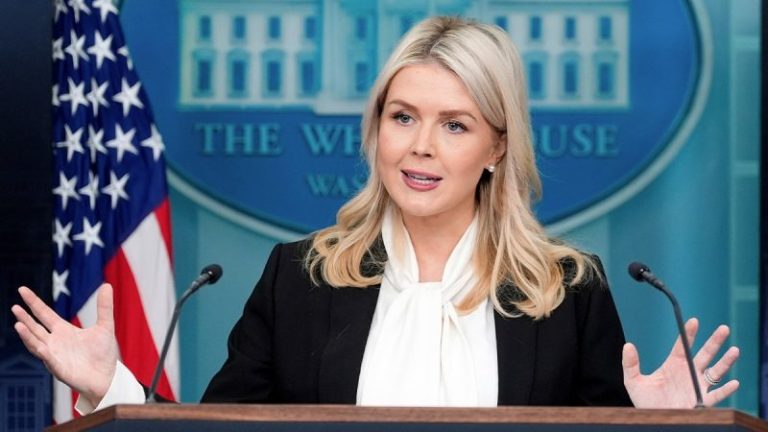
White House press secretary Karoline Leavitt would not rule out the possibility of the U.S. sending ground troops to Iran, though she said Wednesday it is not being considered at the moment.

During the first White House press briefing since Operation Epic Fury was launched, a reporter asked whether ground troops would be sent into Iran.

‘Well, they’re not part of the plan for this operation at this time, but I certainly will never take away military options on behalf of the president of the United States or the commander in chief, and he wisely does not do the same for himself,’ Leavitt said.

‘I know there’s many leaders in the past who like to take options off of the table without having a full understanding of how things could develop. So, again, it’s not part of the current plan, but I’m not going to remove an option for the president that is on the table.’

Since Saturday, the U.S. and Israel have carried out attacks on Iran using airstrikes and naval attacks, but neither country has put boots on the ground. The attacks that have been carried out thus far have targeted the regime’s security and military infrastructure, including the killing of Supreme Leader Ayatollah Ali Khamenei and other senior officials.

Leavitt said the U.S. has four main objectives with Operation Epic Fury: eliminate Iran’s ballistic missile threat, destroy its naval capability, disrupt its missile and drone production infrastructure and cut off Iran’s pathway to a nuclear weapon.

The press secretary was asked multiple times if the U.S. wished to see regime change in Iran. She repeated the objectives she previously detailed and reiterated the administration’s stance on the regime.

‘Obviously, as the president has said numerous times, do we want to see Iran being led by a rogue terrorist regime? No, of course not,’ Leavitt said.

So far, the U.S. has hit nearly 2,000 targets in Iran, and more than 17,500 Americans have returned to U.S. soil from the Middle East since the operation began.

Secretary of War Pete Hegseth gave an operational update earlier on Wednesday, saying he U.S. was ‘decisively’ winning, and later adding that Iran was ‘toast’ and if it didn’t already realize it, it would ‘soon enough.’

‘I stand before you today with one unmistakable message about Operation Epic Fury. America is winning — decisively, devastatingly and without mercy,’ Hegseth told reporters at the Pentagon.

‘The two most powerful air forces in the world will have complete control of Iranian skies. Uncontested airspace.’

Related Article

74 retired US generals, admirals back Iran strikes, warn Tehran seeks to ‘spill American blood’
This post appeared first on FOX NEWS

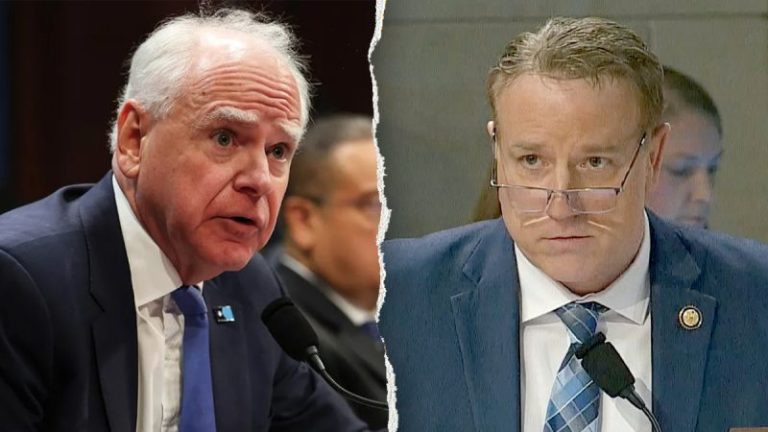
GOP Rep. Pat Fallon blasted Minnesota Gov. Tim Walz in a heated fraud hearing on Wednesday in an exchange that was quickly amplified by conservatives on social media. 

‘It’s been widely reported that in 2008, when Barack Obama was choosing his vice presidential candidate, he had three criteria. He wanted to make sure he picked someone that wasn’t as smart as him and had less talent and charisma and couldn’t possibly outshine him, so he picked Joe Biden,’ Fallon said in the House Oversight Committee hearing. 

‘And then Joe Biden in 2020 used the exact same criteria,’ Fallon continued. ‘He wanted to make sure he picked somebody that wasn’t as smart as him, had less talent and charisma, and wouldn’t outshine him, and he picked Kamala Harris.’

Fallon went on to say that in 2024, ‘I think it’s very evident why Kamala Harris picked you.’

Walz appeared to take the criticism in stride as he laughed and responded with, ‘I wouldn’t know, Congressman.’

‘The talent pool isn’t just shallow, brother, we have hit the shore,’ Fallon said before ending his questioning. 

The clip immediately made waves on social media, particularly from conservatives.

‘Tim Walz just got SCORCHED,’ conservative commentator Nick Sortor posted on X. 

Conservative influencer account Libs of TikTok called the exchange ‘one of the most INCREDIBLE OWNS in American politics.’

‘Rep. Pat Fallon torches Tim Walz,’ Brandon Straka, the founder of the #walkaway campaign, posted on X.

Much has been made in media reports and books in recent months about what went into Harris’s decision to name Tim Walz as her running mate instead of other candidates, particularly Pennsylvania Gov. Josh Shapiro.

Ultimately, according to the book ‘2024: How Trump Retook the White House and the Democrats Lost America,’ Harris ‘went with her gut’ and chose Walz believing he was the ‘better fit’ in a decision her staff was ‘unanimously behind.’

Related Article

Walz accused by Jordan of trying to ‘hide behind’ court order in Feeding Our Future payments
This post appeared first on FOX NEWS

Senate Republicans closed ranks Wednesday, handing President Donald Trump a win on his use of force in Iran, despite lingering questions about America’s involvement in the Middle East.

The Senate shot down a resolution from Sen. Tim Kaine, D-Va., aimed at limiting Trump’s military actions in Iran on Wednesday, following days of speculation about whether Republicans would cross the aisle — as they have done before — to reprimand the president.

The administration pushed hard to lobby support for Operation Epic Fury, holding several briefings with Congress to make its case. It appeared to work, at least for now, convincing some Republicans on the fence to back continued military action in Iran.

Only Sen. Rand Paul, R-Ky., voted in favor of the resolution, while Sen. Jon Fetterman, D-Pa., was the lone Democrat to cross the aisle in support.

Democrats argued that Trump’s actions were another instance of him disregarding Congress’ authority to use military force, that they lacked a clear strategy going forward and, further, that they were yet another campaign promise he had broken.

‘It’s time for the president to keep promises, not break them,’ Kaine said ahead of the vote. ‘That’s why I’m so glad that we’re going to put everybody on the record … Nobody gets to hide and give the president an easy pass or an end run around the Constitution.’

Democrats also seized on the administration’s refusal to rule out sending U.S. troops into Iran.

‘They refuse to take off the table the insertion of ground troops,’ said Sen. Chris Murphy, D-Conn., warning the conflict could expand beyond air and naval operations. ‘This is going to make the operations in Libya look like child’s play.’

Sen. Josh Hawley, R-Mo., who previously supported a resolution to rein in Trump’s war powers in Venezuela, said he would oppose the latest effort.

But like last time, he said a ground operation would require congressional approval.

‘I’ve always said that committing ground troops would be something I think would require immediate congressional authorization, but that doesn’t appear to be on the immediate horizon,’ Hawley said.

Senate Minority Leader Chuck Schumer, D-N.Y., argued that the goalposts kept moving for the administration, which he said was a clear sign that ‘a strategy is missing.’

Republicans countered that the president acted within his constitutional authority as commander in chief. Sen. Lindsey Graham, R-S.C., called the War Powers Act ‘an unconstitutional shift of authority from the president,’ arguing Congress retains the ability to restrict funding if it disagrees with military action.

‘We don’t need 535 commanders in chief,’ said Sen. Markwayne Mullin, R-Okla., arguing against the legislation.

There was also fatigue among some in the GOP over Kaine’s repeated efforts to reassert congressional authority in conflicts.

Republicans privately huddled Tuesday to discuss the strikes and the upcoming war powers vote ahead of their briefing with Secretary of State Marco Rubio, CIA Director John Ratcliffe, Joint Chiefs of Staff Chair Gen. Dan ‘Raizin’ Caine and Secretary of War Pete Hegseth.

A source familiar with the closed-door discussion told Fox News Digital that Republicans who may have been swayed were frustrated with Kaine’s repeated use of the Senate floor to push resolutions limiting Trump’s war authorities.

Senate Majority Whip John Barrasso, R-Wyo., noted that it was Kaine’s fifth resolution to rein in Trump’s war powers since he returned to office last year, which accounts for nearly half of all war powers resolutions put forward in U.S. history.

‘These resolutions have been used only 11 times in 50 years,’ Barrasso said. ‘The senator from Virginia alone accounts for nearly half of them. Yet Senator Kaine introduced zero war powers resolutions when Barack Obama and Joe Biden were president.’

Rubio told reporters after a briefing with every senator on Tuesday that the administration had complied with the War Powers Act, though it believes the law is unconstitutional and noted that congressional leaders had been notified ahead of the strikes.

Rubio had previously suggested that the U.S. carried out Operation Epic Fury after it became clear that Israel intended to strike Iran first, a point he later walked back.

‘If you tell the President of the United States that if we don’t go first, we’re going to have more people killed and more people injured, the president is going to go first,’ Rubio said. ‘That’s what he did. That’s what the president will always do.’

Meanwhile, U.S. forces have now struck more than 2,000 targets in Iran, largely focusing on taking out the regime’s air defenses and missile capacity. Six U.S. service members have been killed in the operation, as have nearly 50 top Iranian leaders.

The Iranian government claims at least 1,045 people have been killed throughout Iran during the operation.

Related Article

Rubio says in ‘simple English’ Iran run by ‘lunatics,’ defends Trump strike as ‘right decision’
This post appeared first on FOX NEWS

As U.S. and Israeli air forces continue to attack Iran’s leadership and facilities with devastating military strikes, there are intense discussions unfolding about who will rule the country if the regime falls.

One of the biggest questions being asked by Iran experts is whether the fragmented opposition groups can come together and unite in defeating the regime.

Lawdan Bazargan, anIranian political and human rights activist who was imprisoned by the regime for her dissident activities in the 1980s, told Fox News Digital there is a dangerous precedent for a total unified opposition. 

Unity cannot mean everyone stands under my flag,’ she said. 

‘That model failed Iran once before. In 1979, one figure [Ayatollah Ruhollah Khomeini] absorbed moral authority while claiming he wasn’t seeking office and ended up consolidating absolute power. It’s also not fair to automatically position someone who has not lived in Iran for decades as the interim authority of over 90 million people. That fuels more mistrust, not less.’

She also warned about the need to avoid a Venezuela situation in which Nicolás Maduro was replaced by his devotee, Delcy Rodríguez.

Mariam Memarsadeghi, a senior fellow at The Macdonald-Laurier Institute and founder and director of the Cyrus Forum for Iran’s Future, told Fox News Digital, ‘When it comes to helping unite opposition forces, the crown prince [Reza Pahlavi] has the most responsibility because he is leading. It is to everyone’s advantage for him to build true alliances and real cooperation.

‘He can start through reconciliation with prominent figures who once were in collaboration with him before spoilers in his own ranks were propelled by regime manipulation and infiltration to turn on others. It will be tempting to think that, because he is popular, he does not need others. But there is much hard work ahead.’

Reza Farnood, a researcher, writer and activist, told Fox News Digital, ‘In 48 years of activism and struggle, I have never experienced such broad unity and alignment. Even those who for years held firmly leftist views and were staunch opponents of the Shah and the Pahlavi family are now openly supporting the prince. Inside Iran, people are openly and courageously chanting his name.’

Yet others remain skeptical of Pahlavi. 

‘Unfortunately, the Iranian opposition is more divided than ever,’ Alireza Nader, an Iran expert, said. ‘And I blame much of it on Reza Pahlavi and his team. Take the announcement of the formation of the new Kurdish Iranian coalition. Pahlavi attacked the coalition as soon as it was formed, labeling them as ‘separatists.’ 

‘But then Pahlavi had to walk back his statement after he found out that President Trump had called Kurdish leaders, an important development.’

Nader added, ‘The Kurds are very organized and capable. And they are armed. Anyone who wants to free Iran has to work with them. The regime is a deeply entrenched system in Iran. It’s an ideology and belief system that will not be uprooted with air strikes. And the regime has been preparing for this moment for decades. The individual leaders may not matter as much as the system.’

Yet while many voices claim Pahlavi should be the rightful successor to bring democracy to Iran, others point to the influential Mojahedin-e-Khalq (MEK), the Iranian exile organization that has attracted supporters like former Secretary of State Mike Pompeo and former New York City Mayor Rudy Giuliani.

The group was reportedly the first to highlight Iran’s nuclear weapons ambitions and regularly posts videos on its social media showing its active units operating against the regime. A post on X dated March 3 shows attacks against regime targets.

‘Resistance Units step up anti-regime activities nationwide,’ it said, adding that there have been 30 operations in 15 cities, including Tehran, in recent days.

Its Paris-based leader, Maryam Rajavi, says she supports a secular provisional government. Ali Safavi, an official with the Foreign Affairs Committee of the Paris-based National Council of Resistance of Iran (NCRI), told Fox News Digital, the organization ‘has consistently argued that unity must be built on principles — republicanism, popular sovereignty, human rights and the separation of religion and state — rather than on personalities or nostalgia for past systems.’

The NCRI is the umbrella organization for groups that fall under MEK.

Andrew Ghalili, the policy director for the National Union for Democracy in Iran (NUFDI), defended Pahlavi’s standing, saying, ‘There is no figure within the Islamic Republic who has legitimacy with the Iranian people or who would be a credible partner for the U.S.

‘As for opposition unity, the pro-democracy opposition is more united than it gets credit for. At the Munich Security Conference in 2025, a broad coalition came together around Crown Prince Reza Pahlavi and four core principles for democratic transition. That includes monarchists, republicans, human rights advocates, ethnic minority representatives — all committed to a democratic, territorially intact Iran.’

Ghalili claimed, ‘When people say the opposition is ‘fractured,’ they’re usually lumping in groups like the MEK, which is universally reviled inside Iran and has no democratic credentials or aspirations, or separatist movements that don’t reflect what Iranians, including ethnic minorities, actually want. The real pro-democracy opposition is already uniting. The world, and international media, should recognize it.’

‘If the West truly wants stability and not a Venezuela-style managed authoritarian transition, it should not anoint personalities,’ Bazargan warned. ‘It should push for a structured transition that guarantees free and fair elections within 12 months, with distributed authority and real safeguards against concentration of power. 

‘Iran does not need another supreme figure, even a secular one. It needs an accountable transitional framework, so every Iranian feels they have a stake in their future. Without that, fragmentation will continue, and fragmentation only helps the regime survive.’

Her warning was echoed by Memarsadeghi, who said, ‘The Iranian people will not trust in any process that leaves in power any vestige of the regime that massacred them.’

Related Article

Trump says Iran wants to talk but who will lead after Khamenei?
This post appeared first on FOX NEWS

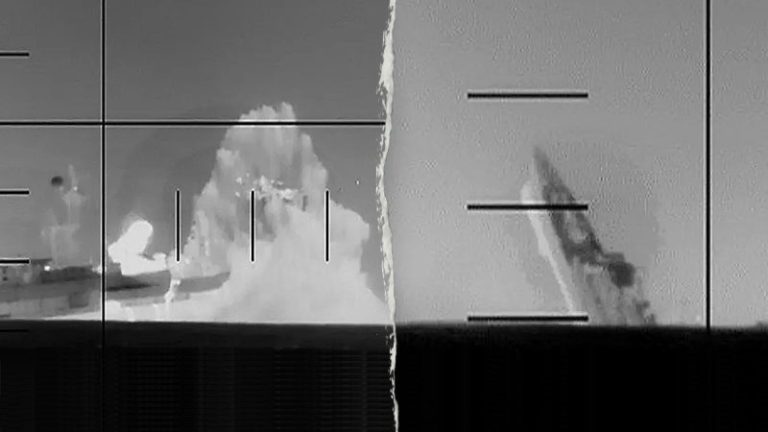
A multi-million-dollar U.S. Navy torpedo detonated underneath an Iranian warship in a nighttime submarine strike off Sri Lanka’s southern coast — an attack, War Secretary Pete Hegseth said Wednesday in a Pentagon update, was the first of its kind since World War II.

The weapon, identified as a Mark 48 Advanced Capability (ADCAP) torpedo, underscored the scale of force used, and signaled to Tehran that ‘the gloves really are off,’ according to a former U.S. submarine commander.

‘The Mark 48 is one of the most lethal anti-ship weapons in the U.S. inventory,’ Thomas Shugart, an adjunct senior fellow at the Center for a New American Security, told Fox News Digital.

The torpedo carries a 650-pound warhead and is designed not to strike a ship directly, Shugart said, but to detonate beneath it, creating a massive vapor bubble that breaks the vessel’s back and splits it in half.

‘This torpedo detonated underneath the stern of the Iranian ship and lifted it up out of the water, and so it sank in a matter of minutes,’ he added.

The torpedo costs approximately $4.2 million per unit, according to recent data, with Shugart likening the strike to rare submarine attacks in modern naval history.

In addition to World War II, he pointed to the 1982 Falklands War as one example of a submarine-launched torpedo sinking a major surface combatant.

‘This was the second time ever that a nuclear-powered submarine has fired a torpedo and sunk a ship,’ Shugart said.

‘The only other time that happened was a British submarine called HMS Conqueror, which similarly sank an Argentine cruiser, the General Belgrano, during the Falklands War in 1982,’ he added.

The naval submarine operation, he said, would have involved increased surveillance, forward naval deployments and targeted actions designed to demonstrate U.S. maritime dominance.

‘It definitely seems to me like a message that the gloves really are off,’ Shugart added.

‘An American submarine sank an Iranian warship that thought it was safe in international waters,’ Hegseth told reporters at the Wednesday briefing.

Hesgeth described the strike as ‘a quiet death,’ adding that it marked the first sinking of an enemy ship by torpedo since World War II.

‘The U.S. Navy submarines are very highly mobile, very, very quiet, and our crews are extremely well-trained,’ Shugart explained. ‘This was not a challenge for a U.S. Navy submarine to fire a torpedo.’

‘To hunt down and sink an Iranian ship like that is not — that’s not a challenging task for a U.S. nuclear-powered submarine,’ he said.

The targeted vessel, identified as the IRIS Dena, was the newest frigate in Iran’s naval fleet and was equipped with surface-to-air missiles, anti-ship missiles, torpedo launchers and other heavy weaponry.

According to Sri Lanka’s Foreign Affairs Minister Vijitha Herath, the country’s coast guard received a distress call at 5:08 a.m. local time Wednesday from the Iranian vessel reporting an explosion.

‘I’m not sure Iran has any operational submarines anymore, but if they were operational, their biggest submarines would be at least 20 or 30 years old,’ Shugart said.

‘They would be ex-Russian diesel-electric submarines, so they’re not nuclear-powered like the U.S. ones, with satellite communications and unlimited mobility.’

‘The U.S. submarines can operate at high speed for as long as they want with unlimited endurance, other than the food on board. They carry the most advanced weapons, the most advanced sensors.’

‘This strike sent a message that if there are any Iranian warships left or any Iranian government-owned ships, they should expect no mercy,’ he added.

Related Article

US unleashes Operation Epic Fury, strikes 1,700 Iran targets in 72 hours
This post appeared first on FOX NEWS

A House Democrat with a background in physics is sounding the alarm over what he views as a lack of a plan to deal with Iran’s nuclear sites during the U.S. offensive campaign.

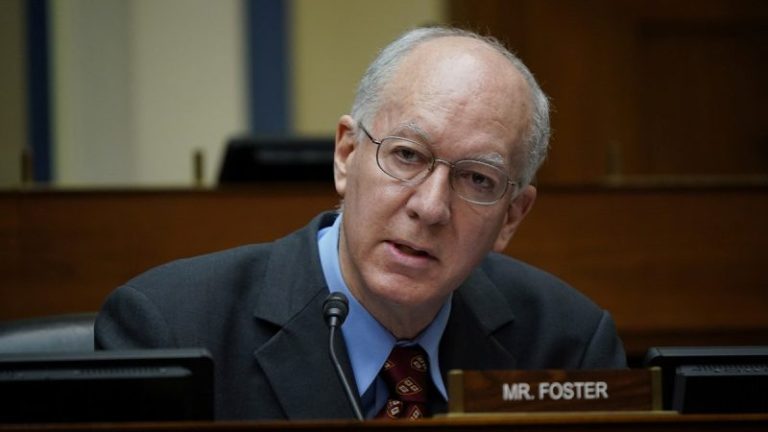
After a classified briefing Tuesday with top administration officials, Rep. Bill Foster, D-Ill., said lawmakers were not presented with a clear plan to secure or neutralize Iran’s stockpile of enriched uranium.

‘We have heard that they never had a plan for that nuclear stockpile of enriched uranium — to destroy that, to seize it or to put it under international inspection,’ he said.

The U.S. intervention was publicly justifiedby the Trump administration as a necessary step to stop Iran from developing a nuclear weapon. 

U.S. forces have struck more than 1,700 targets across Iran, including ballistic missile launch sites, air defenses, naval assets and command centers. Core nuclear facilities, however, have not been among the primary targets.

‘Until that happens, Iran will be very, very close to making — as many observers have pointed out in a nonclassified situation — Iran can use that material to make a handful of Hiroshima-style nuclear devices,’ Foster told Fox News Digital. ‘Not the sort you can put on a missile, but the sort you can deliver by a number of other ways and are very hard to stop.’ 

Foster was referring to Iran’s stockpile of highly enriched uranium, material that, if weaponized, could be used to build a nuclear explosive device.

Experts note that building a compact warhead that fits on a ballistic missile is technically complex and requires advanced engineering. But a simpler, larger nuclear device — similar in basic concept to the bomb the U.S. dropped on Hiroshima, Japan, in 1945 — would not need to be miniaturized to fit on a missile. Such a device could not be delivered by long-range rocket but could theoretically be transported by other means.

Foster argued that containing Iran’s nuclear materials, most of which are buried deep underground, would likely require U.S. forces to enter Iran.

Recent satellite imagery shows damage to support buildings and access points at Iran’s Natanz enrichment site, though the deepest underground infrastructure at key nuclear facilities has not been confirmed as a primary target in the current campaign.

U.S. and international officials previously have acknowledged that while strikes can damage enrichment infrastructure, stockpiled enriched uranium stored underground may remain intact and potentially retrievable unless physically secured or removed.

‘You have to go in there with boots on the ground and grab a bunch of equipment,’ Foster said. ‘You have to go underground into those facilities and lose a lot of soldiers’ lives doing that.

‘They’re unwilling to do that, or they’ve decided not to or they’ve decided it’s impossible. In any case, they did not present to us any plan that would actually get the material under control.’

Without securing the nuclear material, he argued, military operations may push Iran closer to a nuclear weapon than diplomatic negotiations would have.

‘The only positive thing about the ayatollah is that he had a fatwa against building nuclear weapons,’ Foster said. ‘Who knows what the next generation of ayatollahs are going to feel? They’re going to be under a lot of pressure from the IRGC, which was not so much against having a nuclear weapon.’

Ayatollah Ali Khamenei, who was killed in the joint U.S.-Israeli operations, had previously issued a fatwa, a religious edict, opposing the pursuit of nuclear weapons. Analysts have long debated how binding or durable that ruling was.

At a White House briefing Wednesday, press secretary Karoline Leavitt said the administration believes Iran ‘wanted to build nuclear weapons to use against Americans and our allies,’ framing the strikes as necessary to prevent Tehran from advancing its nuclear ambitions.

‘The US military has more than enough munitions, ammo, and weapons stockpiles to achieve the goals of Operation Epic Fury laid out by President Trump — and beyond. Nevertheless, President Trump has always been intensely focused on strengthen our Armed Forces and he will continue to call on defense contractors to more speedily build American-made weapons, which are the best in the world,’ she said in a follow up statement to Fox News Digital. 

Missile suppression strategy faces ‘math problem’

Senior administration officials have emphasized that the current phase of the campaign is aimed at dismantling Iran’s ability to project force with missiles, drones and naval assets. 

Defense Secretary Pete Hegseth has highlighted strikes on Iran’s ballistic missile systems, air defenses and naval capabilities, describing the effort as a push to degrade the conventional tools Tehran uses to threaten U.S. forces and regional allies. 

Secretary of State Marco Rubio similarly has said the United States is working to ‘systematically take apart’ Iran’s missile program, so it could not ‘hide behind’ it to develop a nuclear weapon. 

While the broader justification for intervention centered on preventing a nuclear-armed Iran, the most immediate threat facing U.S. troops and partners has been Iran’s ongoing missile and drone launches. Administration officials contend Iran’s missile buildup was meant to create a deterrent buffer, shielding its broader strategic ambitions, including its nuclear program, from outside attack.

Lawmakers emerging from classified briefings said the campaign has become, in part, a question of sustainability.

‘We do not have an unlimited supply,’ Sen. Mark Kelly, D-Ariz., said of U.S. and allied interceptor inventories. He warned the conflict could become a ‘math problem,’ balancing launch volumes against finite air defense munitions and the ability to replenish them without weakening readiness in other theaters.

‘At some point — and we’re probably already in this — this becomes a math problem,’ Kelly added.

He said he pressed defense officials on how interceptor stocks are being replenished and whether diverting munitions to the Middle East could strain U.S. readiness elsewhere.

‘How can we resupply air defense munitions? Where are they going to come from? How does that affect other theaters?’ he said. ‘The math on this currently seems to be an issue.’

Sen. Andy Kim, D-N.J., said he also sought clarity on interceptor inventories but did not receive detailed answers.

‘I am very concerned about that,’ Kim said. ‘I did not get any specificity today. … Something akin to ‘trust us’ is not good enough for me.’

Republicans, however, pushed back on the notion that interceptor supplies are strained. 

Sen. Markwayne Mullin, R-Okla., said officials told lawmakers U.S. forces are ‘in great shape,’ dismissing concerns about shortages.

Ehud Eilam, a former Israeli defense official and national security analyst, said that while a nuclear weapon remains the most serious long-term threat, missile and drone systems pose the most immediate danger if intelligence assessments conclude Iran is not on the verge of assembling a device.

‘As long as it is estimated Iran cannot produce a nuclear weapon soon, then the focus moves to missiles and drones,’ Eilam said, noting that ballistic missiles would ultimately be required to deliver any future nuclear warhead. Suppressing mobile launchers, crews and command networks can reduce Iran’s firing tempo, conserving interceptor supplies while degrading Tehran’s broader military capacity, he said.

The concern is not theoretical. 

During the intense June 2025 Iran–Israel conflict, U.S. forces reportedly fired more than 150 Terminal High Altitude Area Defense interceptors, roughly a quarter of the global inventory, along with large numbers of ship-based Standard Missile interceptors to shield allies. 

Analysts note that replenishing high-end air defense systems such as Patriot, THAAD and SM-3 interceptors could take more than a year under current production rates.

The Pentagon also is balancing competing demands. The same missile defense systems used to protect U.S. bases and Gulf partners are being supplied to Ukraine to defend against Russian cruise missile attacks, creating what some analysts describe as a ‘zero-sum’ competition for inventory between Europe and the Middle East.

‘There is a limit to how many THAAD missiles can be used,’ Eilam said. ‘These are not systems you can reproduce overnight.’

Related Article

Rubio says in ‘simple English’ Iran run by ‘lunatics,’ defends Trump strike as ‘right decision’
This post appeared first on FOX NEWS
An Iranian refugee held at gunpoint at school before fleeing Iran during the 1979 revolution is calling for hope, democracy and prayers for his homeland as the U.S. joins Israel in targeting Iran’s ruling clerical regime.

David Nasser, now an American pastor, spoke to Fox News Digital six days after Operation Epic Fury was launched in Iran — an event that reignited haunting memories for him and of the time when he was 9 years old.

‘As a child, my family and I were forced to escape Iran and run for our lives,’ Nasser, President and CEO of David Nasser Outreach recalled.

‘We found safe harbor as refugees granted political asylum here in the United States,’ Nasser said, before describing how his father had been a high-ranking officer in Iran’s military, meaning ‘his family became targets as the government collapsed.’

‘One of my most vivid memories of realizing that nothing was ever going to be the same again was at a school assembly on a military base – a soldier called out three names and mine was called first,’ he said.

‘When I got to the front, the soldier dropped a piece of paper, took a gun out of his holster and put it to my head and quoted the Quran. He told me that he was sent to make an example out of me,’ Nasser added.

The principal intervened, but the message he relayed was unmistakable. Nasser recalled.

‘They’re killing everybody who’s anybody. They’re trying to make an example out of people like our family, and they’re using fear,’ he remembered hearing at the time.

‘That’s one of my first memories of the revolution, but really just being completely scared for my life.’

Soon after, Nasser’s family devised an escape plan. They would pretend Nasser’s mother needed emergency heart surgery in Switzerland and buy round-trip tickets to avoid raising suspicion.

‘We bought round-trip airline tickets, like we were going and coming back, but we weren’t coming back. We were running for our lives,’ he said.

At the airport, Nasser remembers gripping his father’s hand tightly and hearing words he will never forget.

”If they find out we’re escaping, they’re going to kill us right here on the spot,” my father said as his hands shook, holding mine, he said. ‘The last time I was in Iran, I was a 9-year-old little boy running for my life,’ he said.

Now, watching events unfold in Iran from the safety of the U.S., Nasser said his heart remains with millions of desperate Iranians facing uncertainty.

‘We see them — I see them, I hear them. My heart is beating really fast for them right now, with hope and with prayers for their protection and their provision,’ Nasser said.

‘Protection. I’m praying for protection for them. I want to be a part of the provision for them. If Iran transitions from a theocracy to a democracy,’ he said, ‘I want to help rebuild.’

‘If this moment actually comes, and they go from a theocracy to a democracy, I want to be a part of the solution — for that 9-year-old little boy that I once was. I want to do this for him.’

Beyond political change, Nasser, who is also Teaching Pastor at New Vision Baptist Church, said he takes solace in what he describes as spiritual transformation already underway, calling it ‘the fastest-growing church in the world right now, or the underground church in Iran.’

‘We know there’s at minimum 4 million, at maximum 8 million Christians right now in Iran,’ he said.

‘In Iran, if you convert from Islam to Christianity, that can be a death sentence. If they come into your home and you’re gathering for Christian worship, they will take your home title, you will lose your home.’

‘They’re in prison. They’re being tortured. They’re being ridiculed. They’re being mocked,’ he added.

‘Above all, I came to America, and it was a land of opportunity, and I was given the gift of democracy, so I would love to see democracy in Iran, where all the boys and girls are afforded what I was afforded when I managed to escape.’

Related Article

Exiled Iranian crown prince says US strikes mark ‘beginning of the very end’ for regime
This post appeared first on FOX NEWS