Author

admin

Browsing

The State Department on Monday urged Americans to depart immediately from more than a dozen countries across the Middle East, warning of ‘serious safety risks’ as the Iran war intensifies.

Assistant Secretary of State for Consular Affairs Mora Namdar said U.S. citizens should leave from Bahrain, Egypt, Iran, Iraq, Israel, the West Bank and Gaza, Jordan, Kuwait, Lebanon, Oman, Qatar, Saudi Arabia, Syria, the United Arab Emirates and Yemen.

The department said Americans who need help arranging departure via commercial means can contact the State Department 24/7 at +1-202-501-4444 from abroad or +1-888-407-4747 from the U.S. and Canada.

The travel push was amplified by the State Department’s official travel account, which urged Americans abroad to enroll in the Smart Traveler Enrollment Program, or STEP, at step.state.gov to receive the latest security updates from their nearest U.S. embassy or consulate.

Officials have warned that conditions in the region remain volatile, and that security situations can change quickly as fighting tied to the Iran conflict continues.

The warnings come days after the United States launched Operation Epic Fury, striking command-and-control centers, Iranian air defense capabilities, missile and drone launch sites.

In a Feb. 28 Worldwide Caution security alert, the State Department said Americans worldwide, and especially those in the Middle East, should exercise increased caution, monitor local security alerts and expect potential travel disruptions, including periodic airspace closures.

The evacuation push follows a cascade of security alerts issued by U.S. embassies across the region since Saturday, many ordering or recommending Americans to shelter in place.

At least nine U.S. missions, including Bahrain, Iran, Kuwait, the United Arab Emirates, Saudi Arabia, Iraq, Jordan, Qatar and Israel, have issued repeated shelter-in-place directives or advisories over the past several days.

In multiple cases, embassy personnel and their families were ordered to remain at home, with Americans urged to stay in secure structures away from windows and be prepared for incoming missiles or drones.

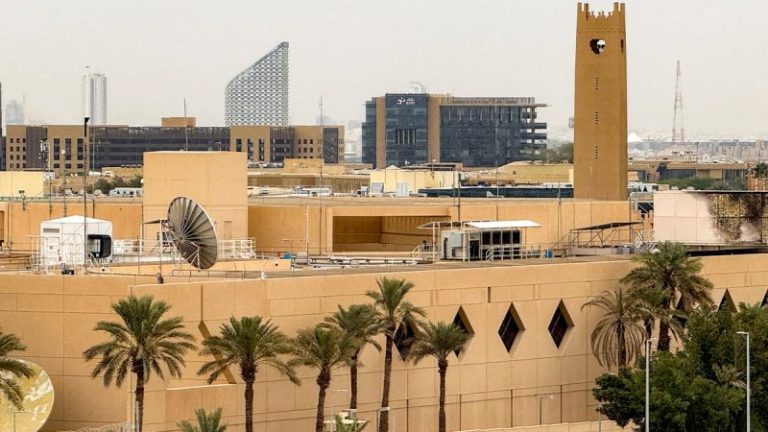
In Saudi Arabia, the embassy in Riyadh closed Tuesday after two Iranian drones struck the building, prompting expanded shelter-in-place orders for Jeddah, Riyadh and Dhahran. No injuries were reported.

Related Article

Iran’s security chief accuses Trump of ‘Israel First’ policy, ‘delusional fantasies’ in region
This post appeared first on FOX NEWS

The U.S. Embassy in Riyadh was hit by two drones from Iran on Monday as Americans in Saudi Arabia were instructed to shelter in place. The embassy was empty at the time of the hits and no injuries were reported as a result of the attack.

On Tuesday, the embassy issued a security alert saying that the shelter in place order for Jeddah, Riyadh and Dhahran remained in effect, and it added that U.S. citizens throughout Saudi Arabia were advised to remain indoors. It also advised U.S. citizens to ‘avoid the embassy until further notice’ due to the attack.

‘We advise all U.S. citizens to maintain a personal safety plan. Crises can happen unexpectedly while traveling or living abroad, and a good plan helps you think through potential scenarios and determine in advance the best course of action,’ the embassy’s Tuesday alert read.

In the security alert, the embassy urged U.S. citizens to shelter in place, monitor its website for updates, enroll in the State Department’s Smart Traveler Enrollment Program (STEP), ensure their passports are valid for potential short-notice travel, remain aware of their surroundings, avoid demonstrations and large gatherings, follow local authorities’ instructions and monitor official information sources for the latest updates.

Secretary of State Marco Rubio in a video posted on X urged Americans in the Middle East to register with STEP, saying that it would allow them to see the latest safety and security guidance amid the ‘cowardly attacks’ from Iran.

Saudi Arabia’s Foreign Ministry released a statement condemning the attack, saying ‘the repetition of this cowardly and unjustified attack blatantly violates all international norms and laws, including the 1949 Geneva Convention and the 1961 Vienna Convention on Diplomatic Relations.’

‘The Kingdom emphasizes that the repetition of this flagrant Iranian behavior, which comes despite the Iranian authorities’ knowledge that the Kingdom has affirmed it will not allow its airspace or territory to be used to target Iran, will push the region toward further escalation,’ the foreign ministry’s statement read.

Iran has launched attacks in the region against Israel and several countries that have U.S. interests in retaliation for the U.S. and Israel’s joint military offensive known as Operation Epic Fury. Saudi Arabia condemned the retaliation on Feb. 28.

‘The Kingdom of Saudi Arabia expresses its rejection and condemnation in the strongest terms of the blatant and cowardly Iranian attacks that targeted the Riyadh Region and the Eastern Province, which were successfully intercepted,’ the Saudi Foreign Ministry’s Feb. 28 statement read. ‘These attacks cannot be justified under any pretext or in any way whatsoever, and they came despite the Iranian authorities’ knowledge that the Kingdom had affirmed it would not allow its airspace or territory to be used to target Iran.’

Amid the retaliatory strikes, the State Department has ordered the evacuation of non-emergency personnel and their families from Kuwait, Bahrain, Iraq, Qatar, Jordan and the United Arab Emirates.

Related Article

US casualties rise to 6 following Iranian retaliation for massive strikes
This post appeared first on FOX NEWS

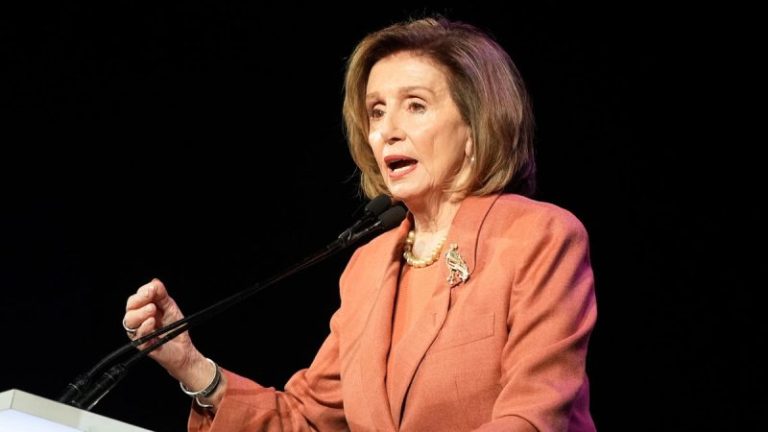
A clip of former U.S. House Speaker Nancy Pelosi, D-Calif., has resurfaced online where she flatly defended the then-Obama administration’s decision to strike Libya — without the congressional authorization she believes President Donald Trump should have secured before conducting his own strikes over the weekend.

‘You’re saying that the president did not need authorization initially and still does not need any authorization from Congress on Libya?’ a reporter asked Pelosi at a press event back in 2011.

‘Yes,’ Pelosi answered plainly.

The unambiguous answer contrasts sharply with Pelosi’s view of Trump’s strikes against Iran on Saturday.

In a joint effort targeting Iranian military leadership, the U.S. and Israel killed Iranian Supreme Leader Ayatollah Ali Khamenei on Saturday, citing an imperative to halt Iran’s pursuit of developing a nuclear weapon.

Pelosi swiftly condemned the operation.

‘President Trump’s decision to initiate military hostilities into Iran starts another unnecessary war which endangers our servicemembers and destabilizes an already fragile region,’ Pelosi said in a post to X.

‘The Constitution is clear: decisions that lead our nation into war must be authorized by Congress.’

Pelosi, alongside other Democrats, is pursuing a war powers resolution that would limit Trump from taking further military action against Iran without express congressional approval.

Trump’s strikes bear similarity to President Barack Obama’s decision to strike Libya in 2011 under Operation Odyssey Dawn.

In that operation, Obama ordered a series of strikes against Libya in March 2011, looking to deter Muammar Gaddafi from attacking civilian protesters.

Gaddafi, known as the ‘Mad Dog of the Middle East,’ was the ruler of Libya from 1969 to 2011. He had a long and complicated relationship with the U.S. — at times aligning with national objectives and, at others, governing in a manner the U.S. couldn’t ignore.

The final straw came in the Libyan revolt of 2011, when demonstrations broke out in Benghazi and other cities. Like recent uprisings in Iran, Gaddafi met the threat to his rule with crushing force, marching his forces toward several Libyan cities that had resisted his power.

In what he described as attempts to uphold international law, Obama said the U.S., in partnership with the North Atlantic Treaty Organization (NATO), had taken the strikes to protect Libya’s civilians to protect Libya’s civilians.

‘We struck regime forces approaching Benghazi to save that city and the people within it,’ Obama said in remarks after the attacks.

The strikes did not kill Gaddafi.

Gaddafi was killed later that year at the hands of revolutionaries in October.

While Obama said he had consulted a bipartisan group of congressional lawmakers, he did not pursue a declaration of war before carrying out his strikes.

‘So, for those who doubted our capacity to carry out this operation, I want to be clear: The United States of America has done what we said we would do,’ Obama said.

Pelosi’s office did not respond to a request for comment on whether she saw any key differences between the attacks carried out by Obama and those now ordered by Trump.

Related Article

Massie-led push to handcuff Trump on Iran gets Jeffries’ backing
This post appeared first on FOX NEWS

WACO, TEXAS — Two of this primary season’s fiercest rivals have one thing in common: unflinching support for President Donald Trump’s decision to strike Iran.

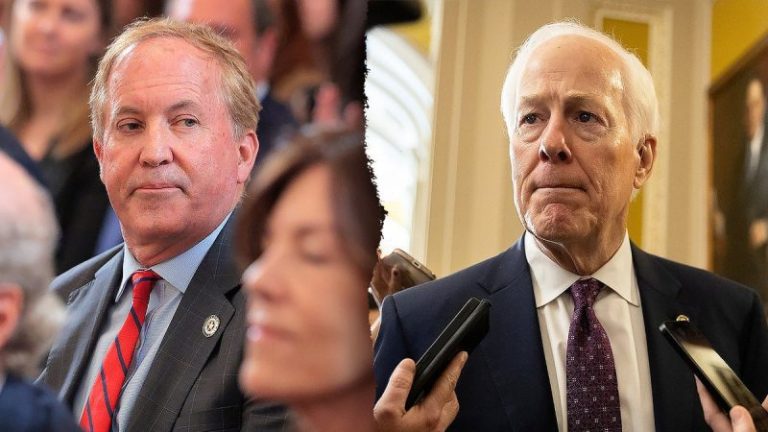
Texas Attorney General Ken Paxton and Sen. John Cornyn, R-Texas, are both leaning into their relationship with Trump and their record of support over the years as they vie for the Republican nomination in Texas’ contentious Senate primary. While it’s a crowded primary, including Rep. Wesley Hunt, R-Texas, all eyes are on Paxton and Cornyn. 

And as they push for Trump’s coveted endorsement in the final stretch of their intense campaign, their support of the president has remained unwavering.

Paxton told Fox News Digital outside his final campaign event ahead of the March 3 primary that he believed Trump ‘did the right thing’ with Operation Epic Fury. When asked what voters were saying, he said, ‘No one wants foreign wars.’

‘But the reality is, when you’ve got a country that’s trying to build nuclear weapons, that is willing to use them, and that has demonstrated terrorist activity for decades, 40 or 50 years, you’ve got to deal with that, or eventually it comes to you,’ Paxton said.

Cornyn had a front-row view of Trump’s decision.

Chairman of the Joint Chiefs of Staff Gen. Dan ‘Raizin’ Caine said Tuesday during a press conference at the Pentagon that Trump gave the go-ahead to launch Operation Epic Fury while en route to Corpus Christi, Texas, to promote his energy agenda.

Cornyn and others from the Texas delegation were on Air Force One when Trump gave the order. When asked by Fox News Digital whether he was aware of the plan while traveling with the president, Cornyn said Trump was ‘a very cool customer.’

‘He asked us whether we supported a strike on Iran,’ Cornyn recalled. ‘The members of Congress who were there in the cabin of Air Force One all raised our hands and said we did support that, recognizing the gravity of the decision and that only the president, as commander in chief, could make it.’

In Washington, D.C., lawmakers are grappling with the decision, with members of both parties calling for a vote to limit Trump’s war powers in the region. Both Paxton and Cornyn said they are open to debate on the matter.

Cornyn argued it comes down to a simple choice.

‘I want to know who’s standing on the side of American peace and security, and who’s standing on the side of a nuclear-armed Iran,’ Cornyn said. ‘I think that’s the choice.’

How long the country remains involved in the operation remains an open question. Trump said in a video address that the U.S. would continue operations ‘until all of our objectives are achieved,’ but later suggested it could take ‘four weeks or less.’

Some Senate Democrats, including Sen. Andy Kim, D-N.J., argued the strike was ‘the same dangerous and foolish decision’ former President George W. Bush, a fellow Texan, made more than two decades ago in the Middle East.

‘I think the president is doing his best to get in and out. Bush was into nation-building, a very different approach to things. I do not think that’s Trump’s idea here or his endeavor,’ Paxton said. ‘I’m very confident that he’s going to do whatever he can to take them out, and he’s encouraging the people in Iran to take their country back.’

‘He’s not encouraging us to move in and help them do that,’ Paxton added. ‘We’re just taking out the bad guys, and then it’s up to them to build their country in a way that they see fit.’

Related Article

Bipartisan revolt targets Trump’s war powers after massive Iran strikes
This post appeared first on FOX NEWS

Pope Leo XIV warned Sunday that U.S.-Israel airstrikes on Iran risk plunging the Middle East into an ‘irreparable abyss,’ urging leaders to halt a dangerous spiral of violence.

Speaking at the Angelus, the pontiff expressed ‘deep concern’ over recent developments and called on nations to choose dialogue over war.

‘Stability and peace are not built with mutual threats, nor with weapons, which sow destruction, pain, and death, but only through a reasonable, authentic, and responsible dialogue,’ the pope said, according to Vatican News.

‘Faced with the possibility of a tragedy of enormous proportions,’ he added, ‘I address to the parties involved a heartfelt appeal to assume the moral responsibility to stop the spiral of violence before it becomes an irreparable abyss!’

The pope’s warning came after Israel and the U.S. launched a joint military operation against Iran on Saturday, dubbed ‘Operation Epic Fury.’ The attacks reportedly killed several senior leaders, including Iranian Supreme Leader Ayatollah Ali Khamenei, who ruled the Islamic Republic for more than three decades.

Meanwhile, Iranian airstrikes killed at least eight Israelis on Sunday as Tehran’s latest missile barrage landed miles from Jerusalem.

The pope reinforced his warning in a two-part message posted Sunday morning on X.

‘I am following with deep concern what is happening in the Middle East and in Iran during this tumultuous time,’ he wrote.

‘Stability and peace are not achieved through mutual threats, nor through the use of weapons, which sow destruction, suffering, and death, but only through reasonable, sincere and responsible dialogue.’

In a follow-up post, he warned of ‘the possibility of a tragedy of immense proportions’ and urged all parties involved to ‘assume the moral responsibility of halting the spiral of violence before it becomes an unbridgeable chasm.’

‘May diplomacy regain its proper role, and may the well-being of peoples, who yearn for peaceful existence founded on justice, be upheld. And let us continue to pray for peace,’ he added.

Related Article

MIKE POMPEO: Operation Epic Fury is righteous, and regime change must follow
This post appeared first on FOX NEWS

At least nine people are dead and more than two dozen injured after violent clashes outside the U.S. Consulate in Karachi, Pakistan.

Hundreds of protesters stormed the diplomatic compound in a sharp escalation of anti-American demonstrations.

The unrest followed reports that Iran’s supreme leader, Ayatollah Ali Khamenei, was killed in a joint U.S.-Israeli strike, sparking anger among Shiite Muslims in Pakistan.

Witnesses told The Associated Press that many of the protesters were Shiite Muslims who expressed outrage over Khamenei’s reported death and alleged U.S. involvement. Protesters chanted anti-American and anti-Israel slogans, and attempted to breach the consulate’s perimeter.

Security forces deployed police and paramilitary units as clashes intensified outside the compound.

Between 25 and 30 people were wounded in the clashes, according to local officials.

Pakistani authorities tightened security around the consulate and other U.S. diplomatic missions in Lahore, Islamabad and Peshawar amid fears the unrest could spread. The U.S. Embassy in Pakistan issued a security alert urging American citizens to monitor local news, avoid large crowds and remain vigilant.

‘We are monitoring reports of ongoing demonstrations at the U.S. Consulates General in Karachi and Lahore, as well as calls for additional demonstrations at U.S. Embassy Islamabad and Consulate General Peshawar,’ the U.S. Embassy in Islamabad said on X. ‘We advise U.S. citizens in Pakistan to monitor local news and observe good personal security practices, including being aware of your surroundings, avoiding large crowds, and ensuring your STEP registration is up to date.’

The violence comes amid escalating tensions between Iran and the United States over Tehran’s nuclear program, regional influence and support for proxy groups.

Pakistan has seen protests over what demonstrators describe as Western aggression.

The unrest comes as U.S. and Israeli forces continue coordinated strikes targeting Iranian military infrastructure, air defenses and command centers. The Pentagon named the mission Operation Epic Fury, while the Israel Defense Forces called its portion Operation Lion’s Roar. U.S. officials said the strikes aim to degrade Tehran’s military capabilities and neutralize what they describe as imminent threats to the United States and its allies.

Related Article

Sustained war with Iran could drain US missile stockpiles, test escalation control
This post appeared first on FOX NEWS

American counterterrorism agencies are quietly monitoring suspected sleeper cells on U.S. soil in the wake of joint U.S.–Israel strikes on Iran, stepping up surveillance amid heightened fears of possible retaliation from Iran-linked operatives or sympathizers.

Federal and local law enforcement have also boosted on-the-ground security in major U.S. cities as part of a precautionary posture, even though no specific, credible threats have been publicly identified.

The move comes on the heels of a Saturday morning operation, dubbed Operation Epic Fury, that resulted in the death of Iran’s Supreme Leader Ayatollah Ali Khamenei and several senior Iranian officials in a coordinated U.S.–Israeli military campaign.

Security experts warn that the fallout could extend beyond the Middle East.

‘If ever there’s going to be a Hezbollah cell or a Hamas cell act in the United States in a violent way it’s now,’ Chris Swecker, a former assistant FBI director, told Fox News.

‘Both organizations are Iranian-backed all the way. Both organizations have had a presence in the United States since the 1980s,’ he added.

Swecker said U.S. authorities have long been aware of domestic networks and sympathizers.

‘We know that they have cells here. We also know that there are lone sympathizers, many of whom have come out in these protest groups,’ he added.

He also warned that border security vulnerabilities may have compounded the risk.

‘We just come off four years of open borders, and I have said before that that was an open door for terrorists to terrorist cells and terror sympathizers to infiltrate. Many were already here, but it’s impossible that they would not infiltrate into these particular groups and sort of act as catalysts, as enablers.’

Against that backdrop, the FBI is moving to reinforce its domestic security posture.

FBI Director Kash Patel said Saturday that counterterrorism and intelligence teams are now on high alert amid ongoing U.S. actions involving Iran.

‘Last night, I instructed our Counterterrorism and intelligence teams to be on high alert and mobilize all assisting security assets needed,’ Patel wrote on X.

Patel added that while the U.S. military is handling force protection overseas, the FBI ‘remains at the forefront of deterring attacks here at home’ and will continue working around the clock to protect Americans.

Jason Pack, a retired FBI supervisory special agent and Fox News contributor, said heightened monitoring is routine when U.S. military operations intersect with adversaries that have historically responded through indirect or unconventional means.

‘The intelligence and counterterrorism communities work on this kind of scenario continuously, long before any conflict begins,’ Pack said. ‘When the United States commits to a joint military campaign with Israel, the domestic threat environment doesn’t simply remain static. It could shift, potentially significantly.’

He noted that adversarial actors — including Hezbollah, Hamas’s external networks and Iranian Revolutionary Guard Corps proxies — have historically demonstrated both intent and, in some cases, the capability to retaliate against U.S. military actions.

Meanwhile, Homeland Security Secretary Kristi Noem said she is ‘in direct coordination with our federal intelligence and law enforcement partners as we continue to closely monitor and thwart any potential threats to the homeland.’

The heightened alert comes as parts of the Department of Homeland Security face a partial shutdown, raising additional questions about resources and operational strain at a time when federal agencies are on elevated watch.

While no specific plots have been identified, officials acknowledge the threat environment could shift quickly as tensions overseas evolve and whether that escalation reaches American soil remains to be seen.

Fox News Digital’s Michael Dorgan and Kelley Kramer contributed to this report. 

This post appeared first on FOX NEWS

When missiles fly, we expect explosions. We expect smoke, sirens and satellite images. What we do not expect is silence. 

On February 28, 2026, as fighter jets and cruise missiles struck Iranian Revolutionary Guard command centers during Operation Roar of the Lion, a parallel assault reportedly unfolded in cyberspace. 

Official news sites and key media platforms went offline, government digital services and local apps failed across major cities, and security communications systems reportedly stopped functioning, plunging Iran into a near-total digital blackout.

According to NetBlocks, a global internet monitoring organization that tracks connectivity disruptions, nationwide internet traffic in Iran plunged to just 4 percent of normal levels. 

That level of collapse suggests either a deliberate state-ordered shutdown or a large-scale cyberattack designed to paralyze critical infrastructure. Western intelligence sources later indicated the digital offensive aimed to disrupt IRGC command and control systems and limit coordination of counterattacks. 

For the United States and its allies, the episode offers a stark reminder that modern conflict now blends airstrikes with digital warfare in ways that can ripple far beyond the battlefield.

In a matter of hours, modern conflict looked less like tanks and more like a blinking cursor.


Get my best tech tips, urgent security alerts, and exclusive deals delivered straight to your inbox. Plus, you’ll get instant access to my Ultimate Scam Survival Guide – free when you join my CYBERGUY.COM newsletter    

Iran internet shutdown: A country offline in real time

Reports described widespread outages across Iran. Official news sites stopped functioning. IRNA, Iran’s state-run news agency, went offline. 

Tasnim, a semi-official news outlet closely aligned with the Islamic Revolutionary Guard Corps, reportedly displayed subversive messages targeting Supreme Leader Ali Khamenei. 

The IRGC, Iran’s powerful military and intelligence force, plays a central role in national security and regional operations. At the same time, local apps and government digital services failed in cities like Tehran, Isfahan and Shiraz.

This was not one website defaced for headlines. It appeared systemic. Electronic warfare reportedly disrupted navigation and communications systems. 

Distributed denial of service attacks, often called DDoS attacks, flooded networks with traffic to overwhelm and disable them. 

Deep intrusions targeted energy and aviation systems. Even Iran’s isolated national internet struggled under pressure. 

For a regime that tightly controls information, losing digital command creates both operational and political risk.

Why cyber warfare matters in the Iran conflict

Cyber operations offer something missiles cannot. They disrupt without always killing. They send a signal without immediately triggering full-scale war. That matters in a region where escalation can spiral fast. 

History shows Iran understands this logic. Between 2012 and 2014, Iranian actors targeted U.S. financial institutions in Operation Ababil. Saudi Aramco also suffered a major cyberattack. 

After Israeli strikes in 2025, cyberattacks targeting Israel surged dramatically within days.

Cyber retaliation lets leaders respond while limiting direct military confrontation. It buys leverage in negotiations. It creates pressure without necessarily crossing a red line.

But there is a catch. Every cyber strike risks miscalculation. And digital damage can spill into the real world fast if critical infrastructure is hit.

If the blackout and strikes mark a turning point, Tehran has options. None are simple.

1) Cyberattacks against U.S. or allied infrastructure

Cyber retaliation remains one of Iran’s most flexible tools. It can range from disruptive attacks and influence campaigns to more targeted intrusions that pressure critical services. Recent expert commentary warns that U.S. cyber defenses and the private sector could face sustained testing.

2) Targeting U.S. drones and unmanned systems

Iran has used drones and electronic interference as signals before. Analysts continue to flag jamming, spoofing and harassment of unmanned systems as a way to raise costs without immediately striking large numbers of personnel.

3) Maritime attacks in the Strait of Hormuz

This risk is rising fast. An EU naval mission official reportedly said IRGC radio transmissions warned ships that passage through Hormuz was ‘not allowed’. Greece has also urged ships to avoid high-risk routes and warned about electronic interference that can disrupt navigation. Insurers are already repricing the danger, with reports of war-risk policies being canceled or sharply increased.

4) Support for allied or informal armed groups

Iran has long worked with allied forces and militias in the region, and some of those groups could step up attacks on U.S. interests or allied partners in retaliation, widening the clash without direct state-to-state engagement.

5) Limited ballistic missile strikes

Missile strikes remain a high-impact option, but they raise the odds of rapid escalation. Recent expert analysis continues to frame them as a tool Iran may use for signaling, especially if leadership feels cornered.

The escalation risk between the U.S. and Iran

Here is the uncomfortable truth. Neither Washington nor Tehran likely wants a full-scale regional war. In moments like this, military strikes rarely stand alone. 

They often move alongside diplomacy. Leaders send signals. They apply pressure. At the same time, they try to leave room for talks.

But escalation has momentum. Each missile changes the equation. Each casualty raises the stakes. The more damage done, the harder it becomes to step back. 

Fear plays a role. So does pride. Domestic audiences demand strength. Leaders feel pressure to respond in kind. That is how limited strikes can spiral into something much larger.

What the Iran cyberattack blackout means for global cybersecurity

This episode highlights something bigger than regional tension. Nation-states now pair kinetic strikes with digital offensives. 

Cyberattacks can blind communications, freeze infrastructure and disrupt financial systems before the world even processes the first explosion.

For businesses and individuals, that reality matters. Modern conflict no longer stays confined to battlefields. 

Supply chains, energy grids and online platforms can feel the ripple effects. The blackout in Iran serves as a reminder that digital resilience is now a national security issue. 

How to stay safe during rising cyber tensions

When a country’s internet can plunge to just 4 percent of normal traffic in hours, it is a reminder that cyber conflict can escalate quickly. 

Even if the disruption happens overseas, global networks are interconnected. Financial systems, supply chains and online platforms can feel the ripple effects.

You cannot control geopolitics. You can control your digital hygiene. Here are practical steps to reduce your personal risk during periods of heightened cyber activity:

Install strong antivirus software to guard against state-linked phishing and malware campaigns that often spike during geopolitical conflicts. 

Nation-state actors frequently exploit breaking news and global instability to spread malicious links and ransomware. Get my picks for the best 2026 antivirus protection winners for your Windows, Mac, Android & iOS devices at Cyberguy.com

Keep devices updated so security patches close vulnerabilities that attackers often exploit during global cyber spikes.

Use strong, unique passwords stored in a reputable password manager to protect your accounts if cyber retaliation campaigns expand beyond government targets. Check out the best expert-reviewed password managers of 2026 at Cyberguy.com

Enable two-factor authentication (2FA) on financial, email and social accounts to safeguard access in case stolen credentials circulate during heightened cyber conflict.

Be cautious with urgent headlines or alerts about international conflict, since attackers frequently mimic breaking news.

Monitor financial accounts for unusual activity in case broader disruptions spill into banking systems.

When tensions rise, phishing campaigns often rise with them. Threat actors exploit fear and confusion. Staying disciplined with basic security habits makes you a harder target if malicious traffic increases.

Think your devices and data are truly protected? Take this quick quiz to see where your digital habits stand. From passwords to Wi-Fi settings, you’ll get a personalized breakdown of what you’re doing right and what needs improvement. Take my Quiz here: Cyberguy.com        

Kurt’s key takeaways

The reported cyber blackout inside Iran may signal a new chapter in modern conflict. Jets and missiles still matter. But so do servers, satellites and code. Leaders may try to contain the damage while showing strength. 

Still, history shows how quickly careful plans can unravel once pressure builds. War today runs on electricity and bandwidth as much as fuel and ammunition. 

When networks go dark, the impact does not stay on a battlefield. It spills into banking systems, airports, hospitals and the phones in our pockets. That is what makes this moment different.

If an entire nation’s digital systems can be disrupted in hours, how prepared is your community if something similar ever hits closer to home?  Let us know by writing to us at Cyberguy.com

Get my best tech tips, urgent security alerts, and exclusive deals delivered straight to your inbox. Plus, you’ll get instant access to my Ultimate Scam Survival Guide – free when you join my CYBERGUY.COM newsletter 

Copyright 2026 CyberGuy.com.  All rights reserved. 

Related Article

149 million passwords exposed in massive credential leak
This post appeared first on FOX NEWS

As the White House confirmed on Sunday, the Islamic Republic of Iran’s leadership has contacted the U.S. asking for talks. The list of potential successors to replace Ayatollah Ali Khamenei, who was killed on Saturday by an Israeli airstrike, includes his son and former advisers. 

Since the establishment in 1979 of the Islamic Republic, led by the fiery anti-American Ayatollah Ruhollah Khomeini, this will be only the second time that a new supreme leader has been selected. 

The potential successors to Khamenei include a list of hard-line anti-Western extremists who, like Khamenei, are set on the destruction of Israel and the continued export of the Islamic revolution.

Ali Larijani

One possible successor is regime loyalist Ali Larijani, the secretary of the Supreme National Security Council, who reportedly implemented Khamenei’s plan to massacre over 30,000 Iranians who protested against his regime in January.

On Saturday, he threatened a response in a statement on X on Saturday, writing, ‘We will make the Zionist criminals and the vile Americans regret it,’ adding, ‘The brave soldiers and the great nation of Iran will deliver an unforgettable lesson to the hell-bound oppressors of the international order.’

In January, the U.S. Department of the Treasury’s Office of Foreign Assets Control (OFAC) sanctioned Larijani as one of ‘the architects of the Iranian regime’s brutal crackdown on peaceful demonstrators.’ The statement added, ‘Larijani was one of the first Iranian leaders to call for violence in response to the legitimate demands of the Iranian people.’

Larijani was the president of the Islamic Republic’s parliament and, like Khamenei, has engaged in Holocaust denial. Larijani was also a commander for the Islamic Revolutionary Guard Corps (IRGC), a U.S. and EU-designated terrorist organization.

Beni Sabti, an Iran expert at the Institute of National Security Studies in Israel, questioned reports claiming that Larijani is favorite to be the next supreme leader. He told Fox News Digital, ‘Larijani is not a cleric, but he can help some of the candidates who are clerics behind the curtains, such as his brother, Mohammad-Javad Larijani, who was head of the judiciary.’ 

Mohammad-Javad Larijani

Mohammad-Javad Larijani has called for the destruction of Israel and denied the Holocaust. He was previously secretary general of Iran’s high council for human rights. 

As a close adviser to the late supreme leader, he has defended stoning for adultery, declaring it protects ‘family values’ as part of Islamic law. 

Mojataba Khamenei

Another replacement for Khamenei might be his second son, Mojtaba, who works closely with IRGC. The first Trump administration sanctioned him in 2019. 

According to the Treasury Department sanction designation, ‘The Supreme Leader has delegated a part of his leadership responsibilities to Mojataba Khamenei, who worked closely with the commander of the Islamic Revolutionary Guard Corps-Qods Force (IRGC-QF) and also the Basij Resistance Force (Basij) to advance his father’s destabilizing regional ambitions and oppressive domestic objectives.’ 

Iran International reported that the IRGC seeks a rapid-fire replacement for Khamenei. The Islamic system in Iran prescribes an elected body of 88 senior clerics—the Assembly of Experts—to select the next leader.

Alireza Arafi

The cleric and jurist Alireza Arafi, 67, who is part of a three-person temporary leadership council to run Iran might also be the successor to Khamenei.

According to the U.S.group United Against a Nuclear Iran, Arafi promised ‘death’ to protesters who knock over the turbans of Iranian Islamic clerics. ‘Those who attack the turbans of the clergy should know that the turban will become their shroud,’ Arafi said. 

Ayatollah Mohammad-Mehdi Mirbagheri 

The extremist Ayatollah Mohammad-Mehdi Mirbagheri is also a contender to replace Khamenei. Mirbagheri argues for fighting and overcoming ‘infidels.’ 

Mirbagheri has quoted Iran’s first Supreme Leader, Ruhollah Khomeini, declaring that a ‘new culture based on Islam in the world’ would mean ‘hardship, martyrdom and hunger’ and that Iranian people had ‘voluntarily chosen’ to embrace this activity, according to Iran International. Mirbagheri’s theological credentials position him as a natural replacement for Khamenei.

Other names

Another clerical successor to Khamenei being discussed is Hassan Khomeini, the grandson of Ayatollah Ruhollah Khomeini. He is the custodian of the Khomeini mausoleum and, at 53 is young by the Islamic Republic’s standards for leadership.

United Against a Nuclear Iran ranked Ayatollah Seyyed Hashem Hosseini Bushehri, who was born in 1956 in Bardkhun, Bushehr, a second tier candidate to replace Khamenei.

‘Bushehr, is a powerful figure in Iran’s religious and academic spheres. He embarked on his theological education in Bushehr before moving to Qom to further his studies. 

According to UANI, In 2024, Bushehri urged Iranian women to ‘address issues such as the status of women’s rights in Western societies and the flaws that exist in this area in the West,’ which would prevent the ‘enemy [the West]’ to ‘not even have a chance to challenges us [Iran].’

Iran analyst, Sabti, who was born in Tehran, said, ‘I don’t think that Israel and the U.S. should allow them to choose the next leader.’ He compared the successor system to Hamas when Israel eliminates a Hamas terrorist leader, and he is swiftly replaced with a new leader. 

‘There is a need to ‘prevent the next leader from being chosen,’ he said. ‘Maybe we can eliminate the next one even before he is chosen.’ 

He said it is important to ‘break the system’ to prevent the continuation of terrorism. ‘It is bad for Arab countries and Israel if the regime remains the same’ in Iran.  

Sabti said the regime can continue to build its illicit nuclear weapons program, ballistic missiles and sponsor terrorism, adding it is better to dissolve the regime and ‘bring in a new system. 

He concluded that regime change requires ‘talking to the people,’ and, ‘maybe it is time for them to come out and make the good revolution.’ 

Related Article

Iran’s Supreme Leader Ali Khamenei dead after IDF strike hits Tehran compound, Israeli source confirms
This post appeared first on FOX NEWS
The Strait of Hormuz region became a flashpoint Sunday after U.S.-Israeli strikes on Iran under Operation Epic Fury triggered electronic warfare activity and multiple ‘attacks’ on vessels along one of the world’s most critical energy waterways, according to reports.

The sudden escalation followed a Feb. 28 warning from U.S. maritime authorities urging commercial vessels to avoid strategic waterways if possible, including the Persian Gulf, Gulf of Oman and Arabian Sea, citing heightened security risks.

‘It is recommended that vessels keep clear of this area if possible,’ the advisory warned.

‘The Persian Gulf, Strait of Hormuz and adjacent waters are the most dangerous place right now for commercial shipping,’ Jakob P. Larsen, head of maritime security at BIMCO, told Fox News Digital.

‘Ships in the Persian Gulf are under threat from Iranian attacks,’ Larsen said.

‘To protect themselves, most ships stay as far away from Iran as they can,’ he added before describing how ships are ‘trying to depart from the Persian Gulf to get away from the threat.’

The United Kingdom Maritime Trade Operations (UKMTO) and regional authorities reported multiple maritime incidents listed as ‘attacks’ Sunday.

One vessel west of Sharjah, UAE, was rocked by an explosion from an unknown projectile that detonated close alongside, and another tanker north of Muscat, Oman, was struck above the waterline, sparking a fire that was later brought under control, according to data.

A third vessel northwest of Mina Saqr, UAE, was also hit by a projectile that ignited a blaze aboard, the organization reported.

Compounding the physical threats is a surge in electronic warfare with maritime intelligence firm Windward reporting widespread GPS and Automatic Identification System (AIS) interference, impacting 1,000-plus ships.

Windward cited widespread navigation disruption near Iran’s Bandar Abbas port, with ships falsely appearing at airports, a nuclear power plant and inland locations.

Several new AIS jamming clusters were also identified across Emirati, Qatari, Omani and Iranian waters, Windward said.

Major shipping company Maersk announced it would reroute some services away from the region, citing crew and cargo safety.

Roughly 20% of global oil and gas exports pass through the Strait, and traffic has already thinned, with some tankers reversing course or switching off AIS signals.

Industry groups also warned of Houthi retaliation in the Red Sea and Gulf of Aden, while analysts cautioned that Iran could seize vessels tied to U.S. or Israeli interests.

‘The Houthis have threatened to resume attacks on ships in the Red Sea, Bab el-Mandeb Strait and Gulf of Aden,’ Larsen explained.

Ships with business connections to U.S. or Israeli interests are considered more likely targets, though others could be struck deliberately or in error, he said.

Tanker owners’ association Intertanko also warned members that ‘the expectation is that the Houthis may respond and recommence attacks on shipping,’ although immediate intelligence remained unclear.

‘There are no signs of Iranian attempts to close the Strait with sea mines or naval mines, although this can change at short notice,’ Larsen added before confirming that GPS interference has ‘increased significantly following the initiation of hostilities.’

Related Article

Historic US-Israel strikes on Iran underway as Tehran faces regime survival test
This post appeared first on FOX NEWS