Author

admin

Browsing

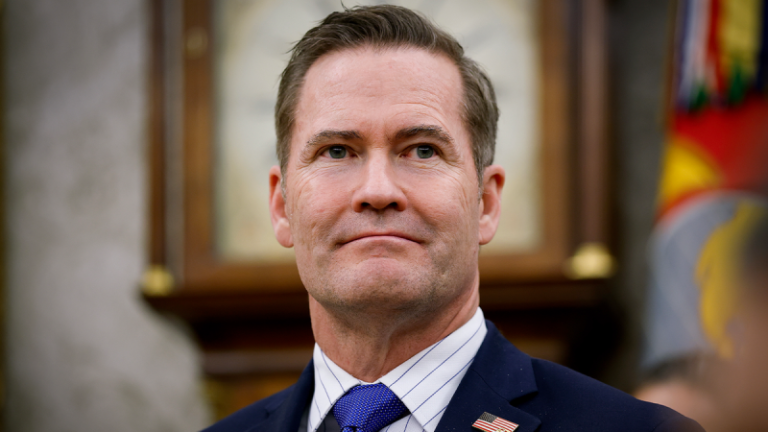
President Donald Trump tapped former national security advisor Mike Waltz for his administration’s ambassador to the United Nations after Waltz was ousted from the National Security Council office earlier Thursday. 

‘I am pleased to announce that I will be nominating Mike Waltz to be the next United States Ambassador to the United Nations,’ Trump posted to Truth Social on Thursday. 

‘From his time in uniform on the battlefield, in Congress and, as my National Security Advisor, Mike Waltz has worked hard to put our Nation’s Interests first. I know he will do the same in his new role. In the interim, Secretary of State Marco Rubio will serve as National Security Advisor, while continuing his strong leadership at the State Department. Together, we will continue to fight tirelessly to Make America, and the World, SAFE AGAIN. Thank you for your attention to this matter!’

Waltz posted to X shortly after Trump’s announcement that he was ‘deeply honored to continue my service to President Trump and our great nation.’

Trump added in his post that Rubio will simultaneously serve as his interim national security advisor after Waltz left the role on Thursday. In 1973, then-President Richard Nixon made a similar move when he named national security advisor Henry Kissinger to also serve as secretary of state, State Department records show. 

Waltz and other National Security Council staffers were ousted from their office on Thursday in the most high-profile executive office exits of the second Trump administration. Trump’s announcement on naming Waltz as U.N. ambassador unfolded just hours after the news began circulating. 

The former national security advisor had been at the heart of the Signal chat leak debacle that unfolded in March, when the editor-in-chief of The Atlantic magazine was inadvertently added to a group chat with high-profile Trump officials such as Waltz, Secretary of Defense Pete Hegseth and CIA Director John Ratcliffe discussing military strikes on Houthi rebels in Yemen.

Speculation had mounted for weeks that Waltz would be removed from his position amid the fallout of the chat leak, though the administration has maintained that no classified material was shared in the group chat and that the president had confidence in his National Security Council team. 

Ahead of Trump tapping Waltz for the new administration role, a handful of names had been floated for U.N. ambassador after Rep. Elise Stefanik, R-N.Y., withdrew her nomination in March, including David Friedman, former U.S. ambassador to Israel; Ellie Cohanim, former deputy special envoy to monitor and combat antisemitism at the State Department under the first Trump administration; and special presidential envoy Richard Grenell. Grenell said he was a ‘hard no’ on serving in the U.N. ambassador role ahead of Trump’s announcement. 

Trump announced Stefanik as his original choice for the role in November 2024, just days after his successful election against former Vice President Kamala Harris. The New York congresswoman, however, pulled her nomination last month as concerns mounted in Trump’s orbit that the GOP’s slim majority in the House would grow smaller in her absence. 

Concerns grew ahead of two special House elections in Florida on April 2, which ultimately saw both Republicans victorious, but with significantly slimmer margins than their GOP predecessors in their previous elections. 

Stefank told Fox News’ Sean Hannity in March that she bowed out of the confirmation process to serve as U.N. ambassador due to both the GOP’s margin in the House combined with the need for her to help combat Democratic ‘corruption’ in her home state of New York. 

‘It was a combination of the New York corruption that we’re seeing under Kathy Hochul, special elections and the House margin,’ Stefanik said on ‘Hannity’ in March. ‘I’ve been in the House. It’s tough to count these votes every day. And we are going to continue to defy the political prognosticators and deliver, deliver victory on behalf of President Trump and, importantly, the voters across this country.’

‘The president knows that. He and I had multiple conversations today, and we are committed to delivering results on behalf of the American people. And as always, I’m committed to delivering results on behalf of my constituents,’ she added. 

Trump announced on Truth Social that Stefanik withdrew her nomination to ‘remain in Congress to help me deliver Historic Tax Cuts, GREAT Jobs, Record Economic Growth, a Secure Border, Energy Dominance, Peace Through Strength.’

‘With a very tight Majority, I don’t want to take a chance on anyone else running for Elise’s seat. The people love Elise and, with her, we have nothing to worry about come Election Day. There are others that can do a good job at the United Nations,’ he added. 

During Trump’s first administration, former South Carolina Gov. Nikki Haley and former diplomat Kelly Craft served as U.N. ambassadors. 

Upon taking office, the 47th president made cuts to U.S. involvement with programs under the U.N.’s umbrella, including ending U.S. engagement with the U.N. Human Rights Council and banning funding for the U.N. relief agency for Gaza. 

‘I’ve always felt that the U.N. has tremendous potential,’ Trump said in February while signing the executive order that made cuts to U.S. involvement with U.N. groups. ‘It’s not being well-run.’

 ‘A lot of these conflicts that we’re working on should be settled, or at least we should have some help in settling them. But we never seem to get help. That should be the primary purpose of the U.N.,’ Trump continued. 

Fox News Digital’s Julia Johnson and Elizabeth Elkind contributed to this report. 

This post appeared first on FOX NEWS

The Department of Health and Human Services (HHS) implemented a pause on research at one of the nation’s most highly secure research labs, following repeated safety incidents that a source familiar told Fox News Digital have been occurring since the Biden administration.

An HHS official confirmed the pause at Fort Detrick’s Integrated Research Facility, which conducts risky research on deadly infectious diseases like SARS-COV-2 and the Ebola virus, began Tuesday at 5 p.m. 

The facility, which is one of only a handful across North America, is part of the National Institute of Allergy and Infectious Diseases (NIAID) and is located at the U.S. Army base Fort Detrick, outside Washington, D.C. The research there studies treatment and prevention of deadly, ‘high-consequence’ diseases such as Lassa Fever and Eastern equine encephalitis.

According to the HHS official who was willing to speak on the matter under the condition of anonymity, the pause stemmed from a lover’s spat between researchers at the facility, which resulted in one of the individuals poking holes in the other’s personal protective equipment (PPE). That individual has since been fired, the official indicated. 

The HHS official added that the incident is just the latest example of safety incidents at the high-risk laboratory, which they blamed on a poor safety culture at the lab enabled by the previous Biden administration.

‘NIH and HHS take the safety of our facilities and research very seriously,’ HHS spokesperson Andrew Nixon said. ‘As soon as we found out about this incident, we took immediate action to issue the safety pause until we can correct the safety culture at this facility.’

The latest incident, according to HHS, was preceded by a separate incident that occurred as recently as November.

The facility’s director, Connie Schmaljohn, was placed on administrative leave following the incident. The HHS official familiar with the matter indicated Schmaljohn did not report the incident up the chain of command immediately, causing a delay in remedying the matter.

During this temporary pause, all research at the facility will come to a halt and access will be limited to essential personnel. 

It is unclear how long the pause will remain in effect.   

This post appeared first on FOX NEWS

President Donald Trump late Thursday announced plans to designate May 8 as World War II ‘Victory Day’ in the United States, which coincides with the ‘Victory in Europe Day’ that has been celebrated in most of Europe since the Germans surrendered in 1945.

Trump acknowledged in a Truth Social that ‘many of our allies and friends’ already celebrate on May 8, but said America should join in because ‘we did more than any other Country, by far, in producing a victorious result.’

On May 7, 1945, the Germans surrendered to the Allied Forces, and agreed to cease all operations the next day. 

World War II officially ended later in the year on Sept. 2 when the Japanese signed an instrument of surrender, though Japan waved a white flag on Aug. 14 – about a week after the United States dropped atomic bombs on Hiroshima and Nagasaki.

The U.S. does not have any public holidays commemorating World War II specifically, but there have been remembrance ceremonies in May, August and September across the country for decades.

Former President Harry Truman, who was in office during the end of WWII, issued a proclamation in August 1946 declaring Aug. 14 as ‘Victory Over Japan Day.’

‘And I call upon the people of the United States to observe Victory Day as a day of solemn commemoration of the devotion of the men and women by whose sacrifices victory was achieved, and as a day of prayer and of high resolve that the cause of justice, freedom, peace, and international good-will shall be advanced with undiminished and unremitting efforts, inspired by the valor of our heroes of the Armed Services,’ Truman’s proclamation read, in part.

In the same post, Trump stated that Nov. 11 will also be recognized as World War I ‘Victory Day.’

‘We won both Wars, nobody was close to us in terms of strength, bravery, or military brilliance, but we never celebrate anything,’ the president wrote. ‘That’s because we don’t have leaders anymore, that know how to do so! We are going to start celebrating our victories again!’

This post appeared first on FOX NEWS

The Justice Department (DOJ) has filed lawsuits against four Democrat-led states: Hawaii, Michigan, New York and Vermont, over what it calls unconstitutional climate policies that threaten U.S. energy independence and national security.

The move follows President Donald Trump’s Executive Order 14260, Protecting American Energy from State Overreach, directing federal action against state laws that burden domestic energy development.

‘These burdensome and ideologically motivated laws and lawsuits threaten American energy independence and our country’s economic and national security,’ said Attorney General Pam Bondi.

‘The Department of Justice is working to ‘Unleash American Energy’ by stopping these illegitimate impediments to the production of affordable, reliable energy that Americans deserve.’

The DOJ filed complaints Tuesday against New York and Vermont over newly passed ‘climate superfund’ laws, which would impose strict liability on fossil fuel companies for alleged contributions to climate change.

New York’s law alone seeks $75 billion in damages from energy firms. According to the DOJ, these laws are preempted by the federal Clean Air Act, violate the Constitution, and infringe on federal foreign affairs powers.

‘These state laws assess penalties on businesses for global activities that Congress has not authorized states to regulate,’ the DOJ argued in its filings.

Separate lawsuits were filed Monday against Hawaii and Michigan to block those states from suing fossil fuel companies in state court over past climate harms. The DOJ argues that those states’ litigation would place unconstitutional burdens on energy producers.

‘When states seek to regulate energy beyond their constitutional or statutory authority, they harm the country’s ability to produce energy and they aid our adversaries,’ said Acting Assistant Attorney General Adam Gustafson.

This post appeared first on FOX NEWS

McDonald’s reported its worst quarterly sales for the United States since the height of the pandemic in 2020, the latest restaurant chain to be affected by America’s turbulent economic environment.

The burger giant reported U.S. same-store sales fell 3.6%, the largest three-month drop since Q2 2020, when they plunged 8.7%. Forecasts had been for a decline of just 1.7%.

‘Consumers today are grappling with uncertainty,’ McDonald’s Chairman and CEO Chris Kempczinski said in a statement, as the chain cited lower guest counts.

In a follow-up call with investors, McDonald’s executives said that traffic among middle-income diners fell by ‘nearly double digits’ alongside an ongoing drop-off among low-income ones. As an example, they said more people appear to be skipping breakfast entirely to cut back on spending, or eating breakfast at home.

‘People are just visiting less,’ they said.

High-income traffic, meanwhile, remained stable, they said.

That reflects the economy writ large: While less-well-off consumers rein in transactions to focus on essentials, wealthy consumers continue to spend freely.

McDonald’s is the latest restaurant chain to report weak financial results amid signs that consumers are pulling back on discretionary spending. Chipotle, Domino’s, Pizza Hut, Shake Shack and Starbucks all saw slowing or declining sales in their quarter, with many citing particular weakness among lower-income consumers.

McDonald’s also reported revenues that missed forecasts for the third time in four quarters.

The more volatile economic environment that’s been accelerated by President Donald Trump’s tariffs policies is also being felt abroad.

On the call, company officials said that while the McDonald’s brand hadn’t been affected by worsening perceptions of the U.S. by overseas consumers, its internal surveys had picked up a notable uptick in anti-American sentiment, particularly among diners in northern Europe and Canada.

‘We have seen … an increase in people in various markets saying they’re going to be cutting back on purchases of American brands,’ they said.

It nevertheless maintained its full-year financial outlook, including plans to open 2,200 locations, which it said should help boost sales growth by slightly more than 2%. It said a promotional tie-in with the ‘Minecraft Movie’ had been a hit, and that its refreshed value offerings continued to position it strongly compared with competitors.

Still, officials said on the call that they remained “cautious about consumer sentiment.”

Shares fell 1.6% in early trading.

This post appeared first on NBC NEWS

Pfizer CEO Albert Bourla on Tuesday said uncertainty around President Donald Trump’s planned pharmaceutical tariffs is deterring the company from further investing in U.S. manufacturing and research and development. 

Bourla’s remarks on the company’s first-quarter earnings call came in response to a question about what Pfizer wants to see from tariff negotiations that would push the company to increase investments in the U.S. It comes as drugmakers brace for Trump’s levies on pharmaceuticals imported into the country — his administration’s bid to boost domestic manufacturing.

“If I know that there will not be tariffs … then there are tremendous investments that can happen in this country, both in R&D and manufacturing,” Bourla said on the call, adding that the company is also hoping for “certainty.”

“In periods of uncertainty, everybody is controlling their cost as we are doing, and then is very frugal with their investment, as we are doing, so that we are prepared for remit. So that’s what I want to see,” Bourla said.

Bourla noted the tax environment, which had previously pushed manufacturing abroad, has “significantly changed now” with the establishment of a global minimum tax of around 15%. He said that shift hasn’t necessarily made the U.S. more attractive, saying “it’s not as good” to invest here without additional incentives or clarity around tariffs.

“Now [Trump] I’m sure — and I know because I talked to him — that he would like to see even a reduction in the current tax regime particularly for locally produced goods,” Bourla said, adding a further decrease would be would be a strong incentive for manufacturing in the U.S.

Unlike other companies grappling with evolving trade policy, Pfizer did not revise its full-year outlook on Tuesday. However, the company noted in its earnings release that the guidance “does not currently include any potential impact related to future tariffs and trade policy changes, which we are unable to predict at this time.”

But on the earnings call on Tuesday, Pfizer executives said the guidance does reflect $150 million in costs from Trump’s existing tariffs.

“Included in our guidance that we didn’t really speak about is there are some tariffs in place today,” Pfizer CFO Dave Denton said on the call.

“We are contemplating that within our guidance range and we continue to again trend to the top end of our guidance range even with those costs to be incurred this year,” he said.

This post appeared first on NBC NEWS

Shares of Tesla were flat in premarket trading Thursday after the EV maker denied a Wall Street Journal report that its board was searching for a replacement for chief executive Elon Musk.

The report, citing comments from sources familiar with the discussions, said that Tesla’s board members reached out to several executive search firms to work on a formal process for finding the company’s next CEO. Shares of Tesla fell as much as 3% in overnight trading on trading platform Robinhood following the news, before paring losses.

Tesla chair Robyn Denholm wrote on the social media platform X that the report was “absolutely false.”

“Earlier today, there was a media report erroneously claiming that the Tesla Board had contacted recruitment firms to initiate a CEO search at the company,” she wrote.

Elon Musk during a Cabinet meeting at the White House on Wednesday.Evan Vucci / AP

“This is absolutely false (and this was communicated to the media before the report was published). The CEO of Tesla is Elon Musk and the Board is highly confident in his ability to continue executing on the exciting growth plan ahead.”It comes after a sharp drop in the electric vehicle giant’s sales and profits, with its top and bottom lines missing estimates in the first quarter. Musk has admitted that his involvement with the Trump administration could be hurting the automaker’s stock price.

The mega-billionaire said on a Tesla earnings call last week that he plans to spend just a “day or two per week” running the so-called Department of Government Efficiency beginning in May.Tesla’s total revenue slipped 9% year-on-year to hit $19.34 billion in the January-March quarter. This falls short of the $21.11 billion forecast by analysts, LSEG data shows.

Revenue from its automotive segment declined 20% year-on-year to $14 billion, as the company needed to update lines at its four vehicle factories to start making a refreshed version of its popular Model Y SUV. Tesla also attributed the decline to lower average selling prices and sales incentives as a drag on revenue and profit.

Its net income plunged 71% to $409 million, or 12 cents a share, from $1.39 billion or 41 cents a year ago.

Since the start of the year, its shares have plunged over 30%.

This post appeared first on NBC NEWS

Tech is saving Hollywood — though not in the way you might think.

Back in 2022, e-commerce giant and relative upstart movie studio Amazon promised to spend around $1 billion each year on theatrical releases, a figure that would fund between 12 and 15 films annually. Today, it appears ready to deliver.

Earlier this month, the company, which operates the streaming platform Prime Video and recently acquired MGM studios, took the stage at CinemaCon in Las Vegas to tout its line-up of movies made just for the big screen.

Amazon’s inaugural presentation at the annual convention of Cinema United — previously known as the National Association of Theatre Owners — wowed exhibitors, marketers and media in attendance with flashy trailers and first-look footage from upcoming films like “Project Hail Mary,” “After the Hunt” and “Verity.”

It also brought some star power with the likes of Ryan Gosling, Andrew Garfield, Julia Roberts, Chris Pratt, Chris Hemsworth, Hugh Jackman and Michael B. Jordan set to headline these cinematic releases.

“I thought the presentation was incredible,” said Brock Bagby, president and chief content, programming and development officer at B&B Theatres. “For their first year out, they pulled out all the stops.”

While the studio won’t have a full slate of more than a dozen films until 2026, it has steadily invested in theatrical content over the last few years. Amazon had one wide release, a film that played in more than 2,000 theaters, in 2023 and five in 2024. This year Amazon has only four wide releases on the calendar so far, but the company is slated to have 14 in 2026 and 16 in 2027.

This surge of theatrical content is just what the domestic box office needs. While blockbuster franchise films have been abundant in the wake of the pandemic, the overall number of wide releases has shrunk over the last decade. Even before Covid and dual Hollywood labor strikes slowed production down, Hollywood was making fewer and fewer movies each year, according to data from Comscore. 

Mid-budget movies — often in the drama, comedy and romantic comedy genres — began disappearing in the mid-2010s as studios sought to invest in bigger budget franchise flicks that could result in higher profits. The comparatively lower-budget films have since been predominantly redirected to streaming platforms in an effort to stock these services with more affordable content. 

Analysts project that the domestic box office has lost around $1 billion each year in total ticket sales as a result of that shift.

At the same time that studios were altering their film slates, movie houses were merging. The most recent union between the Walt Disney Company and 20th Century Fox, first announced in 2017 and finalized in early 2019, resulted in the loss of between 10 and 15 film releases annually, according to data from Comscore.

In 2015, 20th Century Fox released 17 films. After its acquisition, the pandemic and the strikes, it has released fewer than a half dozen titles each year.

“With consolidation in the past of some of the studios, the output numbers have decreased over the past few years, and with fewer releases there is less potential for box office and concession sales,” said Paul Dergarabedian, senior media analyst at Comscore. “More importantly movie theaters need new films to draw customers into their auditoriums.”

Amazon’s commitment to theatrical, alongside the emergence of smaller studios like Neon and A24, should help to close the gap left by 20th Century Fox’s acquisition.

“They’ve filled the gap that we’re missing from Fox, which is so exciting, and it looks like a similar slate to Fox, where there’s a few big titles, but a lot of that mid-range,” Bagby said.

What industry experts have discovered is that the strength of the box office doesn’t just rely on the success of franchise films — superhero flicks, big-budget action fare and the like — but also on the sheer volume and diversity of content.

There is a direct correlation between the number of theatrical releases and the strength of the overall box office. During the pandemic, the decline in box office ticket sales largely tracked nearly in lock step with the percentage decline in film releases.

“The number of movies being released continues to trend in the right direction,” said Michael O’Leary, CEO of Cinema United. “When considering wide releases at 2,000 or more locations, we saw 94 last year, but we expect at least 110 in 2025. Beyond that, distributors have secured release dates as far out as 2028 for movies with plenty of commercial potential.”

This post appeared first on NBC NEWS

The world’s smallest elephants are still big. Measuring around nine feet (2.7 meters) tall, Bornean elephants are the smallest subspecies of the Asian elephant, and are two feet (60 centimeters) shorter than their African counterparts.

Found only on the island of Borneo, mostly in the Malaysian state of Sabah, there are fewer than 1,000 Bornean elephants left in the wild, and they are classified as endangered.

In the last 40 years, Sabah has lost 60% of the elephant’s natural forest habitat to logging and palm oil plantations. According to one study, between 1980 and 2000, more wood was exported from Borneo than from the entirety of Africa and the Amazon combined. This has left elephant populations fragmented and squeezed into small areas of preserved forest, such as those in the Kinabatangan Wildlife Sanctuary, an area in the floodplains of the Kinabatangan River where pockets of native forest exist within large agricultural estates.

But Malaysian elephant ecologist Dr. Farina Othman is determined to connect these habitats by building corridors of wild trees through palm oil plantations. She founded conservation organization Seratu Aatai, meaning “solidarity,” in 2018 to raise awareness of the elephants and address the rise in human-elephant conflict.

Due to encroaching plantations, the elephants have come into more frequent contact with humans, sometimes damaging crops and buildings. This leads to conflict, and between 2010 and 2020, 131 Bornean elephants were killed, primarily due to human-related causes, such as accidental poisoning or retribution killings. Othman said that while many people understand the importance of elephants as ecosystem engineers through spreading seeds, and know that they are under threat, there is still a “not in my backyard” attitude towards them.

On Wednesday, she was one of six conservationists given the 2025 Whitley Award, which includes a £50,000 ($66,000) prize for her project. The award, presented by the Whitley Fund for Nature, a UK charity, supports grassroots conservationists in the Global South.

Othman will put the new funding towards expanding the network of elephant corridors across Sabah. “If only one plantation wants to do this, it won’t work. We need to create a consortium of several plantations so that we can connect this corridor back to the wildlife sanctuary,” she said.

Coexistence

The first challenge was getting the farmers on side. For a long time, Othman said she was unable to get palm planters in the same room with her, but eventually, they found common ground.

“As planters, they actually know the need of preserving biodiversity and also the health of the soil, because this is all contributing back to the trees that they’re planting,” she said.

She added that some farmers have now agreed to plant native trees alongside their oil palms, as well as “food chests” of plants that elephants like to eat, to encourage them to use the wildlife corridors.

Othman and her team are now working with plantations to monitor the elephants to better understand their behavior. This will include training planters on how to assess herd dynamics and recognize individual elephants. Larger plantations will also be offered sessions on sustainable farming and pest control, hopefully helping to reduce the number of accidental poisonings.

She has also set up a team of elephant rangers, with members of the local community, who will monitor populations and help to ensure palm planters know how to interact with elephants safely.

Edward Whitley, founder of the Whitley Fund for Nature, said of Othman: “Her innovative project recognizes the key role that oil palm companies can play in (elephant) conservation, and her connection to and love of these beautiful giants has helped empower community members to become guardians of their environment.”

Othman worries that with the rise of human-elephant interaction, the nature of the elephants might change, from docile to more aggressive. But she hopes that through their work to build forest corridors and community outreach, this can be avoided. When an encounter does happen, she says people should act calmly and kindly, and that the elephants will respond in the same way.

She recalls times when elephants could have hurt her in the past, but didn’t. “I believe that they can really read your heart and what is in your mind,” she said.

This post appeared first on cnn.com
The man vying to become Australia’s next prime minister has spent weeks trying to distance himself from comparisons to US President Donald Trump.

“I’m my own person,” opposition Liberal Party leader Peter Dutton insisted, when asked for his thoughts on “Temu Trump,” the label given to him by critics referring to the Chinese website with a reputation for cheap copies.

Political analysts say comparisons to Trump have eaten away at any lead Dutton had over incumbent center-left Labor Prime Minister Anthony Albanese, who is topping opinion polls before Saturday’s vote.

Ex-police officer Dutton became opposition leader after the center-right Liberal Party was swept from power three years ago, bringing with him a reputation as the uncompromising strongman of the party’s right wing – a former minister for defense, home affairs and immigration.

He’s been accused of stoking culture wars, claims Australia takes in too many migrants, and days ago branded the nation’s public broadcaster “hate media.”

“His instincts are those of a right-wing populist. I have no doubt about that, so they do bear resemblance to the kind of politics and rhetoric we’ve associated with Trump,” said Frank Bongiorno, professor of history at the Australian National University.

The Trumpian strategy appears to have been encouraged by senior party members and Australia’s richest woman, mining magnate Gina Rinehart, who attended the US president’s inauguration and backs his “drill baby drill” mantra, according to reports from 2024.

But what sounded like a vote winner backfired when the US president announced global tariffs, turning a prospective Trump bump into a Trump slump – something Canada’s conservatives also experienced this week when they failed to win the national election.

Dutton also faces the potential ignominy of losing his own seat in parliament, as happened to Canadian Conservative Party leader Pierre Poilievre. Dutton holds Dickson, a constituency in the outer suburbs of Brisbane, by just 1.7% – and rivals are circling.

Australia is seeing “a diluted version” of the Canada trend, according to Marija Taflaga, director of the Center for the Study of Australian Politics at the Australian National University.

“Trump has essentially created a rally around the flag effect,” she said. “In liberal democracies like Australia and Canada, (he’s) flipped the incumbent from being in a disadvantaged position… into an advantageous position,” she added.

“Better the devil you know.”

‘The election pivoted’

The most blatant grab for Trump supporters comes from mining billionaire Clive Palmer, of Titanic II fame, who launched Trump-inspired party the Trumpet of Patriots, vowing to “end the two-party duopoly and make Australia great.”

For the most part, Australian elections are a competition between Dutton’s Liberal Party and Albanese’s Labor Party. Compulsory voting and a preference system that redistributes votes cast for candidates that fall out of the race mean both parties focus on securing the maximum middle ground.

The main issue this election has been the cost-of-living crisis, and both major parties have promised to help lower household bills with an array of tax cuts and handouts.

In a program redolent of Trump’s early moves since returning to the White House, Dutton promised 41,000 federal job cuts, an end to work-from-home privileges and an overhaul of “woke” school agendas – some of which he’s had to roll back.

He also appointed a shadow minister for government efficiency, who told a recent rally the Liberal Party would “make Australia great again” – a comment that she later said she didn’t realize she’d made.

As recently as January, the Liberal leader was on a path to victory, according to Simon Jackman, an honorary professor at the University of Sydney and former chief executive officer of its US Studies Centre.

“Then along comes Donald Trump… and the election just pivoted,” Jackman said.

Australians take an avid interest in US politics, so they were watching when the big US pharmaceutical companies complained that the Australian government’s subsidy program was undervaluing US medicines; as US trade advisor Peter Navarro warned that Australian aluminum exports were “killing” America’s aluminum market; and when Democrat Sen. Mark Warner demanded to know why Australia, “an incredibly important national security partner,” had been “whacked” with 10% tariffs.

But it was the post-tariff selling on international markets that really caught their attention, and older voters watched in horror as their retirement savings tracked south, Jackman said.

“The narrative flipped from being sort of looking backwards at Labor’s economic performance to looking forward and (saying), ‘Oh my goodness, the world is very different and dangerous and insecure, and our closest ally and strategic partner is saying all these horrible things about us. I thought the Americans liked us. What’s going on?’” said Jackman.

The Trump backlash presented an issue for Dutton. So, in mid-April, when asked by the moderator during a leaders’ debate if he trusted the US president, he seemed keen to put some distance between them. “I don’t know Donald Trump; I’ve never met him,” he said.

Easing off the China threat

During the last election in 2022, China was seen as the bigger issue.

Relations had suffered under the previous Liberal Party leader Scott Morrison, who led a Coalition government with the National Party and suggested China be investigated for its role in the spread of the Covid pandemic. In response, China slapped tariffs on key Australian exports. While Labor touted its desire to improve relations, the Liberal Party talked up China’s military threat and subsequently lost the votes of Chinese-Australians.

So, this election, despite the unprecedented circumnavigation by Chinese warships of Australia in February and March – complete with unannounced live-fire drills – discussion of China’s threat to Australia’s national security has been relatively subdued.

“Funnily enough, Trump is probably seen as a bigger threat to the global order than China,” said Jackman.

The US president’s unpredictability, transactional approach to foreign affairs, and readiness to rip up past agreements has focused attention on whether Australia can trust the US under Trump.

Critics of AUKUS, Australia’s key security deal with the US and United Kingdom, have cited the president’s recent behavior as proof that it’s too dangerous to outsource the country’s national security.

“Donald Trump is a dangerous demagogue and is a threat to peace, a threat to democracy, and is also a threat to Australia,” said Adam Bandt, leader of the Greens, Australia’s third-largest party, which is pushing for more housing, support for renters and stronger climate action.

Both Albanese and Dutton signed up to AUKUS and have defended the defense agreement.

A possible minority government

While polling suggests Albanese will win the election, it’s unclear if he’ll gain enough votes for a majority government, and analysts say it’s possible he’ll have to form a minority government with smaller parties or independents.

This year, for the first time, Millennial and Gen Z voters will outnumber older demographics, and they’re expected to cast a more progressive, anti-establishment vote that could cost Labor seats.

“Young renters who earn more than their parents but cannot afford to buy the house they grew up in have little reason to preserve the existing political order and appear happy to roll the dice on a minority government,” Shaun Ratcliff, a political scientist from research firm Accent Research, told the National Press Club last week.

Bongiorno from the Australian National University says that, if Dutton loses, he can’t blame the loss entirely on Trump. The Liberal campaign was ill-prepared and relied on voters being angry enough with Labor to want change, he said.

“It hasn’t been a disastrous government, and I think it was probably a mistake for the Coalition to imagine that it could simply wait around and watch it fall over,” Bongiorno said.

As for Dutton’s challenge in Dickson, the seat he’s held for more than 20 years, Bongiorno said the demographics of the area seem to be changing, and that may steer votes towards Labor’s Ali France or progressive independent Ellie Smith. “I suspect he’ll hold on,” Bongiorno said.

The last of 18 million registered voters are expected to go to the polls on Saturday after a record turnout at early-voting centers.

Jackman said he didn’t get the feeling that people were voting with “gusto” to remove the government, as they did three years ago to oust Morrison.

“Sometimes it signals, ‘Oh, I can’t wait to get rid of this government,’” Jackman said. “I don’t get that same vibe this time,” he added. “I suspect it’s more just people want to get it over with.”

“We knew Trump mark two was going to be different,” he said. “I don’t think anybody counted on just how different.”

This post appeared first on cnn.com