Author

admin

Browsing

Ukrainian Foreign Minister Andrii Sybiha is urging NATO leaders to invite Ukraine to join the Western military alliance during a meeting in Brussels next week, according to a letter sent to alliance leaders—reflecting the country’s frenzied push to gain membership in the alliance in the final days of Biden’s presidency. 

The letter, first reviewed by Reuters, comes as Ukraine has re-upped its request for NATO membership to help put an end to Russia’s war, including a recent uptick in attacks on its energy infrastructure. It also comes as the Biden administration has granted Ukraine new permissions to fight back against Russia in their final months in office. 

In the letter, Ukraine’s foreign minister acknowledged his country’s ongoing war with Russia prohibits Kyiv from joining NATO right now. But he argued that an invitation for membership in Brussels would be a powerful show of force—and a major symbolic blow—to Russian President Vladimir Putin, who has long opposed the idea of their membership in NATO.

‘We believe that the invitation should be extended at this stage,’ Sybiha said in the letter. ‘It will become the Allies’ adequate response to Russia’s constant escalation of the war it has unleashed, the latest demonstration of which is the involvement of tens of thousands of North Korean troops and the use of Ukraine as a testing ground for new weapons,’ he added.

Also on Friday, Ukrainian President Volodymyr Zelenskyy used an interview on Sky News to up the public pressure for NATO leaders to extend his country a membership offer.

Speaking Friday to Sky News’s Stuart Ramsay, the Ukrainian president suggested that NATO could extend membership to the territory of Ukraine still under its control to help accelerate the NATO memberhsip process and wind down Russia’s war as quickly as possible.

‘If we want to stop the hot phase of the war, we need to take under the NATO umbrella the territory of Ukraine that we have under our control,’ he told Ramsay. NATO should ‘immediately’ cover parts of the country that are under Ukrainian authority, he said, stressing that it it something Ukraine needs ‘very much otherwise he will come back,’ in apparent reference to Russian President Vladimir Putin.


Ukraine would face many hurdles in attempting to join NATO, despite assurances from the alliance that it is on an ‘irreversible path’ to membership.

That’s because Ukraine lacks two key requirements for NATO membership: territorial integrity and the absence of ongoing conflict. Currently, Russia controls roughly 20% of Ukrainian territory, Rebekah Koffler, a strategic military intelligence analyst and author of ‘Putin’s Playbook,’ told Fox News Digital in an interview Friday. 

Any country hoping to gain membership ‘cannot have ongoing conflict because of Article 5,’ Koffler said. 

For Russia,’it is a red line for Ukraine to be part of NATO,’ Koffler added, since Russian President Vladimir Putin considers Ukraine part of Russia’s strategic security perimeter.

NATO members are also split over the idea of accepting Ukraine. ‘Those who are against it are concerned about Article 5 obligations: admitting Ukraine into NATO would automatically place the United States and the entire NATO alliance at war with Russia because of the collective defense clause,’ Koffler said.

The State Department said Friday that U.S. Secretary of State Antony Blinken had spoken by phone to Ukrainian Foreign Minister Sybiha to discuss battlefield updates and incoming U.S. security assistance in wake of recent Russian attacks on Ukraine’s energy infrastructure. On the call, officials said, Blinken ‘briefed the Foreign Minister on U.S. goals for sustainable support for Ukraine, to be discussed at upcoming diplomatic engagements with NATO and through the Ukraine Defense Contact Group.’

The press release stopped short of detailing any further overtures to Ukraine.

Still, Ukraine’s push for membership comes as Ukrainian President Volodymyr Zelenskyy and his administration brace for the many unknowns of a second Trump presidency. Trump has long expressed skepticism of NATO, and suggested as recently as this year that he could end the war between Russian and Ukraine ‘in a day.’  

While Ukraine’s push for NATO membership is not new, the timeline for leaders to approve their bid has taken on new urgency, as the war nears its third year and as President-elect Trump prepares to take office again.

NATO membership was included as one of the first— and most important—steps in Zelenskyy’s multi-part ‘victory plan’ to help win the war against Russia.

The outline, which his administration published in October, suggested that Ukraine could put an end to the war with Russia as early as 2025, if the country’s requests are granted for more weapons and the continued ability to carry out military operations on Russian soil. 

Any country hoping to gain membership ‘cannot have ongoing conflict because of Article 5,’ Koffler said. 

For Russia,’it is a red line for Ukraine to be part of NATO,’ Koffler added, since Russian President Vladimir Putin considers Ukraine part of Russia’s strategic security perimeter.

President Joe Biden, for his part, has used his final weeks in office to authorize new permissions for Ukraine in the ongoing war with Ukraine.

Earlier this month, the Biden administration granted Ukraine new permission to use U.S.-supplied long-range weapons to strike targets inside Russian teritory. Later, they also signed off on the transfer of anti-personnel mines to bolster Ukrainian army defenses in the east. 
This post appeared first on FOX NEWS

This story discusses suicide. If you or someone you know is having thoughts of suicide, please contact the Suicide & Crisis Lifeline at 988 or 1-800-273-TALK (8255).

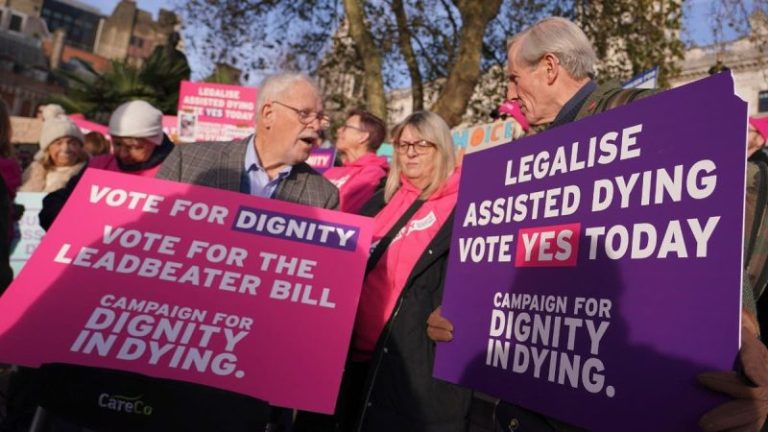
England and Wales edged closer to legalizing assisted dying after lawmakers approved a contentious bill in the House of Commons on Friday to allow terminally ill adults to end their lives.

Lawmakers voted 330 to 275 in Britain’s lower house for the assisted dying bill, which will now be sent on to further scrutiny in Parliament before it faces a final vote by lawmakers.

The proposed bill would allow people over 18 with less than six months to live to request and be provided with help to end their lives, subject to safeguards and protections.

The vote came after hours of emotional debate that saw personal stories of loss and suffering shared. The sensitive discussion touched on issues of ethics, grief, the law, faith, crime and money and drew large crowds outside parliament as the debate went on. 

Although hugely controversial, a majority of Britons support the principle of assisted dying, according to several polls. 

Euthanasia or assisted dying has been decriminalized in European countries like Belgium, Luxembourg, Germany, Spain, Austria, and Portugal, according to Euro News. Switzerland was the first country in the world to permit any kind of assisted dying, with the practice being legal since 1941.

It’s also legal in 10 U.S. states: Washington, D.C. and the states of California, Colorado, Oregon, Vermont, New Mexico, Maine, New Jersey, Hawaii and Washington.

Supporters said the law would provide dignity to the dying and prevent unnecessary suffering, while ensuring there are enough safeguards to prevent those near the end of their lives from being coerced into taking their own life.

Opponents, including faith leaders, said it would put vulnerable people at risk of being coerced, directly or indirectly, to end their lives so they don’t become a burden.

Under the proposals, two doctors and a High Court judge would need to verify that the person had made the decision voluntarily. Pressuring or coercing someone into ending their life would be punishable by up to 14 years in prison.

‘Let’s be clear, we’re not talking about a choice between life or death, we are talking about giving dying people a choice about how to die,’ the bill’s main sponsor, Kim Leadbeater, said as she presented the bill to a packed chamber.

She said it could take another six months before a second vote takes place.

‘I will take evidence, written evidence, oral evidence, we’ll get a very thorough, robust bill committee there to scrutinize the bill and make it the best that it possibly can be,’ she told reporters after the vote on Friday. ‘It’ll be a long process… And then, as I said in my speech, there’s a two-year implementation period, so there’s plenty of time to get this right.’

Assessments on how assisted dying will be funded and how it will impact the U.K.’s state-funded public health service, hospice care and the legal system will also have to be considered.

Conservative lawmaker Danny Kruger said he fears that the bill has lots of loopholes and that the safeguards ‘aren’t very strong.’

‘We now have months of further debate and I am hopeful that colleagues who have expressed concerns will either succeed in strengthening the bill to make it safe or they’ll conclude they haven’t been able to do that and then we can defeat it at the later stage, at third reading,’ he said.

U.K. Prime Minister Sir Keir Starmer voted in favor of the bill. He said last month that he was ‘very pleased’ that such a vote was taking place and said his government would remain neutral on the subject and that his MPs would be given a free vote, rather than having to follow a party line, per the BBC.

Others in his Cabinet, including Health Secretary Wes Streeting and the Justice Minister Shabana Mahmood, voted against it. There were similar divisions across other political parties.

Nigel Farage, the leader of Reform UK, said he voted against the measure. 

‘I voted against the assisted dying bill, not out of a lack of compassion but because I fear that the law will widen in scope,’ Farage wrote on X. ‘If that happens, the right to die may become the obligation to die.’

The Associated Press and Reuters contributed to this report. 

This post appeared first on FOX NEWS

– President-elect Donald Trump announced Karoline Leavitt will return to the White House next year as his press secretary, making the 27-year-old the youngest White House press secretary in U.S. history and notching another massive career benchmark. 

Leavitt has been a fierce defender of Trump throughout his hard-fought campaign against Vice President Kamala Harris, which included Democrats and the Harris campaign lobbing attacks at Trump that he is a ‘fascist’ and on par with Nazi Germany dictator Adolf Hitler, two assassination attempts and crisscrossing the nation to rally support for the former president. 

‘Karoline Leavitt did a phenomenal job as the National Press Secretary on my Historic Campaign, and I am pleased to announce she will serve as White House Press Secretary,’ Trump said in a statement announcing Leavitt as his press secretary this month. 

‘Karoline is smart, tough, and has proven to be a highly effective communicator. I have the utmost confidence she will excel at the podium, and help deliver our message to the American People as we, Make America Great Again.’

Ahead of her appointment as the youngest press secretary in the nation’s history – unseating President Richard Nixon’s press secretary Ron Ziegler, who was 29 when he took the same position in 1969 – Leavitt had long been in Trump’s orbit and also made her own political mark with a congressional run in 2022. 

Leavitt served in Trump’s first administration as assistant press secretary before working as New York Rep. Elise Stefanik’s communications director following the 2020 election. Leavitt launched a congressional campaign in her home state of New Hampshire during the 2022 cycle, winning her primary, but losing the election to a Democrat. 

During her time on the campaign trail for Trump this cycle, Leavitt sparred with liberal media outlets about Trump’s candidacy, fielded media inquiries about the 45th president’s policies and vision for the U.S., served as one of Trump’s top defenders amid legal battles and political landmines lobbed by both the Biden and Harris campaign, and maneuvered an unprecedented campaign cycle that saw President Biden drop out of the running in July amid heightened concerns over his mental acuity and age. 

She was among the dozens of Republican elected officials and Trump supporters who joined Trump in Manhattan court over the spring as he faced trial over 34 counts of falsifying business records, which Trump repeatedly slammed as a ‘sham’ case. She also reported that with the job as the campaign’s national press secretary, she became accustomed to Trump’s ‘sleep schedule’ – which has famously only consisted of roughly four or five hours of rest before getting to work – and joined him at rallies across the nation and at the campaign’s headquarters in Florida. 

Leavitt currently serves as the Trump-Vance transition spokeswoman ahead of Jan. 20, when Trump will be sworn in as president. 

Leavitt made national headlines in June, before Biden dropped out of the race, when CNN’s Kasie Hunt cut her microphone off as she argued on air that CNN hosts Jake Tapper and Dana Bash would be politically biased against Trump while moderating a debate between Biden and the now president-elect. Biden ultimately performed terribly during the debate, which opened the floodgates to traditional Democrat allies calling on him to drop out of the presidential race and pass the torch to a younger generation. 

‘That’s why President Trump is knowingly going into a hostile environment on this very network, on CNN, with debate moderators who have made their opinions about him very well known over the past eight years. And their biased coverage of him,’ Leavitt said to Hunt during the interview previewing the debate. 

‘So I‘ll just say my colleagues, Jake Tapper and Dana Bash, have acquitted themselves as professionals as they have covered campaigns and interviewed candidates from all sides of the aisle. I‘ll also say that if you talk to analysts of previous debates, that if you’re attacking the moderators, you’re usually losing,’ Hunt responded.

As Hunt tried to redirect the interview back to previewing the debate, Leavitt said it would take just a few minutes to pull up examples of Tapper’s anti-Trump rhetoric across the years. 

‘Ma’am, I’m going to stop this interview if you’re going to continue to attack my colleagues,’ Hunt said, before Leavitt continued that she was ‘stating facts’ about what CNN hosts had previously said about Trump. 

‘I’m sorry, guys, we’re going to come back out to the panel,’ Hunt said. ‘Karoline, thank you very much for your time. You are welcome to come back at any point. She is welcome to come back and speak about Donald Trump, and Donald Trump will have equal time to Joe Biden when they both join us later this week in Atlanta for this debate.’

Following the mic getting cut, Leavitt told Fox News Digital at the time that, ‘CNN cutting off my microphone for bringing up a debate moderator’s history of anti-Trump lies just proves our point that President Trump will not be treated fairly in Thursday’s debate. Yet President Trump is still willing to go into this 3-1 fight to bring his winning message to the American people, and he will win.’

As Leavitt juggled the media, she also spent the first six months in her role as Trump campaign national press secretary while pregnant with her first child. Ahead of Mother’s Day this year, Leavitt touted the importance women and mothers have within the Trump orbit and celebrating that in July, she would welcome her own baby. 

‘Joe Biden can’t even define what a ‘woman’ is, and his Administration disrespectfully refers to mothers as ‘birthing people.’ Joe Biden has left working moms and families behind by creating the worst inflation crisis in decades, welcoming millions of illegal immigrants into our country to commit crimes, and allowing violent protests to erupt on college campuses,’ Leavitt exclusively told Fox News Digital in May. 

The campaign touted that it employed dozens of moms during the election cycle, including Leavitt and recently-announced White House Chief of Staff Susie Wiles. He has also hired hundreds of working moms since 2016, including high-profile names such as Kellyanne Conway, Sarah Huckabee Sanders and Kayleigh McEnany. RNC and Trump campaign senior adviser Danielle Alvarez and Trump legal spokeswoman Alina Habba are also both mothers of young kids. 

‘We have a really welcoming environment for children at the office, the headquarters in West Palm Beach,’ Leavitt told the Conservateur in October. ‘You know, we joke that on Saturdays, it’s bring-your-kid-to-work day.’

Months following the article touting the women and moms on the campaign, Democrats came under fire in October after Harris campaign surrogate Mark Cuban said ‘you never see [Trump] around strong, intelligent women.’

‘This is extremely insulting to the thousands of women who work for President Trump, and the tens of millions of women who are voting for him,’ Leavitt shot back at Cuban. ‘These women are mothers, entrepreneurs, and industry leaders, and they are, indeed, strong and intelligent, despite what Mark Cuban and Kamala Harris say.’ 

Leavitt gave birth to her son in July and had planned to take maternity leave before a would-be assassin opened fire on Trump and his supporters at a rally in Butler, Pennsylvania, just days ahead of the Republican National Convention in Milwaukee. Trump was injured on the side of his head, while two other rally-goers were also injured, and local dad and Trump supporter Corey Comperatore was fatally shot. 

Leavitt said the assassination attempt sparked her to jump back into the campaign just days after giving birth. 

‘I had just brought my newborn, my three-day-old baby home from the hospital. And I said, ‘I’m going to turn on the television and watch the rally today,’’ Leavitt recounted to the Conservateur of watching the tragic and shocking rally on July 13. 

‘I looked at my husband and said, ‘Looks like I’m going back to work.’’

She also recounted that following the birth of her son, she received a call from Trump congratulating her before having her chat with former first lady Melania Trump.

‘It was incredibly warm and kind,’ she said of Trump’s call. ‘He wanted to check in. He asked me how I was doing.’ Trump then passed the phone to his wife, the Conservateur reported. 

‘Mrs. Trump and I talked about how wonderful it is to be a mother to a boy. They spoke about their love for Barron, and the president cracked a joke: ‘We have a little boy, but he’s not so little now!’’ she said. 

Leavitt predicted Trump would notch a win this cycle, repeatedly pointing to his message of unity and uplifting Americans of all races and creeds, his vow to secure the border and strengthen the economy following spiraling inflation under the Biden-Harris administration. 

Trump was declared the victor in the race late into the evening on Election Day, after sweeping battlegrounds such as Pennsylvania, North Carolina and Georgia. He ultimately secured 312 electoral votes and locked down the popular vote. 

Leavitt celebrated the win as the ‘Greatest political comeback in HISTORY!’ where Trump ‘defeated the big tech oligarchs who tried to silence him, the weaponized system of justice against him, and the fake news that has lied about him and his supporters for years.’

Just over a week after his win at the ballot boxes, Trump named Leavitt as his White House press secretary pick. 

‘Thank you, President Trump, for believing in me. I am humbled and honored,’ she posted to her X account following the announcement.  

‘Let’s MAGA!’

This post appeared first on FOX NEWS

The U.S. Federal Trade Commission has opened a broad antitrust investigation into Microsoft, including of its software licensing and cloud computing businesses, a source familiar with the matter told Reuters Wednesday.

A source confirmed the investigation to NBC News.

The investigation was approved by FTC Chair Lina Khan ahead of her likely departure in January. The election of Donald Trump as U.S. president, and the expectation he will appoint a fellow Republican with a softer approach toward business, leaves the outcome of the investigation up in the air.

The FTC is examining allegations the software giant is potentially abusing its market power in productivity software by imposing punitive licensing terms to prevent customers from moving their data from its Azure cloud service to other competitive platforms, sources confirmed earlier this month.

The FTC is also looking at practices related to cybersecurity and artificial intelligence products, the source said on Wednesday.

Microsoft declined to comment on Wednesday.

Competitors have criticized Microsoft’s practices they say keep customers locked into its cloud offering, Azure. The FTC fielded such complaints last year as it examined the cloud computing market.

NetChoice, a lobbying group that represents online companies including Amazon and Google, which compete with Microsoft in cloud computing, criticized Microsoft’s licensing policies, and its integration of AI tools into its Office and Outlook.

“Given that Microsoft is the world’s largest software company, dominating in productivity and operating systems software, the scale and consequences of its licensing decisions are extraordinary,” the group said.

Google in September complained to the European Commission about Microsoft’s practices, saying it made customers pay a 400% mark-up to keep running Windows Server on rival cloud computing operators, and gave them later and more limited security updates.

The FTC has demanded a broad range of detailed information from Microsoft, Bloomberg reported earlier on Wednesday.

The agency had already claimed jurisdiction over probes into Microsoft and OpenAI over competition in artificial intelligence, and started looking into Microsoft’s $650 million deal with AI startup Inflection AI.

Microsoft has been somewhat of an exception to U.S. antitrust regulators’ recent campaign against allegedly anticompetitive practices at Big Tech companies.

Facebook owner Meta Platforms, Apple and Amazon.com Inc. have all been accused by the U.S. of unlawfully maintaining monopolies.

Alphabet’s Google is facing two lawsuits, including one where a judge found it unlawfully thwarted competition among online search engines.

Microsoft CEO Satya Nadella testified at Google’s trial, saying the search giant was using exclusive deals with publishers to lock up content used to train artificial intelligence.

It is unclear whether Trump will ease up on Big Tech, whose first administration launched several Big Tech probes. JD Vance, the incoming vice president, has expressed concern about the power the companies wield over public discourse.

Still, Microsoft has benefited from Trump policies in the past.

In 2019, the Pentagon awarded it a $10 billion cloud computing contract that Amazon had widely been expected to win. Amazon later alleged that Trump exerted improper pressure on military officials to steer the contract away from its Amazon Web Services unit.

This post appeared first on NBC NEWS

At least 15 people have died and 113 others are still missing after landslides buried homes in six villages in eastern Uganda, police said.

Another 15 injured people have been rescued and admitted to Buluganya Health Center.

The Uganda Red Cross Society said Thursday that 13 bodies had been recovered after landslides buried 40 homes and the rescue effort was continuing.

Local media reported that authorities expect the death toll could rise to 30.

The landslides happened after heavy rains on Wednesday night in the mountainous district of Bulambuli, where landslides are common. The district is about 280 kilometers (173miles) east of the capital, Kampala.

A journalist in the area told The Associated Press that local officials said an excavator would be brought to assist in the rescue efforts, but the roads were covered in mud and the rain was still falling.

The affected area is about 50 acres (20ha) with homesteads and farmlands spread downhill.

Photos and videos of people digging through mud in search of victims were shared on social media platforms. Some of the houses were completed covered by mud while others only had a roof showing above the ground.

The Daily Monitor newspaper reported that most of the bodies recovered so far were those of children.

The prime minister’s office issued a disaster alert on Wednesday stating that heavy rains across the country had cut off major roads.

Two rescue boats capsized on Wednesday during a rescue mission on River Nile where Pakwach bridge was submerged.

This post appeared first on cnn.com

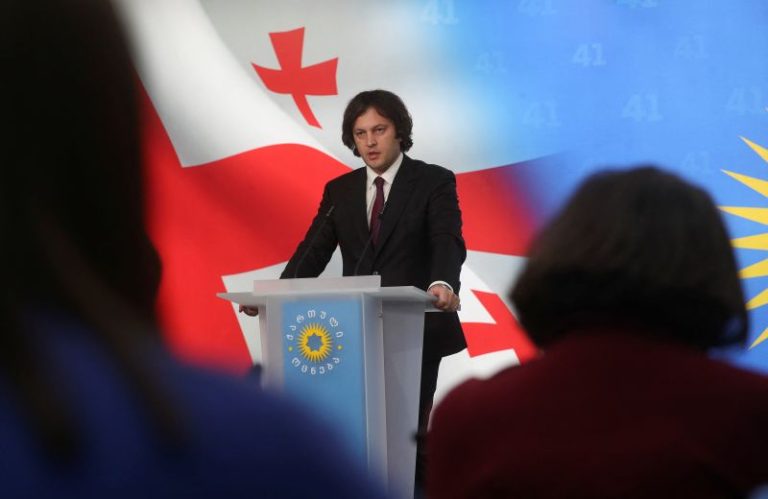
Georgia is suspending talks on its bid to join the European Union for four years, its prime minister said Thursday, in view of what he described as “blackmail and manipulation” from some of the bloc’s politicians. His announcement outraged the opposition and triggered a new wave of protests.

The move by Irakli Kobakhidze came hours after he was reappointed to the job by members of the governing Georgian Dream party after its disputed victory in last month’s parliamentary election that has sparked massive demonstrations and led to an opposition boycott of parliament.

The October 26 election was widely seen as a referendum on the country’s aspirations to join the European Union. The opposition said the vote was rigged under the influence of Russia seeking to keep Georgia in its orbit, and declared a boycott of parliament.

European election observers said the balloting took place in a divisive atmosphere marked by instances of bribery, double voting and physical violence.

The EU granted Georgia candidate status in December 2023 on condition that it meets the bloc’s recommendations but put its accession on hold and cut financial support earlier this year after the passage of a “foreign influence” law widely seen as a blow to democratic freedoms.

Kobakhidze said Thursday that while the country will pursue its bid to join the EU, “it will not put the issue of opening negotiations with the European Union on the agenda until the end of 2028.”

“Additionally, we are rejecting any budgetary grants from the European Union until the end of 2028,” he added.

Thousands of protesters poured into the streets following Kobakhidze’s announcement, rallying outside the parliament building in Tbilisi and staging demonstrations in other cities.

Earlier in the day, the European Parliament adopted a resolution that condemned last month’s Georgian parliamentary vote as neither free nor fair, representing yet another manifestation of the continued democratic backsliding “for which the ruling Georgian Dream party is fully responsible.”

EU lawmakers urged a rerun of the parliamentary vote within a year under thorough international supervision and by an independent election administration. They also called on the EU to impose sanctions and limit formal contacts with the Georgian government.

The Georgian prime minister fired back, denouncing what he described as a “cascade of insults” from the EU politicians and declaring that “the ill-wishers of our country have turned the European Parliament into a blunt weapon of blackmail against Georgia, which is a great disgrace for the European Union.”

“We will continue on our path toward the European Union; however, we will not allow anyone to keep us in a constant state of blackmail and manipulation, which is utterly disrespectful to our country and society,” Kobakhidze said. “We must clearly show certain European politicians and bureaucrats, who are completely devoid of European values, that they must speak to Georgia with dignity, not through blackmail and insults.”

Critics have accused Georgian Dream — established by Bidzina Ivanishvili, a shadowy billionaire who made his fortune in Russia — of becoming increasingly authoritarian and tilted toward Moscow. The party recently pushed through laws similar to those used by the Kremlin to crack down on freedom of speech and LGBTQ rights.

Speaking in parliament earlier on Thursday, Kobakhidze described last month’s parliamentary vote as “also a referendum between immoral propaganda and traditional values, and our society chose traditional values.”

The EU suspended Georgia’s membership application process indefinitely in June, after parliament passed a law requiring organizations that receive more than 20% of their funding from abroad to register as “pursuing the interest of a foreign power,” similar to a Russian law used to discredit organizations critical of the government.

President Salome Zourabichvili, whose six-year term expires next month, has rejected the official results and refused to recognize the parliament’s legitimacy. Zourabichvili, whose post is mostly ceremonial, met with EU ambassadors and opposition leaders after Kobakhidze’s announcement.

In an address to the nation, Zourabichvili denounced what she described as a “coup” aimed at taking the country away from Europe and toward Russia. The president accused the governing party of waging a “war on our future, the future of our society, and the future of our country.” “Because on this path, there is no Georgian statehood, no independence, and no future — except in Russia,” she said.

Zourabichvili was elected by popular vote, but Georgia has approved constitutional changes that abolished the direct election of the president and replaced it with a vote by a 300-seat electoral college consisting of members of parliament, municipal councils and regional legislatures.

On Wednesday, the ruling party nominated Mikheil Kavelashvili, a 53-year-old former national team and Premier League player, for the presidential post. He is all but certain to win the Dec. 14 vote by the electoral college controlled by the ruling party.

This post appeared first on cnn.com

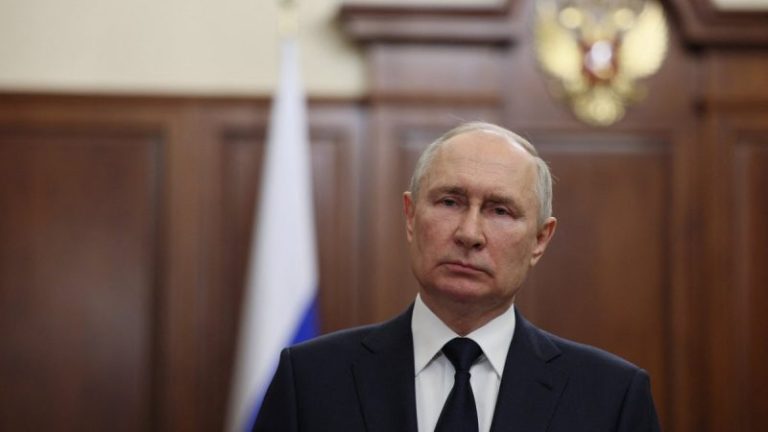
Russia’s widespread overnight attack targeting critical energy infrastructure facilities in Ukraine was a response to strikes on Russian territory using US-made ATACMS missiles, President Vladimir Putin said Thursday.

Putin claimed Russia hit 17 targets that were “military facilities, defense industry facilities and their support systems,” without acknowledging the hits to power infrastructure. “As I have said many times, there will always be a response from our side (to the use of American ATACMS),” Putin said during comments made at a security summit in Kazakhstan.

More than a million households in Ukraine were left without power following the aerial bombardment, authorities in the country said. This is Russia’s 11th large-scale assault on Ukraine’s energy supplies this year alone, according to the energy ministry in Kyiv, a strategy that has caused nationwide rolling blackouts.

Ukraine’s energy system came “under massive enemy attack,” overnight, Energy Minister German Halushchenko said Thursday, adding the attacks took place “all over Ukraine.” Bombardments have intensified in recent months, leaving Ukraine in a precarious position as the war grinds into its third winter.

In the immediate aftermath, Ukraine’s energy operator introduced emergency power cuts in many regions, with large outages in the western regions of Lviv, Volyn and Rivne. It has since shifted back to implementing scheduled hourly power cuts.

At least five people were injured, including one person in the central Vinnytsia region, two in the southern Odesa region, and two in the capital Kyiv, officials said. In the city of Kharkiv, a missile struck a civilian business, according to local military authorities.

Air defenses were activated across the country, with damage reported in 14 regions, according to the Interior Ministry. In the capital Kyiv, residents took shelter in metro stations as the air raid alert lasted for more than nine hours, due to the combined missile and drone attack. There were no immediate reports of casualties there, authorities said.

About 215,000 households in the Volyn region were temporarily without power, authorities said earlier.

“I have a power bank for charging my phone, but I did not buy a more powerful station because I did not take it seriously that there would be such attacks and that missiles would reach us,” Dorotiy said, adding that it seemed Russia was concentrating on attacking eastern Ukraine instead. “But it did reach us.”

Kyiv resident Olha Vaynrikh, 32, told Reuters, “Our mornings begin with checking the phone to see if there is an air alert… We are indeed fed up with all of it.”

Several critical infrastructure facilities had been attacked, he later discovered.

“I expected to be without power for three hours, but according to the new schedule, it looks like we will be without electricity for eight hours today,” Turiy said. “We all understand that every winter is getting harder.”

The onslaught involved about 100 drones and more than 90 missiles, according to Ukrainian President Volodymyr Zelensky.

This comes after Russia launched a record 188 drones at Ukraine on Tuesday in a mass attack that damaged critical infrastructure in the west of the country, according to the Ukrainian Air Force.

“Every attack like this proves that air defense systems are needed in Ukraine now, where they save lives, not at storage bases,” Zelensky added, urging allies to help his country increase its air defense capabilities.

In his comments on Thursday, Putin warned that he will consider further launches of Russia’s new medium-range ballistic missile, called ‘Oreshnik,’ which was used to attack Ukraine’s Dnipro region last week.

“We will respond to the ongoing strikes on Russian territory by Western-made long-range missiles, including the possible continuation of the Oreshnik test in combat conditions,” Putin said.

Russia’s Ministry of Defense is “selecting targets for hitting on Ukrainian territory. These could be military facilities, defense industry enterprises or decision-making centers in Kyiv,” he added.

Putin previously said that Moscow also considers itself entitled to use weapons against military targets belonging to countries that allow their weapons to be used against Russia.

This story has been updated with additional developments.

This post appeared first on cnn.com

In a single post, the presidentelect told the world what the end of the Ukraine war might look like. And it is going to be a big diplomatic ask, to say the least.

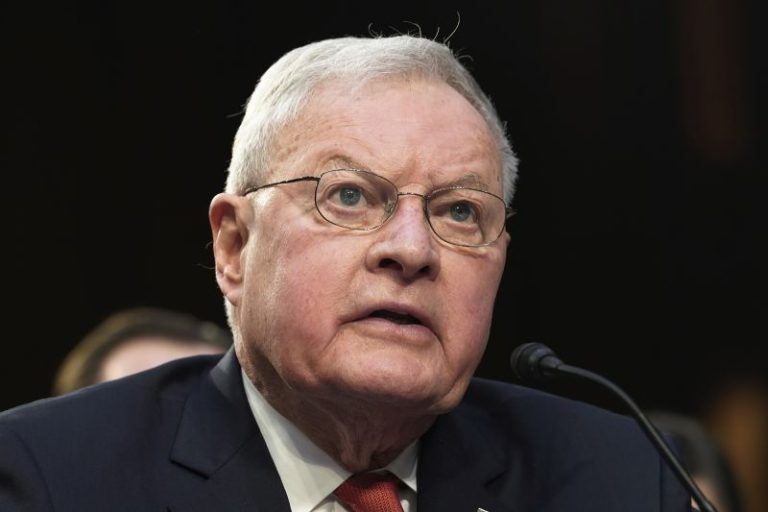
“I am very pleased to nominate General Keith Kellogg to serve as Assistant to the President and Special Envoy for Ukraine and Russia,” Trump wrote on his Truth Social channel. “Together, we will secure PEACE THROUGH STRENGTH, and Make America, and the World, SAFE AGAIN!”

By appointing Keith Kellogg as his special envoy to Ukraine, Donald Trump has also chosen a very specific, pre-announced plan for the thorniest foreign policy issue on his plate.

Kellogg, Trump’s 80-year-old former national security advisor, has laid out his peace plan in some detail, writing for the America First policy institute in April.

It begins calling the war “an avoidable crisis that, due to the Biden Administration’s incompetent policies… has entangled America in an endless war.”

In short, a ceasefire will freeze the frontlines and both sides will be forced to the negotiating table. But it is in the longer details where it all gets complex.

Changing the US’ involvement

Kellogg spends most time berating Biden’s actions – saying that his administration gave too little lethal aid too late. He says Trump’s decision to give the first lethal aid to Ukraine in 2018 conveyed the strength needed to confront Putin, and that Trump’s soft approach to the Kremlin head – not demonizing him like Biden has – will enable him to strike a deal.

Kellogg says more weapons should have been given before the Russian invasion, and immediately afterwards, to enable Ukraine to win.

Kellogg says the United States doesn’t need involvement in another conflict, and its own stocks of weaponry have suffered from aiding Ukraine, leaving the country potentially exposed in any conflict with China over Taiwan. He says Ukraine’s NATO membership – in truth a very distant prospect, tentatively offered to Kyiv in symbolic solidarity – should be put on hold indefinitely, “in exchange for a comprehensive and verifiable peace deal with security guarantees.”

Foremost, the plan says it should become “a formal US policy to seek a ceasefire and negotiated settlement.”

It says future US aid – likely given as a loan – will be conditioned on Ukraine negotiating with Russia, and the US will arm Ukraine to the extent it can defend itself and stop any further Russian advances before and after any peace deal. This latter suggestion is perhaps dated by the fast Moscow advance underway in eastern Ukraine and the current high US level of aid already makes Kellogg uncomfortable.

Kellogg credits partially a 2023 article by Richard Haas and Charles Kupchan for some of the next ideas.

A freeze to the frontlines

The frontlines would be frozen by a ceasefire, and a demilitarized zone imposed. For agreeing to this, Russia would get limited sanctions relief, and full relief only when a peace deal is signed that is to Ukraine’s liking. A levy on Russian energy exports would pay for Ukraine’s reconstruction. Ukraine would not be asked to give up on reclaiming occupied territory, but it would agree to pursue it through diplomacy alone. It accepts “this would require a future diplomatic breakthrough which probably will not occur before Putin leaves office.”

It is fetchingly simple and swift in its approach. But it lacks an accommodation of what Moscow will demand and has used the diplomatic process for in the past: To cynically pursue military advances. The freezing of the frontlines will precipitate a very violent few months ahead as Moscow seeks to take as much ground as it can. The Kremlin has in the past ignored ceasefires and pursued its territorial objectives – often blankly denying that it is.

A demilitarized zone would likely need to be policed, possibly putting NATO troops, or soldiers from other non-aligned nations, in between the two sides. That will be hard to maintain and staff, to say the least. It would be enormous, spanning hundreds of miles of border, and a massive financial investment.

Arming Ukraine to the extent it can stop present and future Russian advances will also be tough. The plan notes the United States manufactures 14,000 155 artillery rounds a month, which Ukraine can use up in just 48 hours. Paradoxically, Kellogg wants the US to arm Ukraine more, yet also accepts they really can’t.

A change in values

Two lines provide a wider insight into the author’s thinking. He says that national security, the American First way, was about practical necessities.

“Biden replaced the Trump approach with a liberal internationalist one that promoted Western values, human rights, and democracy,” he writes. That is a pretty grim base from which to build a compromise on European security.

He adds that some critics of continued aid to Ukraine – in which he seems to include himself – are “worried about whether America’s vital strategic interests are at stake in the Ukraine War, the potential of the involvement of US military forces and whether America is engaged in a proxy war with Russia that could escalate into a nuclear conflict.”

These two sentences provide the ultimate backdrop for the deal proposed: That Ukraine’s war is about values we don’t need to perpetuate, and we should step back from Putin’s nuclear threat. It is the opposite of the current unity in which the West prioritizes the values of its own way of life and security, based on the lesson of the Thirties that appeased dictators don’t stop.

The plan presents Ukraine with a welcome chance for an end to the violence, at a time when it is losing on all fronts, and darkly short of basic manpower – a hurdle it may never overcome, and something in which Russia will likely always outpace it.

But it begins a process in which a wily and deceitful Putin will revel. Exploiting a ceasefire and Western weakness is his forte, the moment he has been waiting nearly three years for. The plan accepts Western fatigue, that its armament production cannot keep pace, and that its values are wasteful. It also makes little accommodation for what Russia will do to upset its vision.

It is a bleak compromise for a bleak war. But it may not end it and instead open a new chapter where Western unity and support begins to crumble, and Putin edges, both at the negotiating table and at the front, closer towards his goals.

This post appeared first on cnn.com

Over 1,000 days of war, Russian President Vladimir Putin has repeatedly warned Kyiv’s Western allies of dire – potentially nuclear – consequences if they “escalate” the war by giving Ukraine the weapons it needs to defend itself.

Putin’s threats became even fiercer this month after the Biden administration finally gave Kyiv permission to launch longer-range American weapons at targets deep inside Russia. In response, Putin updated Russia’s nuclear doctrine and fired a new, nuclear-capable ballistic missile at Ukraine. The message was taken as a clear threat to Ukraine’s backers: Don’t test us.

But, nearly three years into the war, these developments have assumed a familiar rhythm. Each time Ukraine made a request – first asking for tanks, then fighter jets, then cluster munitions, then long-range weapons – its allies agonized over whether to grant it, fearing it would escalate the conflict and provoke a Russian response.

Each time, when the West finally accepted Ukraine’s requests, Russia’s most catastrophic threats did not materialize. What was taboo one week became normal the next.

Instead, they said the anxious reaction to Ukraine’s newly granted powers is another example of the Kremlin’s successful strategy of forcing the West to see the conflict on Russia’s terms, confusing each fresh attempt by Ukraine to resist Russian aggression as a major “escalation.”

Alongside the battlefields, the Kremlin has been engaged in a fight to force the West to argue from Russian premises rather than its own, and to “make decisions in that Kremlin-generation alternative reality that will allow Russia to win in the real world,” the Institute for the Study of War (ISW), a think-tank, said in a report in March.

“The persistent Western debates and delays in Western military aid to Ukraine is a clear example of the Kremlin’s successful reflexive control strategy, which had committed the Western to self-deterrence despite routine Russian escalations of the war,” Stepanenko said.

This strategy could be seen in action on Thursday after Russia launched a large-scale attack targeting Ukraine’s power grid. Although Putin said the attack was “a response from our side” to the Biden administration’s decision on longer-range weapons, Russia has not needed a pretext for such strikes in the past.

The recent policy changes by Ukraine’s Western allies – which came after Russia involved some 11,000 North Korean troops in its war effort – “is not an escalation as the Kremlin is attempting to frame it,” Stepanenko said.

“Russia launched an unprovoked full-scale invasion of Ukraine and had been routinely escalating the war to sustain its initiative on the battlefield. The approval of Ukraine’s use of long-range strike systems against Russia is finally allowing Ukraine to level out its capabilities,” she said.

‘Nonsense’ policies

The Biden administration sent US-made Army Tactical Missile Systems, or ATACMS, to Ukraine earlier this year, but placed strict conditions on how they could be used: They could be fired at Russian targets in occupied Ukraine, but not on Russia’s own territory.

William Alberque, a former director of NATO’s Arms Control, Disarmament, and WMD Non-Proliferation Centre, said this policy made little sense – and was to Russia’s huge benefit.

“I’m sure the Russian commanders couldn’t believe their luck. ‘So if I set up my command headquarters here, they’ll blow me up, but if I set up a kilometer away, I’m fine? Really? Awesome!’”

In effect, this policy led to “the idea that Russia can kill anyone anywhere in Ukraine, but Ukraine can’t kill the troops that are actually attacking them if they’re across the border (in Russia).” This idea is “nonsense,” Alberque said.

Shifting red lines

Amid the anxious responses to last week’s developments, it is easy to forget that Ukraine has long launched home-grown drones at targets extremely deep in Russia – and that it had already fired Western weapons at territory the Kremlin considers its own. The decision to fire slightly longer-range Western weapons is a difference of degree, not of kind.

For more than a year, Kyiv has used British Storm Shadows to strike Crimea, which Russia has occupied since 2014. For months, Kyiv has been allowed to fire ATACMS at Russian targets in occupied Ukraine. By law, Russia considers these territories its own, and warned of dire consequences if Ukraine targeted them with Western weaponry.

Since May, Washington has also allowed Kyiv to use shorter-range American rockets to strike targets in Russia across the border from Ukraine’s northeastern Kharkiv region. Before President Joe Biden green-lighted that decision, Putin made similar nuclear threats, warning the move could lead to “serious consequences” for “small and densely populated countries.” It did not.

“Again and again, we prove that when you cross a fake red line – nothing really happens,” said Alberque. Still, he said the threats were enough to prevent the West from giving Ukraine what it needed to defend itself.

Although the threats have yet again intensified following last week’s developments, Albuquerque said there is little reason to suspect that this time really is different. The prospect of an incoming Donald Trump administration – long assumed to be Putin’s desired outcome – means Russia is even less likely than usual to make good on its threats.

“The (risk) that they’re suddenly going to do something that would risk actual intervention by the United States or by NATO allies – or would fundamentally change global attitudes towards the conflict – is relatively low,” said Alberque.

This post appeared first on cnn.com

A Beijing court sentenced veteran Chinese state media journalist Dong Yuyu on Friday to seven years in prison for espionage, a family member told Reuters.

Former Guangming Daily editor and journalist Dong Yuyu, 62, was detained by police in Beijing in February 2022 while having lunch with a Japanese diplomat, according to a statement from the US National Press Club, and later charged with espionage.

There was a heavy police presence outside Beijing’s No. 2 Intermediate People’s Court, with at least seven police cars parked nearby. Reuters journalists were asked to leave the area.

A US diplomat told Reuters that they had been barred from attending the hearing.

Dong has been detained in a Beijing prison awaiting the verdict since a closed-court hearing in July 2023, the press club said in September.

He regularly had in-person exchanges with foreign diplomats from various embassies and journalists. The Japanese diplomat he met was also detained for several hours, triggering a strong complaint from the Japanese foreign ministry.

A Chinese foreign ministry spokesperson said at the time that the diplomat was engaged in activities “inconsistent with their capacity” in China. The diplomat was later released.

Dong participated in the prestigious Harvard Nieman Fellowship and was a visiting scholar and visiting professor at Keio University and Hokkaido University in Japan, according to a family statement in April 2023.

He joined the Communist Party-affiliated Guangming Daily in 1987 after graduating from Peking University law school, and was the deputy editor of its commentary section.

He had written opinion articles in Chinese media and liberal academic journals on topics from legal reforms to social issues, and co-edited a book promoting the rule of law in China. His articles advocated moderate reforms while avoiding direct criticism of Chinese leader Xi Jinping.

His family had initially kept news of his detention private in the hope that charges could be reduced or dropped but were notified in March 2023 that his case would be sent to trial, their statement said.

Multiple press freedom non-government organizations (NGO) have called for his release. An online petition for his release has collected over 700 signatures from journalists, academics and NGO workers.

“Dong Yuyu is a talented reporter and author whose work has long been respected by colleagues at home and abroad,” said Ann Marie Lipinski, curator of the Nieman Foundation for Journalism at Harvard University. “We stand with many in hoping for his release and return to his family.”

The Australian writer and pro-democracy blogger Yang Hengjun was handed a suspended death sentence on espionage charges by a Beijing court in February.

This post appeared first on cnn.com