Author

admin

Browsing

Russia expelled a British diplomat who worked at the embassy in Moscow Tuesday, accusing him of spying, marking the latest blow to the two countries’ worsening diplomatic relations.

Russia’s Federal Security Service (FSB) alleged that the British diplomat intentionally provided false information to enter the country as a cover for espionage work, “thereby violating Russian law,” according to state media TASS.

“The Russian FSB has identified signs of intelligence and subversive work by the said diplomat that threatens the security of the Russian Federation,” TASS cited the security service as saying.

The Russian Foreign Ministry subsequently revoked the diplomat’s diplomatic accreditation and ordered him to leave Russia within two weeks, TASS reported.

Russia’s FSB claimed the diplomat was sent to Moscow to “replace” one of six alleged British intelligence officers that Russia expelled this summer.

In August, Russia revoked the accreditation of the diplomats, also on allegations of espionage. At the time, Britain described the accusations as “completely baseless.”

Relations between the UK and Russia have been increasingly strained as Russia continues its full-scale invasion of Ukraine.

The UK has joined the heavy sanctions imposed by Western nations against Russia and pledged billions of dollars of military and economic support to Ukraine since 2022.

Last week, Ukraine launched the British-French-made Storm Shadow missiles at targets inside Russia for the first time, according to a Russian military blog and Reuters, a day after Ukraine fired US-made ATACMS missiles into Russia.

That prompted direct condemnation from Russian President Vladimir Putin, who said the Kremlin’s launch of a new medium-range ballistic missile last week was a response to the “reckless decisions” of Western countries in supplying weapons to Kyiv.

Meanwhile, Russia launched a “record” 188 drone attacks on Ukraine overnight, according to the Ukrainian Air Force on Tuesday.

Russia fired four more Iskander-M ballistic missiles at Ukraine, the Air Force said. The attack damaged critical infrastructure in the western Ukrainian city of Ternopil, causing power outages, according to the local military administration.

In the Kyiv region, air defense interceptions could be heard operating throughout the night. Several residential homes were damaged by the downed drones, which shattered windows of houses, Kyiv authorities said.

Clare Sebastian and Maria Kostenko contributed to this report.

This post appeared first on cnn.com

John Tinniswood, the world’s oldest man, has died at the age of 112.

Tinniswood died on Monday at a care home in Southport, England, according to a news release from Guinness World Records (GWR) on Tuesday.

“His last day was surrounded by music and love,” his family told GWR in a statement, according to the release.

Born August 26, 1912, Tinniswood had held the record for the world’s oldest living man since April 2024, following the death of 114-year-old Juan Vicente Pérez of Venezuela.

Tinniswood didn’t have any particular explanation for how he managed to live for so long, describing it as “pure luck,” according to GWR.

“You either live long or you live short, and you can’t do much about it,” he told GWR earlier this year.

However, he did have one piece of advice for staying healthy: do everything in moderation.

“If you drink too much or you eat too much or you walk too much; if you do too much of anything, you’re going to suffer eventually,” he said.

And while he can’t tell them how to live as long as he did, Tinniswood did have some life advice for younger generations.

“Always do the best you can, whether you’re learning something or whether you’re teaching someone,” he added.

“Give it all you’ve got. Otherwise it’s not worth bothering with.”

Tinniswood is survived by his daughter, Susan, four grandchildren and three great-grandchildren.

“John had many fine qualities. He was intelligent, decisive, brave, calm in any crisis, talented at maths and a great conversationalist,” said the family in a statement.

According to GWR, the oldest man ever was Jiroemon Kimura of Japan. He was born in 1897 and died in 2013 at the age of 116.

This year has also seen the death of the world’s oldest person.

US-born Maria Branyas Morera passed away at the age of 117 years 168 days, making her the eighth-oldest person with a verifiable age in history, said GWR in a statement at the time.

The title of the oldest person ever recorded belongs to Jeanne Louise Calment.

Born on February 21, 1875, her life spanned 122 years and 164 days, according to GWR.

This post appeared first on cnn.com

With a Hezbollah-Israel ceasefire on the horizon, an 18-year-old United Nations resolution has resurfaced as a blueprint for ending the war.

The 60-day cessation of hostilities aims to implement UN Security Council Resolution 1701, with the hope that it could form the basis of a lasting truce.

Resolution 1701 was adopted to end a 34-day war between Israel and Lebanon in 2006, and had kept relative calm in the area for nearly two decades. That lasted until the day after Hamas’ October 7 attack on Israel last year, when Hezbollah attacked in solidarity, beginning more than a year of conflict.

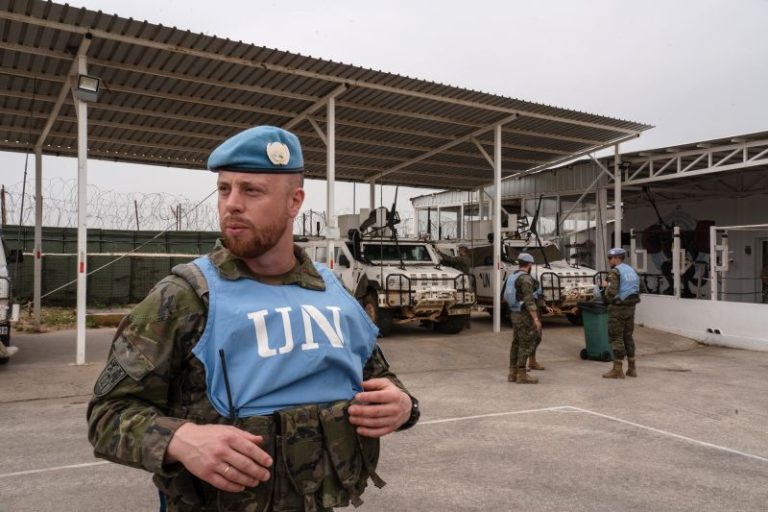
The resolution stipulated that Israel must withdraw all its forces from southern Lebanon, and that the only armed groups present in south of the Litani river should be the Lebanese military and UN peacekeeping forces.

The United States, which is mediating between Israel and Lebanon in the current conflict, believes a return to the principles of the resolution is in the interest of both parties, but has insisted on a mechanism to enforce it more strictly. Israel has argued that Hezbollah has breached the resolution multiple times by operating close to its border. Lebanon says Israel regularly breached the agreement over the past two decades by sending fighter jets into its airspace.

Here’s what we know about the resolution and why it is critical to a ceasefire between Israel and Lebanon.

A brief history

Israel launched an invasion into Lebanon in 1982, sending tanks all the way to the capital Beirut, after coming under attack from Palestinian militants in the country.

It then occupied southern Lebanon for almost two decades until the year 2000, when it was driven out by Hezbollah, created – with backing from Iran – to resist the Israeli occupation.

In 2000, the UN established the so-called Blue Line, a “line of withdrawal” for Israeli forces from Lebanon. That boundary now serves as the de facto border between the two countries.

Lebanon has however claimed that Israel did not complete its withdrawal from the country, continuing to occupy the Shebaa Farms, a 15-square-mile (39-square-km) patch of land Israel has held since 1967.

Israel claims the Shebaa Farms area is part of the Golan Heights, which it captured from Syria and later annexed. The international community – with the notable exception of the United States – considers the Golan Heights to be occupied territory belonging to Syria.

Resolution 1701

Israel invaded Lebanon again in 2006 after Hezbollah killed three soldiers and kidnapped two others – in an effort to compel the release of Lebanese prisoners. The war lasted just over a month and resulted in the death of more than 1,000 Lebanese, mostly civilians, as well as 170 Israelis, mostly soldiers.

On August 11, 2006, the UN Security Council unanimously adopted Resolution 1701, which called for “a full cessation of hostilities” by Hezbollah and Israel.

The resolution demanded that Israel withdraw all its forces from southern Lebanon, and for the Lebanese government and the UN Interim Force in Lebanon (UNIFIL) “to deploy their forces together throughout the south.” No other armed personnel would be permitted in the area.

It also called on the Lebanese government “to exercise its full sovereignty, so that there will be no weapons without the consent of the Government of Lebanon and no authority other than that of the Government of Lebanon.”

A 10,000-troop UN peacekeeping force, UNIFIL is the main body tasked with implementing Resolution 1701 on the ground.

A UN-mediated prisoner exchange between Israel and Hezbollah in 2008 saw the return of the remains of the two Israeli soldiers captured in 2006 for five Lebanese prisoners. Israel later released the bodies of some 200 Arabs.

Escalation since October 8

Hezbollah began firing at the Israeli-held Shebaa Farms on October 8, 2023, in what it later said was solidarity with the Palestinians of Gaza, a day after Gaza-based Hamas launched a major attack on southern Israel, killing approximately 1,200 people and taking another 251 hostage. Israel fired back.

Between October 8, 2023 and the end of June, UNIFIL detected 15,101 cross border trajectories, of which 12,459 were from Israel into Lebanon, and 2,642 Lebanon into Israel,” the UN said on October 1, adding that “while most exchanges of fire have been confined to within a few kilometers of either side of the Blue Line, several strikes have reached as far as 130 km into Lebanon and 30 km into Israel.”

Since then, cross border skirmishes continued but were contained along the Israel-Lebanon frontier, until September this year, when Israel expanded its war aims to including the return home for residents of the north, who were displaced due to cross border attacks from Hezbollah, which said that it would only stop attacks on Israel once a ceasefire is reached in Gaza. That was followed by a massive aerial assault on Lebanon, and the October 1 ground invasion into the country.

Where each party stands on 1701

It focuses on stricter mechanisms to implement Resolution 1701 in the south of the country and on the role of the Lebanese army in doing so, the official said, adding that it also deals with smuggling routes through the country’s international borders.

The proposal also requires Israeli ground forces, operating in southern Lebanon since October, to withdraw.

But some officials in Israel have said that simply returning to 1701 is not enough, insisting that Israel must retain the right to strike Hezbollah targets in Lebanon after a ceasefire deal should violations occur.

Bezalel Smotrich, the far-right Israeli minister of finance, has said that “full operational freedom” for the Israeli military in southern Lebanon is “a non-negotiable condition.”

“We are changing the security paradigm and will not return to decades of concepts of containment and threats without response. This will not happen again,” he said.

Lebanese Prime Minister Najib Mikati has dismissed reports of demands to give the Israeli military operational freedom in south Lebanon as “speculation,” adding that he hasn’t seen such a clause in the proposal.

Lebanese parliament speaker Nabih Berri, who leads the Hezbollah-allied Amal party and is the interlocutor in talks with Hezbollah, has said that the proposal he received from the US does not include mention of Israeli military operational freedom in Lebanon, adding that the US knows that such a demand would be “unacceptable.”

State Department spokesperson Matthew Miller has said that “there has been an exchange of different ideas for how to see what we believe is in everyone’s interest, which is the full implementation of UN Security Council Resolution 1701.”

This post appeared first on cnn.com

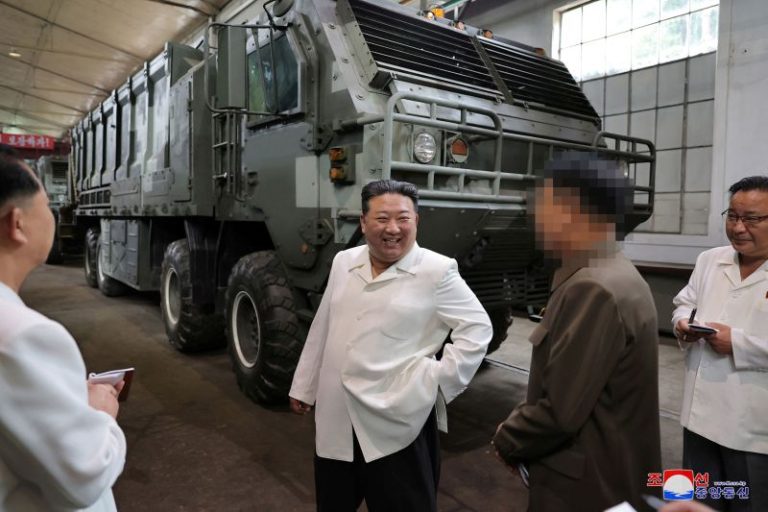
North Korea is expanding a weapons plant that manufactures missiles used by Russia against Ukraine, according to new research from a US-based think tank.

The facility produces both KN-23 missiles (Hwasong-11A) and KN-24 missiles (Hwasong-11B), according to researchers at the James Martin Center for Nonproliferation Studies at the Middlebury Institute of International Studies.

Located in the country’s second-largest city, Hamhung, the factory has been visited several times by North Korean leader Kim Jong Un, with North Korean state media previously touting its mass-production of tactical missiles.

Ukraine has been hit by a recent surge in Russian ballistic missile attacks, about a third of which used North Korean weapons, according to Ukrainian military officials.

Moscow and Pyongyang have also deepened their military ties to a level unseen since the Cold War, including agreeing to a mutual defense pact earlier this year and sending North Korean troops to help fight against Ukraine according to Western and South Korean officials.

Now, new satellite images indicate North Korea is expanding the Hamhung facility and building what appears to be a second building for the final assembly of missiles, as well as additional housing for workers.

Lair said researchers have seen a lot of expansion at the facility, which is called the ‘February 11 plant’ by North Korean authorities, in the last few years alone. The size of the plant started to increase in 2020, and it has since undergone routine improvements like repairing old buildings and replacing roofs, he said.

But the new building, likely intended for missile assembly, indicates “that they’re not just improving an element of the production line, but rather, they’re trying to expand it.”

“Just outside the security perimeter of the factory, we see what appear to be new apartment buildings going up,” he said. “We can see the foundations in satellite imagery.”

The new missile assembly building is roughly 60% to 70% as large as the original building, Lair estimates.

State media footage from KCNA shows Kim Jong Un touring the plant in August 2023, showing off tail kits being added to Hwasong-11 class missiles, nozzles being fitted and nose cones capping off the short-range ballistic missiles, according to researchers. But that footage has since been removed from state media websites.

The factory is part of the Ryongsong Machine Complex, which also manufactures goods like multiple rocket launcher shells for the North Korean military, Lair said.

Attacks on Ukraine with KN-23 missiles

Russia has fired about 60 North Korean KN-23 missiles (Hwasong-11A) at Ukraine this year.

Crucial components used in the missiles are produced by nine Western manufacturers, including companies based in the United States, the Netherlands and the United Kingdom, according to a recent report by Ukraine’s Independent Anti-Corruption Commission (NAKO), a civil society organization.

Moscow and Pyongyang have both previously denied that North Korea has exported weapons to Russia, despite significant evidence of such transfers. Meanwhile, observers have raised concerns that Moscow may be violating international sanctions to aid Pyongyang’s development of its military satellite program.

In June, the two autocratic nations signed a new landmark defense pact, pledging to North use all available means to provide immediate military assistance in the event the other is attacked.

Western officials have also warned that thousands of North Korean troops have joined Moscow’s forces in its attempt to seize back the Kursk region that was taken by Kyiv’s military in a surprise offensive earlier this year.

This post appeared first on cnn.com
A police officer who fatally shocked a 95-year-old woman with a Taser in an Australian nursing home has been found guilty of manslaughter after the jury found that the great-grandmother, who was holding a knife, did not pose an “imminent” threat.

Senior Constable Kristian White was one of two police officers called in May last year to Yallambee Lodge, a nursing home in regional New South Wales, when staff asked for help with a resident who was holding two knives as she pushed a mobility walker around the facility.

Clare Nowland – who had dementia – had refused her carers’ requests to return to her room and threw a knife at a staff member that fell on the floor before they dialed emergency services, according to court documents.

The court heard she had been cornered in an office by police and paramedics and had refused to put down a steak knife when White deployed his Taser.

The jury deliberated for days before returning a verdict of guilty to one charge of manslaughter against White for breaching his duty of care to Nowland and engaging in an unlawful and dangerous act.

White had told the court he believed that a “violent confrontation was imminent” – the condition for firing a Taser under standard operating procedures in New South Wales. The rules state that a Taser may only be used against elderly people in “exceptional circumstances.”

The prosecution had argued that White’s use of the Taser was “utterly unnecessary” and an excessive use of force against a frail, elderly woman. After she was shocked with the device, Nowland fell backwards, hitting her head. She died a week later in hospital.

Nowland’s family released a statement after the guilty verdict, thanking the judge, jury and prosecutors, and saying it would take “some time to come to terms with the jury’s confirmation that Clare’s death at the hands of a serving NSW police officer was a criminal and unjustified act.”

How the incident unfolded

Closed-circuit video played to the jury on Monday showed how the incident unfolded in the administrative building of the home around 5 a.m. on May 17, 2023.

In the witness box, White was asked to explain what was going through his mind as he and his partner approached Nowland, who was found by carers sitting in a small office. She was wearing pajamas and had a walking frame nearby for support.

Asked for his first impressions of Nowland, White agreed that she was elderly, but took issue with the suggestion she may have been frail.

“Bit of a subjective question,” White said. When asked again, he said, “not that frail, no.”

While White agreed that Nowland was small in stature, when asked if she was weak, he said he “wouldn’t be able to give an answer.”

On the video, White can be heard repeatedly asking Nowland to put the knife on the table. After she refused and stood up, with one hand on the walker, White pulled out his Taser.

“You see this?” White asked her. “This is a Taser. Drop it now,” he said, referring to the knife. Then after a few more appeals, he warned her “you’re gonna get tased.”

After more warnings, White can be heard saying, “Nah, bugger it” and deployed the Taser.

The court heard White had the Taser pointed at Nowland, its light shining in her eyes, for one minute before he used it.

Asked what he meant by “Nah, bugger it,” and if it was a sign he was “fed up” and had abandoned attempts to resolve the issue, he disagreed.

“I was going to be firing a Taser at a 95-year-old. I felt it was my only option at the time to ensure a safe resolution of the incident,” he said.

“I completely understand it was going to cause her some sort of, you know, injury and pain, but I felt that the risk had elevated to the point that, you know, it required a resolution, and it’s not our job to shy away from these types of incidents,” White said.

“I was not going to essentially gamble on the risk of having her out in the corridor,” he added.

In summing up, Crown Prosecutor Brett Hatfield pointed to contradictions in White’s testimony as he tried to justify his actions in deploying the Taser.

“Answers were malleable and changing, even within a few questions,” he said, while also describing some of White’s responses as “evasive and unpersuasive.”

“This was not a mere breach of the standard of care,” said Hatfield. “This was such an utterly unnecessary and obviously excessive use of force on Mrs. Nowland that it warrants punishment for manslaughter,” he said.

White was suspended from the NSW Police Service after the incident.

He will be sentenced at a later date.

This post appeared first on cnn.com
While the deal has not yet been officially announced, it is believed that the 60-day cessation of hostilities aims to implement UN Security Council Resolution 1701, with the hope that it could form the basis of a lasting truce.

Resolution 1701 was adopted to end a 34-day war between Israel and Lebanon in 2006, and had kept relative calm in the area for nearly two decades. That lasted until the day after Hamas’ October 7 attack on Israel last year, when Hezbollah attacked in solidarity, beginning more than a year of conflict.

The resolution stipulated that Israel must withdraw all its forces from southern Lebanon, and that the only armed groups present south of the Litani river should be the Lebanese military and UN peacekeeping forces.

In a symbolic milestone earlier Tuesday, Israeli soldiers reached the Litani river for the first time the military began ground operations in Lebanon in September.

In the hours before the vote, Israel drastically stepped up its strikes on Beirut, targeting central areas of the city – not just its Hezbollah-dominated southern suburbs – for the first time in the conflict. At least 10 people were killed in the strikes on central Beirut, the Lebanese Health Ministry said.

In a pre-recorded televised address Tuesday evening, Prime Minister Benjamin Netanyahu said Hezbollah was “no longer the same” after Israel’s offensive, and gave three reasons why he is now pursuing a ceasefire.

First, to allow Israel to “focus on the Iranian threat,” Netanyahu said. Second, to replenish the country’s military forces and equipment, which he said had been depleted in part by “big delays” in the supply of weapons and munitions. And third, to leave Hamas isolated in Gaza, without Hezbollah able to fight alongside it, he said.

Although the deal represents a significant breakthrough – after months of negotiations that a US State Department spokesperson described as “incredibly frustrating” – it is not yet clear whether the deal will lead to a lasting peace.

Before the vote, the deal was met with fury from the more extreme wing of Netanyahu’s coalition, and trepidation from residents of northern Israel, many of whom have been displaced by the conflict, along with residents of southern Lebanon across the border.

Far-right National Security Minister Itamar Ben Gvir on Monday called the deal a “historic mistake” that failed to achieve the war’s main goal of returning displaced Israelis to their homes in the north. Ben Gvir has also long worked to thwart potential ceasefire deals between Israel and Hamas in Gaza.

Mayors of Israel’s northernmost communities were outraged by reports that Netanyahu’s government was set to approve the deal, with one calling it a “surrender agreement” and a “disgrace on a historic scale.”

Avihay Shtern, the mayor the Kiryat Shmona – where Hezbollah fire has forced residents out of their homes – urged Israeli leaders to “stop and think about the children of Kiryat Shmona” before approving the ceasefire deal.

In his address, Netanyahu stressed that Israel will respond “forcefully” if Hezbollah violates the agreement and attempts to rearm.

“If it tries to rebuild terrorist infrastructure near the border, we will attack. If it launches a rocket, if it digs a tunnel, if it brings in a truck carrying rockets, we will attack,” Netanyahu said in a fiery speech.

This story has been updated with additional developments.

This post appeared first on cnn.com

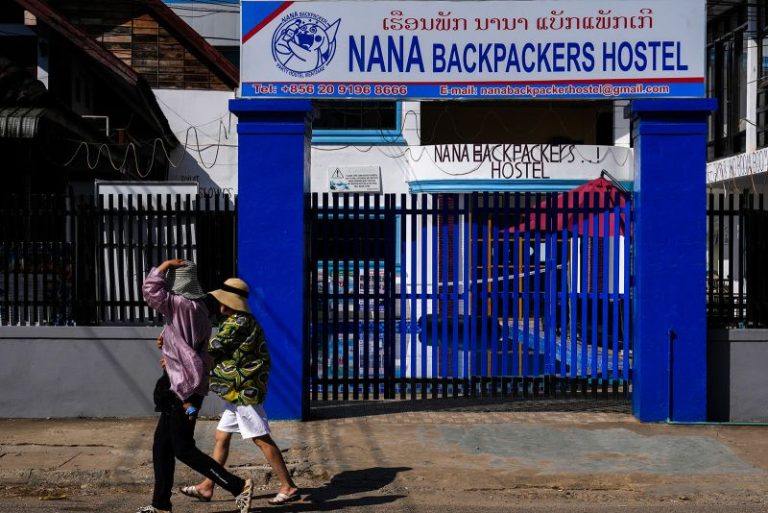
Eight staff members of a backpacker hostel in Laos have been detained by local authorities as they investigate the deaths of six foreign tourists from suspected methanol poisoning, according to state-affiliated media in the Southeast Asian country.

The deaths of two Australian teenagers, a British woman, an American man and two Danish women – and reports of others taken ill – prompted warnings last week from several Western nations about the potentially fatal consequences of drinking tainted alcohol in Laos.

The employees of the Nana Backpacker Hostel in the northern town of Vang Vieng, all Vietnamese nationals aged between 23 and 44, were arrested Monday by local police, state-affiliated newspaper the Laotian Times reported.

Part of the investigation has focused on reports the tourists were offered free shots of alcohol at the hostel, where at least five of those who died had stayed.

The hostel manager and owner, who are also Vietnamese, were previously detained for questioning by police, according to the Associated Press. The manager had earlier said the two Australian women joined more than 100 guests for free shots at the hostel before leaving for a night out, but he denied that other guests had reported any issue, AP reported.

The victims’ respective governments have confirmed their nationalities and deaths, but many details of the suspected mass poisoning remain unclear, frustrating families and fellow travelers trying to piece together what happened in Vang Vieng.

A statement from the official Lao News Agency (KPL) Friday reported that “the consumption of tainted alcoholic beverages” was the suspected cause of the deaths. But Laos authorities have not given any indication of where and how tainted alcohol might have got into the supply chain.

Travelers conduct own investigation

Meanwhile, the victims’ families are grappling with the abrupt loss of their loved ones.

The bodies of 19-year-old best friends Holly Bowles and Bianca Jones were returned to Australia on Tuesday night. Speaking to reporters at Melbourne airport, their fathers thanked supporters and praised efforts from the Australian government, according to Nine News.

But Mark Jones said the families were still no closer to getting answers about how their daughters had died, Nine News reported.

“We want to grieve. We miss our daughters desperately,” Jones said, after news broke of the arrests in Vang Vieng. “I was happy to hear that there’s been some movement over in Laos … I would continue to urge the Laos government to continue to pursue whomever.”

Methanol is an alcohol chemical commonly used in industrial solvents, cleaning products and fuel, though it can be added to alcoholic drinks either inadvertently through traditional brewing methods or deliberately – usually in the pursuit of profit.

In recent decades, Vang Vieng had earned a notorious reputation as a hedonistic party center where travelers could easily access cheap alcohol and illicit drugs.

But in 2012, the government ordered a crackdown following a string of fatal accidents linked to poor safety standards and a culture of excess along the river that flows through the town, reinventing Vang Vieng as more of an eco-paradise and adventure travel hub.

This post appeared first on cnn.com
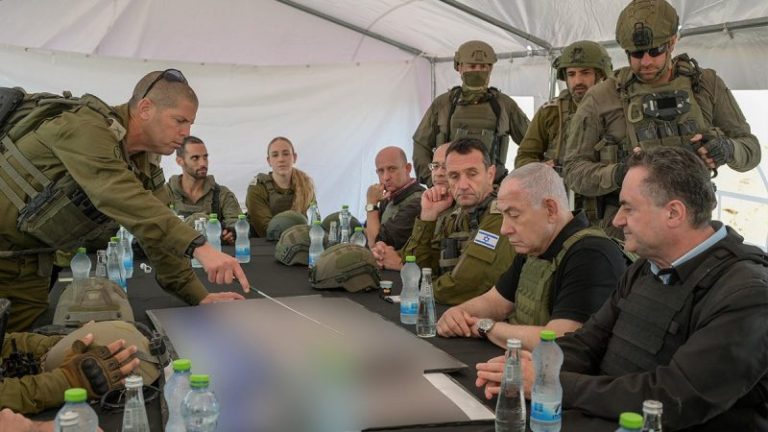
Israeli Prime Minister Benjamin Netanyahu publicly backed a cease-fire agreement with Hezbollah terrorists that would end nearly 14 months of fighting, but the deal, brokered by the U.S. and France, has yet to be formally approved by his cabinet.

Netanyahu’s security Cabinet convened earlier Tuesday, when ministers had been deliberating for more than three hours over the proposed cease-fire. 

At a press conference while deliberations were ongoing, Netanyahu laid out three reasons in support of the deal: to focus on the Iranian threat; provide an opportunity to refresh the Israeli forces; and separate Hamas from the northern front. 

By ending the conflict with Hezbollah, Netanyahu said Hamas would stand alone, clearing the way for Israeli forces to recover the remaining Oct. 7 hostages. 

Netanyahu said he would present the agreement to the Cabinet for a vote later Tuesday. 

‘How long it will be will depends on what will happen in Lebanon,’ Netanyahu said. ‘If Hezbollah doesn’t follow the agreement, we’ll attack.’ 

Under the proposed terms of an initial two-month cease-fire, Hezbollah is required to move its forces north of the Litani River – a significant focal point which in some places is 20 miles from the Israeli border – and Israeli forces must withdraw from southern Lebanon as well. The Lebanese armed forces are to deploy to the border region within 60 days, and a five-country committee chaired by the U.S., and including France, would monitor compliance of the terms of the deal, Reuters reported. 

A peacekeeping mission by observers from the United Nations Interim Force in Lebanon will also continue, according to the Israeli news agency Tazpit Press Service (TPS-IL). 

Among the remaining issues was Israel’s demand to reserve the right to take military action should Hezbollah violate its obligations under the emerging deal.

The Israeli Defense Forces (IDF) said earlier Tuesday that its ground troops have reached parts of Lebanon’s Litani River – considered a longtime Hezbollah stronghold. 

In a statement, the IDF said its troops had reached the Wadi Slouqi area in southern Lebanon and ‘raided Hezbollah strongholds, uncovering and confiscating hundreds of weapons, dismantling dozens of underground facilities, and neutralizing numerous rocket launchers that were prepared for imminent use.’ 

The IDF said the clashes with Hezbollah took place on the eastern end of the Litani, just a few miles from the border. It is one of the deepest places Israeli forces have reached in a nearly two-month ground operation.

The Israeli military said troops ‘conducted intelligence-based raids based on terrorist infrastructure concealed in the complex terrain.’ 

‘The soldiers raided several terrorist targets, engaged in close-quarters combat with terrorists, located and destroyed dozens of launchers, thousands of rockets and missiles, and weapons storage facilities hidden in the mountainside,’ the IDF said. 

Senate Majority Leader Chuck Schumer, D-N.Y., praised the deal, saying it would allow Israelis displaced in the north to return to their homes and ensure Israel’s security against Hezbollah. 

‘As this agreement shows, when terrorists are beaten back both militarily and through dogged diplomacy, the likelihood of peace increases. Hezbollah said they would never give up as long as there was fighting in Gaza, but today’s ceasefire agreement should show Hamas they are as isolated as ever,’ Schumer said in a statement. ‘Now, Hamas must release all the remaining hostages and come to a negotiated ceasefire. Carrying on their failed strategy will lead only to further suffering and SENSELESS bloodshed in Gaza. Hamas must recognize that there’s no future without a strong and secure state of Israel.’

‘The Israel-Hezbollah ceasefire agreement also provides an enforcement mechanism to help ensure Hezbollah remains weakened and allows displaced Lebanese and Israeli civilians to return to their homes,’ he added. ‘I applaud the Biden administration for this agreement and for continuing to work to negotiate a ceasefire and the return of all the hostages in Gaza.’

Hezbollah began attacking Israel on Oct. 8, 2023, a day after Hamas terrorists killed more than 1,200 people and took more than 250 hostages from southern Israel into Gaza, setting off more than a year of fighting. That escalated in September with massive Israeli airstrikes across Lebanon, and an Israeli ground incursion of the country’s south. Hezbollah has fired thousands of rockets into Israeli military bases, cities and towns, including some 250 projectiles on Sunday.

More than 68,000 Israelis have been displaced from their homes along the Lebanese border, TPS-IL reports.

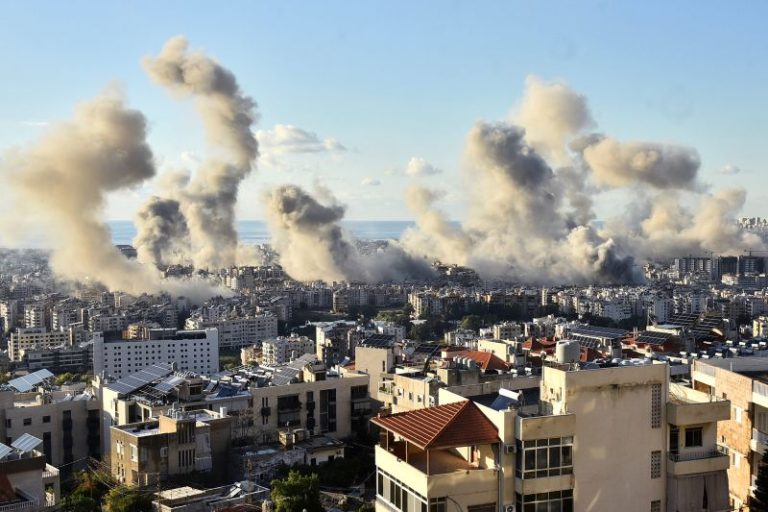
An Israeli strike on Tuesday leveled a residential building in the central Beirut district of Basta — the second time in recent days warplanes have hit the crowded area near the city’s downtown. 

The Israeli military also issued warnings for 20 more buildings in Beirut’s Hezbollah-controlled suburbs to evacuate before they too were struck — a move carried out in the final moments before any cease-fire took hold.

Speaking on the sidelines of a Group of Seven meeting in Italy, the European Union’s foreign policy chief, Josep Borrell, said Tuesday there were ‘no excuses’ for Israel to refuse a cease-fire with Hezbollah, warning that without it, ‘Lebanon will fall apart.’

The Times of Israel reported that Minister of Defense Israel Katz met with the U.N. Special Envoy for Lebanon Jeanine Hennis-Plasschaert on Tuesday, when he said Jerusalem would have ‘Zero tolerance’ for any violation of the truce, warning that ‘If you don’t do it, we will … and with great force.’

The Associated Press contributed to this report.

This post appeared first on FOX NEWS

The ‘Fog of War’ is the strategic message that Russian President Vladimir Putin aimed to signal last week to President Biden, Ukrainian President Volodymyr Zelenskyy, the Pentagon and military and political leaders across the U.S. and NATO.

This iconic metaphor, coined by the renowned Prussian military strategist Karl Von Clausewitz in his seminal work ‘On War,’ connotes the inherent uncertainty that military commanders face when making life and death decisions in wartime. It is because the commander never actually has a clear and full picture of what is taking place on the battlefield. Clausewitz explained that ‘three quarters of the factors on which action in war is based are wrapped in a fog of greater or lesser uncertainty,’ comparing such conditions with the lack of clarity during twilight. 

This is exactly the type of confusion and psychological impact that Putin sought to create and has likely achieved when Russia fired an experimental hypersonic ballistic missile, striking a weapons production plant in the Ukrainian city of Dnipro. This was in retaliation against Ukrainian strikes on a Russian military facility in Bryansk with U.S. made long-range missiles called ATACMS, after President Biden had given Zelenskyy permission to do so.

Russia’s striking Ukraine with a weapon that has never been used in a war before caused temporary confusion in Washington and Kyiv as to the nature of the missile.

The media reported, based on official statements from Kyiv, that the missile in question was an intercontinental ballistic missile or ICBM. ICBMs are designed to wage a nuclear war. It was not until the Pentagon’s deputy press secretary, Sabrina Singh, confirmed that the missile was an ‘intermediate-range ballistic missile,’ or IRBM, that the fears of a major escalation of the war that crossed the 1,000-day milestone had subsided. At least for now. Singh also revealed that ‘the United States was pre-notified, briefly, before the launch, through nuclear risk reduction channels.’ 

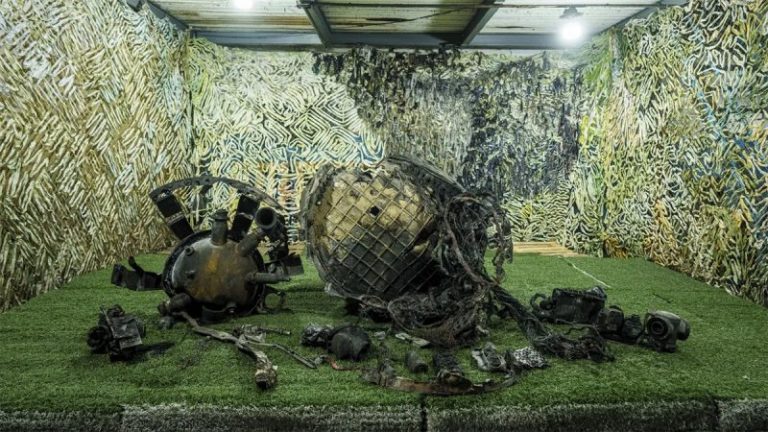
Putin’s choice of this particular weapon, called the Oreshnik, is not accidental. The Oreshnik is an ICBM disguised as an IRBM. Characterizing it as the former or the latter is semantics. It walks, talks, smells and feels like an ICBM. It can do some jobs of an ICBM. Based on the design of the RS-26 Rubezh, an ICBM, the Oreshnik is packed with ICBM technology. It is a MIRV, or multiple independently targetable reentry vehicle (MIRV), another signature of an ICBM. The missile fired at Ukraine on Thursday carried six such warheads. 

The guts of this missile, i.e. its instrumentation (sensors, electronics, data acquisition capabilities installed on the missile) are those of the Rubezh. With its flight capability of between 500 km and 5000 km – just 500 km (310 miles) below the standard low limit of an ICBM – the Oreshnik can target most of Europe and the West Coast of the United States. After a launch, such a missile could probably hit Britain in 20 minutes and Poland in 12 minutes.

The Oreshnik can be outfitted with a non-nuclear or nuclear warhead. And it is nearly impossible to intercept by existing missile defense systems because it is designed to fly at hypersonic speed of Mach 11.

Oreshnik-type missiles are also extremely difficult to properly characterize and discriminate whether they carry a conventional or nuclear payload. Our early warning systems, operated by the U.S. Space Force, look for signatures that are like human fingerprints unique to a specific missile (shape, size, speed, heat/temperature, emissivity, plume, etc.). Then a team of scientists at the Defense Intelligence Agency, where I served as a senior Russia/Putin specialist, conducts a measurement and signature intelligence analysis, making an assessment of the type of missile fired. Since Oreshnik’s instrumentation is that of an ICBM, the technical means could interpret it as an ICBM.

That is exactly why Moscow alerted Washington as to what was about to happen before the launch. It’s not in Putin’s interest to provoke President Biden’s response to what could be a nuclear strike. Kyiv did not get such notification since Ukraine doesn’t have nuclear arms to retaliate.

Putin signaled that today it is conventional, tomorrow it could be nuclear. In peacetime, warring parties follow the arms control notification protocols; in wartime, no such warning is expected. The temporary confusion meant to be achieved by such deception tactics is used to gain the so-called ‘strategic initiative,’ in Russian doctrinal parlance.

The idea is that the fighter who throws the first punch is in a better position to win the fight.

‘Fifty years ago, the streets of Leningrad taught me one thing: If a fight’s unavoidable, you must strike first,’ Putin once said. The Russian General Staff a few years ago made a long-term intelligence assessment that a kinetic war between Russia and the United States was inevitable, given the decades-long confrontation between Moscow and Washington over geopolitical control over former Soviet states.

‘I think it is sufficiently clear and understandable,’ said Putin said in his televised address after the Oreshnik launch. ‘The tests were successful, the goal of the launch was achieved,’ he emphasized, almost certainly directing his message at President Biden. 

Putin’s ally, former president and deputy chair of Russia’s Security Council, Dmitriy Medvedev, explained the meaning of Putin’s warning, ‘The West should take seriously the tests of the new Russian missile system, assess the possible consequences and stop supporting Kyiv.’

He added, ‘Europe now has to guess what damage the system can cause if the warheads are nuclear, whether these missiles can still be shot down and how quickly the missiles will reach the capitals of the Old World. Answer: The damage is unacceptable, it is impossible to shoot down with modern means, and we are talking about minutes. Bomb shelters will not help, so the only hope is that good Russia will warn about launches in advance. Therefore, it is better to stop supporting the war.’ 

Unquestionably, the White House and NATO allies got the message, having called for an emergency meeting taking place today (Tuesday) in Brussels.

The statement made on Friday by Polish Prime Minister Donald Tusk said it all about the peril that Putin and President Biden have placed America, Europe, Ukraine, Russia and the rest of the world in. He noted that the Russia-Ukraine war is ‘entering a decisive phase’ and ‘taking on very dramatic dimensions.’

This post appeared first on FOX NEWS

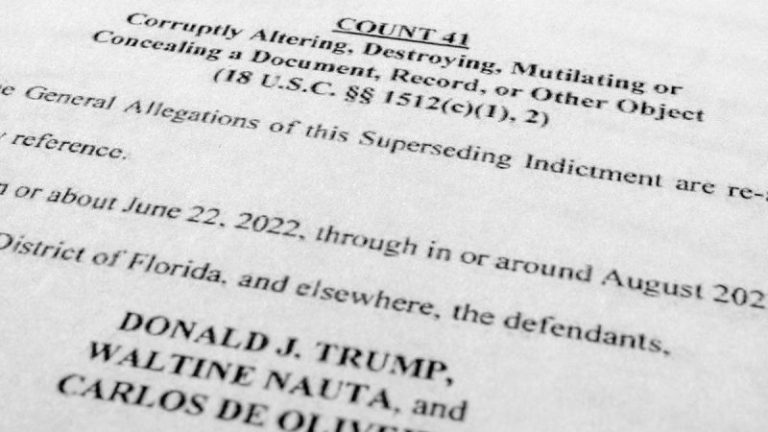
Special Counsel Jack Smith’s investigations into Donald Trump over the last two years – which he opted to dismiss this week – have likely cost U.S. taxpayers more than $50 million, according to Department of Justice expenditure reports.

Financial disclosures from the Special Counsel’s Office show that from mid-November 2022, when Smith was appointed special counsel, until March 31, 2023, his office incurred costs of about $9.25 million. A second disclosure laying out the office’s expenditures for the following six months showed the office’s spending increased to roughly $14.66 million. Meanwhile, a third expenditure report, the latest available, showed that from Oct. 1, 2023, to March 31, 2024, Smith’s office spent roughly $11.84 million.

These costs include both direct and indirect expenses, the latter of which is provided through various Department of Justice agencies.

Expenditure figures for the months between April 1, 2024, and Sept. 30, 2024, have yet to be released, but the average of the three reported periods is roughly $12 million. 

When that estimate is added to the numbers from the three reporting periods that have been publicly reported, the amount spent by Smith’s office since he was appointed rounds to about $47.5 million.

However, this estimate does not include any expenditures from Sept. 30 to date, so the total money spent is likely more than $50 million, Newsweek reported earlier this month. 

Attorney General Merrick Garland appointed Smith in November 2022 to oversee the federal investigation into Trump’s alleged interference in the 2020 election, and his improper handling of sensitive classified documents.

After an exhaustive, nearly two-year investigation, and other cases that saw Trump surrendering to authorities for a mugshot, Smith filed motions on Monday to dismiss the cases against the former president, citing procedural standards that preclude the prosecution of a sitting president.

The judge overseeing the election interference case agreed to drop the charges, while a decision on the classified documents case was still pending as of Monday evening, according to the Associated Press.

Trump responded to the judge’s decision Monday, calling the investigations he has been subjected to ’empty and lawless,’ adding that they ‘should never have been brought.’ 

‘Nothing like this has ever happened in our Country before,’ Trump wrote on Truth Social, before laying into state prosecutors and district attorneys, such as Fulton County DA Fani Willis, Manhattan DA Alvin Bragg and New York state Attorney General Letitia James, who Trump said ‘inappropriately, unethically and probably illegally campaigned on ‘GETTING TRUMP.’’ 

Fox News Digital reached out to the Department of Justice and White House for comment, but did not receive a response prior to publication.

This post appeared first on FOX NEWS