Author

admin

Browsing

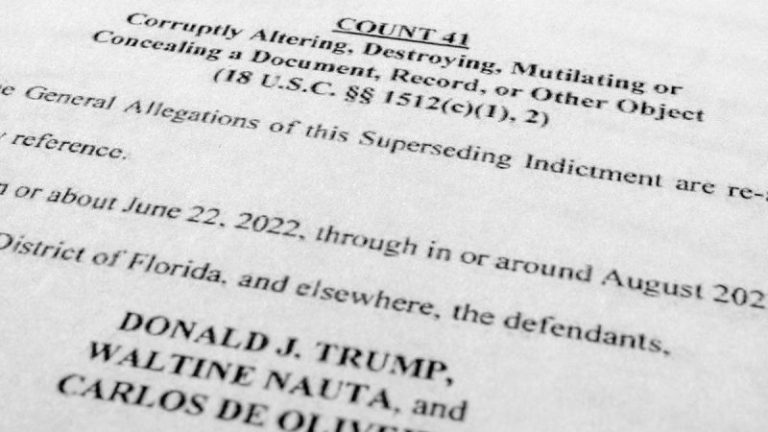
Special Counsel Jack Smith’s investigations into Donald Trump over the last two years – which he opted to dismiss this week – have likely cost U.S. taxpayers more than $50 million, according to Department of Justice expenditure reports.

Financial disclosures from the Special Counsel’s Office show that from mid-November 2022, when Smith was appointed special counsel, until March 31, 2023, his office incurred costs of about $9.25 million. A second disclosure laying out the office’s expenditures for the following six months showed the office’s spending increased to roughly $14.66 million. Meanwhile, a third expenditure report, the latest available, showed that from Oct. 1, 2023, to March 31, 2024, Smith’s office spent roughly $11.84 million.

These costs include both direct and indirect expenses, the latter of which is provided through various Department of Justice agencies.

Expenditure figures for the months between April 1, 2024, and Sept. 30, 2024, have yet to be released, but the average of the three reported periods is roughly $12 million. 

When that estimate is added to the numbers from the three reporting periods that have been publicly reported, the amount spent by Smith’s office since he was appointed rounds to about $47.5 million.

However, this estimate does not include any expenditures from Sept. 30 to date, so the total money spent is likely more than $50 million, Newsweek reported earlier this month. 

Attorney General Merrick Garland appointed Smith in November 2022 to oversee the federal investigation into Trump’s alleged interference in the 2020 election, and his improper handling of sensitive classified documents.

After an exhaustive, nearly two-year investigation, and other cases that saw Trump surrendering to authorities for a mugshot, Smith filed motions on Monday to dismiss the cases against the former president, citing procedural standards that preclude the prosecution of a sitting president.

The judge overseeing the election interference case agreed to drop the charges, while a decision on the classified documents case was still pending as of Monday evening, according to the Associated Press.

Trump responded to the judge’s decision Monday, calling the investigations he has been subjected to ’empty and lawless,’ adding that they ‘should never have been brought.’ 

‘Nothing like this has ever happened in our Country before,’ Trump wrote on Truth Social, before laying into state prosecutors and district attorneys, such as Fulton County DA Fani Willis, Manhattan DA Alvin Bragg and New York state Attorney General Letitia James, who Trump said ‘inappropriately, unethically and probably illegally campaigned on ‘GETTING TRUMP.’’ 

Fox News Digital reached out to the Department of Justice and White House for comment, but did not receive a response prior to publication.

This post appeared first on FOX NEWS

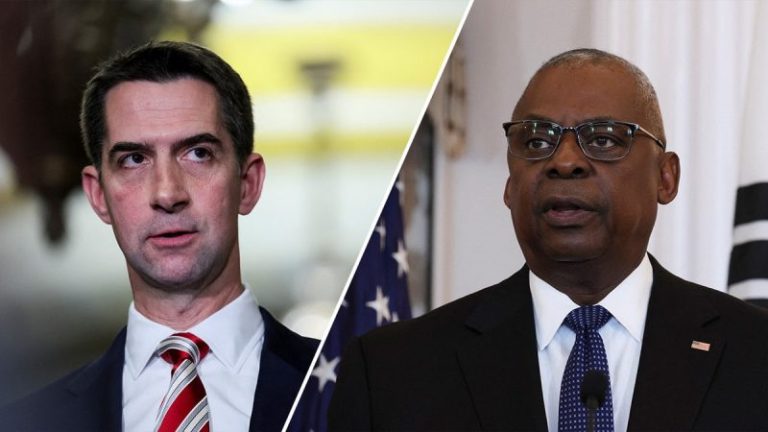
Sen. Tom Cotton, R-Ark., blasted anyone within the Defense Department working to safeguard certain norms or policies that they expect the incoming Trump administration to target. 

‘It appears that partisans and obstructionists inside the Department of Defense are laying groundwork to defy or circumvent President Trump’s plans for both military and civil-service reform,’ Cotton wrote in a letter to Defense Secretary Lloyd Austin in reference to reports of such strategizing among DOD employees. 

‘These actions undermine civilian control of the military and our constitutional structure of government.’

Earlier this month, it was reported that there were ‘informal discussions’ occurring among Pentagon officials on what the department would do if Trump ordered the military for a domestic purpose or if he fired a significant number of employees, per CNN. 

One anonymous defense official was quoted in the report saying, ‘Troops are compelled by law to disobey unlawful orders.’ 

‘But the question is what happens then – do we see resignations from senior military leaders? Or would they view that as abandoning their people?’ they reportedly asked. 

President-elect Trump promised during his campaign to shake up the federal government, whether it be through staffing changes or reorganization. Some reports have indicated specific people are being looked at for termination once he enters office again. An ally of Trump, former presidential candidate Vivek Ramaswamy, has been vocal about his belief that the federal government must be shrunk in size. 

Ramaswamy has been tapped by Trump, along with billionaire business magnate Elon Musk, to lead his planned Department of Government Efficiency (DOGE) in his new administration. The proposed department has the goal of reducing the size of government, cutting spending and increasing efficiency. 

Cotton criticized Lloyd in his letter for ‘promulgating false claims that the incoming administration plans to arbitrarily fire uniformed leaders.’ 

Further, he slammed the secretary for a message after the election that the military would specifically follow ‘lawful orders’ from Trump. Cotton said this was ‘a thinly veiled and baseless insinuation that President Trump will issue unlawful orders.’

‘I have to observe that these actions and reports only prove the need for reform and fundamental change at the Department of Defense. And, of course, while inappropriate and annoying, these tactics are also useless because no action by the outgoing administration can limit the incoming president’s constitutional authority as commander-in-chief,’ the Arkansas Republican wrote. 

Cotton was recently elected to serve as chairman of the Senate Republican conference in the new Congress. He is also expected to take Florida Sen. Marco Rubio’s place as the head of the Senate Select Committee on Intelligence. 

The DOD did not immediately provide comment to Fox News Digital for purposes of this story. 

This post appeared first on FOX NEWS

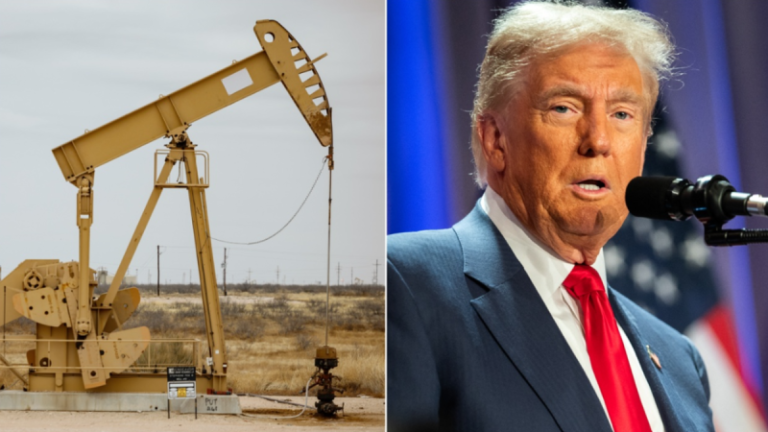
President-elect Trump is expected by many of his supporters to preside over an energy ‘boom’ in the United States by slashing Biden administration regulations, and one industry expert told Fox News Digital that she is encouraged by Trump’s energy sector cabinet nominees while outlining specific moves she hopes to see over the next four years.

I think the three cabinet picks that Trump has so far chosen to lead EPA, Interior and Energy are a vast improvement to who we have currently in those respective positions,’ Gabriella Hoffman, Independent Women’s Forum Center for Energy & Conservation Director, told Fox News Digital. 

‘They’re going to be taking a more tactful approach to energy development. They’re not going to be keeping things in the ground. They’re going to be prioritizing reliable energy sources like coal, oil, natural gas, nuclear even, and most recently, geothermal has also taken a renewed interest by Congress, and we will probably see geothermal as well unleashed. But also there’s going to be this balance of this energy abundant mindset with promoting land stewardship, expanding hunting and fishing opportunities, expanding ocean access, and reevaluating so-called clean energy projects that promise to be greener or are believed to be green but actually might be worse for the environment and don’t produce enough reliable energy or electricity.’

Hoffman told Fox News Digital the country is going to see a ‘reassessment of what conservation looks like’ that is ‘balanced out by this robust kind of development of energy here in the United States.

‘So it’s going to be great for the economy, we believe. As a center, we believe it’s going to lead to better national security with more energy being produced here. We’re going to be less reliant on countries that produce certain energy sources less cleanly, less environmentally friendly than we do.’

In recent days, President-elect Trump has named former Republican Congressman Lee Zeldin to head the EPA, Liberty Energy CEO Chris Wright to head the Energy Department, and North Dakota Gov. Doug Burgum to oversee the Interior Department. 

Hoffman outlined several top line agenda items that her center hopes to see from the three departments.

Emphasizing reliable energy production, moving away from sources that are subsidized like solar and wind to reliable sources that don’t really need to be subsidized or that are actually very plentiful and can be extracted safely and responsibly here in the United States,’ Hoffman said. 

‘Another priority is to kind of clamp down on this regulatory overreach we have seen across all three agencies. We have seen them take extreme positions with devising so-called tailpipe emissions standards, all these different green energy efficiency, household appliance directives. We’ve seen them take extreme positions on policies like the America the Beautiful Plan, or the 30 by 30 plan to protect so-called 30% of waters in lands by 2030, which is a very extreme position, not rooted in conservation whatsoever. It’s a control mechanism, not a conservation tool.’

Hoffman said she anticipates a ‘return back to true conservation’ under Trump ‘where you don’t see environmentalist groups suing agencies in perpetuity to block different measures of progress to go into effect.’

Trump often vowed on the campaign trail to unleash an energy boom in the United States by slashing regulations and expanding drilling in the United States and Hoffman told Fox News Digital she is optimistic that will happen.

Our center is very optimistic that there will be an energy boom,’ Hoffman said. ‘It’s not going to happen overnight, but it could be seen within a couple of months. I think realistically, once we hit the six-month mark, perhaps the year-end mark if President-elect Trump is going to be able to repeal some of the Biden-Harris directives as it relates to all the climate measures, the day one executive orders are really going to be a weight off of the administrative state’s shoulders and then all other policies that emanate from that tackling the climate crisis executive order will similarly be probably clamped down.’

Trump has for months vowed to ‘undo’ the Inflation Reduction Act, the Democrats’ marquee climate and clean energy spending legislation that allocates $369 billion in subsidies aimed at re-shoring investments for electric vehicle manufacturing and battery production as well as new utility-scale wind and solar projects.

Hoffman told Fox News Digital that repealing the IRA will be critical to unleashing American energy despite possible opposition from some Republicans in Congress who like certain aspects of the bill. 

‘For gas prices, electricity prices to truly be lowered, you’re going to have to see that law terminated or repealed, because that is what invited a lot of the so-called energy or environmental inflation,’ Hoffman said. ‘These higher prices at the pump, higher utility bills, higher food costs, because everything emanates from energy, transportation, food delivery, things of that sort. So that law really does have to be kind of called into question. And perhaps Trump will work with Congress to ensure that that is repealed.’

Hoffman also explained that a focus on nuclear energy will be critical over the next four years.

‘It is a really safe technology, especially produced here, and we don’t want China or Russia to have an edge,’ Hoffman said. 

Fox News Digital’s Breanne Deppisch contributed to this report.

This post appeared first on FOX NEWS

Israel has agreed to a cease-fire agreement with Hezbollah terrorists that would end nearly 14 months of fighting, President Biden announced Tuesday.

Biden, speaking from the White House Rose Garden, said that Israel and Lebanon agreed to the deal. Israel retains the right to self-defense should Hezbollah break the pact, Biden said. 

‘Let’s be clear. Israel did not launch this war. The Lebanese people did not seek that war either. Nor did the United States,’ Biden said. ‘Security for the people of Israel and Lebanon cannot be achieved only on the battlefield. And that’s why I directed my team to work with the governments of Israel and Lebanon, to forge a cease-fire, to bring a conflict between Israel and Hezbollah to a close.’

‘This is designed to be a permanent cessation of hostilities,’ Biden added. ‘What is left of Hezbollah and other terrorist organizations will not be allowed. Well, I emphasize, will not be allowed to threaten the security of Israel again.’

In a prepared joint statement with Biden and French President Emmanuel Macron, both leaders said the cease-fire would restore calm and allow residents of both countries to return to their homes on both sides of the Blue Line, the demarcation line between Israel and Lebanon. 

Israeli Prime Minister Benjamin Netanyahu spoke with Biden and ‘thanked him for the US involvement in achieving the ceasefire agreement in Lebanon and for the understanding that Israel maintains freedom of action in enforcing it,’ his office said. 

Netanyahu’s security Cabinet convened earlier Tuesday, when ministers had been deliberating for more than three hours over the proposed deal. The political-security cabinet approved the United States’ proposal for a ceasefire arrangement in Lebanon, with 10 ministers in favor and one opposed, Netanyahu’s office said. 

At a press conference while deliberations were ongoing, Netanyahu laid out three reasons in support of the deal: to focus on the Iranian threat; provide an opportunity to refresh the Israeli forces; and separate Hamas from the northern front. 

The conflict in Lebanon began when Hezbollah, which is backed by Iran, initiated strikes into Israel’s north after Hamas attacked Israel on Oct. 7, 2023. Since the back-and-forth began, Israel has killed many of Hezbollah’s leaders, in addition to degrading its infrastructure in Lebanon. 

By ending the conflict with Hezbollah, Netanyahu said Hamas would stand alone in the Gaza Strip, clearing the way for Israeli forces to recover the remaining Oct. 7 hostages. 

Earlier, Netanyahu said he would present the agreement to the Cabinet for a vote later Tuesday. 

‘How long it will be will depends on what will happen in Lebanon,’ Netanyahu said. ‘If Hezbollah doesn’t follow the agreement, we’ll attack.’ 

Under the proposed terms of an initial two-month cease-fire, Hezbollah would have been required to move its forces north of the Litani River – a significant focal point which in some places is 20 miles from the Israeli border – and Israeli forces must withdraw from southern Lebanon as well. The Lebanese armed forces are to deploy to the border region within 60 days, and a five-country committee chaired by the U.S., and including France, would monitor compliance of the terms of the deal, Reuters reported. 

Rocket alarms began sounding Tuesday evening across Israel around the time the deal was accepted. 

‘Israel: We accept your request for a ceasefire. Hezbollah: We raise you a barrage of missiles,’ Eylon Levy, a former spokesman for Israel, wrote on X. 

Sen. Ted Cruz, R-Texas, backed Israel in a statement, but criticized former President Barack Obama and the Biden administration over its handling of the conflict. 

‘I am deeply disturbed both by reports that Obama-Biden officials exerted enormous pressure on our Israeli allies to accept this ceasefire and by how those officials are characterizing Israel’s obligations,’ Cruz said. ‘This pressure and these statements are further efforts to undermine Israel and constrain the incoming Trump administration.’

Among the remaining issues was Israel’s demand to reserve the right to take military action should Hezbollah violate its obligations under the emerging deal.

‘Obama-Biden officials pressured our Israeli allies into accepting the ceasefire by withholding weapons they needed to defend themselves and counter Hezbollah, and by threatening to facilitate a further, broader, binding international arms embargo through the United Nations,’ he added. ‘Obama-Biden officials are already trying to use Israel’s acceptance of this ceasefire to ensure that Hezbollah and other Iranian terrorist groups remain intact across Lebanon, and to limit Israel’s future freedom of action and self-defense.’

Republicans have criticized the Biden administration for constraining Israel while fighting off attacks from terrorist neighbors. 

In addition to the cease-fire, a peacekeeping mission by observers from the United Nations Interim Force in Lebanon will also continue, according to the Israeli news agency Tazpit Press Service (TPS-IL). 

The Israeli Defense Forces (IDF) said earlier Tuesday that its ground troops have reached parts of Lebanon’s Litani River – considered a longtime Hezbollah stronghold. 

In a statement, the IDF said its troops had reached the Wadi Slouqi area in southern Lebanon and ‘raided Hezbollah strongholds, uncovering and confiscating hundreds of weapons, dismantling dozens of underground facilities, and neutralizing numerous rocket launchers that were prepared for imminent use.’ 

The IDF said the clashes with Hezbollah took place on the eastern end of the Litani, just a few miles from the border. It is one of the deepest places Israeli forces have reached in a nearly two-month ground operation.

The Israeli military said troops ‘conducted intelligence-based raids based on terrorist infrastructure concealed in the complex terrain.’ 

‘The soldiers raided several terrorist targets, engaged in close-quarters combat with terrorists, located and destroyed dozens of launchers, thousands of rockets and missiles, and weapons storage facilities hidden in the mountainside,’ the IDF said. 

Senate Majority Leader Chuck Schumer, D-N.Y., praised the deal, saying it would allow Israelis displaced in the north to return to their homes and ensure Israel’s security against Hezbollah. 

‘As this agreement shows, when terrorists are beaten back both militarily and through dogged diplomacy, the likelihood of peace increases. Hezbollah said they would never give up as long as there was fighting in Gaza, but today’s ceasefire agreement should show Hamas they are as isolated as ever,’ Schumer said in a statement. ‘Now, Hamas must release all the remaining hostages and come to a negotiated ceasefire. Carrying on their failed strategy will lead only to further suffering and SENSELESS bloodshed in Gaza. Hamas must recognize that there’s no future without a strong and secure state of Israel.’

‘The Israel-Hezbollah ceasefire agreement also provides an enforcement mechanism to help ensure Hezbollah remains weakened and allows displaced Lebanese and Israeli civilians to return to their homes,’ he added. ‘I applaud the Biden administration for this agreement and for continuing to work to negotiate a ceasefire and the return of all the hostages in Gaza.’

Hezbollah began attacking Israel on Oct. 8, 2023, a day after Hamas terrorists killed more than 1,200 people and took more than 250 hostages from southern Israel into Gaza, setting off more than a year of fighting. That escalated in September with massive Israeli airstrikes across Lebanon, and an Israeli ground incursion into the country’s south. Hezbollah has fired thousands of rockets into Israeli military bases, cities and towns, including some 250 projectiles on Sunday.

More than 68,000 Israelis have been displaced from their homes along the Lebanese border, TPS-IL reports.

An Israeli strike on Tuesday leveled a residential building in the central Beirut district of Basta — the second time in recent days warplanes have hit the crowded area near the city’s downtown. 

The Israeli military also issued warnings for 20 more buildings in Beirut’s Hezbollah-controlled suburbs to evacuate before they too were struck — a move carried out in the final moments before any cease-fire took hold.

Speaking on the sidelines of a Group of Seven meeting in Italy, the European Union’s foreign policy chief, Josep Borrell, said Tuesday there were ‘no excuses’ for Israel to refuse a cease-fire with Hezbollah, warning that without it, ‘Lebanon will fall apart.’

The Times of Israel reported that Minister of Defense Israel Katz met with the U.N. Special Envoy for Lebanon Jeanine Hennis-Plasschaert on Tuesday, when he said Jerusalem would have ‘Zero tolerance’ for any violation of the truce, warning that ‘If you don’t do it, we will … and with great force.’

The Associated Press contributed to this report.

This post appeared first on FOX NEWS

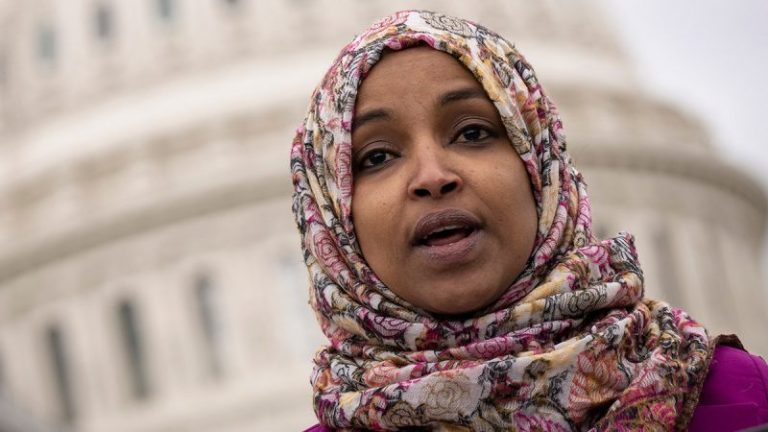
Controversial ‘squad’ member Rep. Ilhan Omar, D-Minn., has explained where she thinks the Democratic presidential ticket of Vice President Kamala Harris and Gov. Tim Walz, D-Minn., went wrong. 

According to Omar, the campaign’s choice to embrace the endorsements of former Republican Rep. Liz Cheney and her father, former Vice President Dick Cheney, was ‘a huge misstep.’ 

This was especially true in battleground state Michigan, she told the Minnesota Star-Tribune, because it was where the Uncommitted Movement maintained a stronghold.

The Uncommitted Movement specifically withheld support from President Joe Biden — and then Harris — because of its disapproval of their handling of the war in Gaza. Particularly, a large population of Arabs and Muslims in Michigan believed the U.S. was not holding Israel accountable for death and destruction in Gaza.

‘You have the one name for my generation and generations younger than me that is synonymous with war,’ Omar said of Cheney. 

‘It does say something about where your priorities are, even if those are not your priorities.’

As part of the Harris-Walz campaign’s strategy to attract disaffected Republicans, they advertised former Rep. Cheney’s endorsement and even hosted an event with her and Harris in battleground state Wisconsin. 

She also explained why she thought Harris lost the city of Dearborn, Michigan, which is home to a large Arab community. The congresswoman pointed to the fact that President-elect Donald Trump met with the Democratic mayor, but Harris and Walz were only willing to send staff.  

‘I think that personal touch for that community made the difference,’ Omar said. ‘We could have had that personal touch.’

Despite her past record of criticism of and opposition to Trump, Omar claimed she’d be open to collaborating with his administration. She maintained that she would still be opposing ‘hurtful’ policies towards her constituents, though. 

With Trump returning to office, Omar said she is afraid that Israel will get the ‘green light’ to ‘finish their genocidal war.’ 

The Harris-Walz team did not provide comment in time for publication.

This post appeared first on FOX NEWS
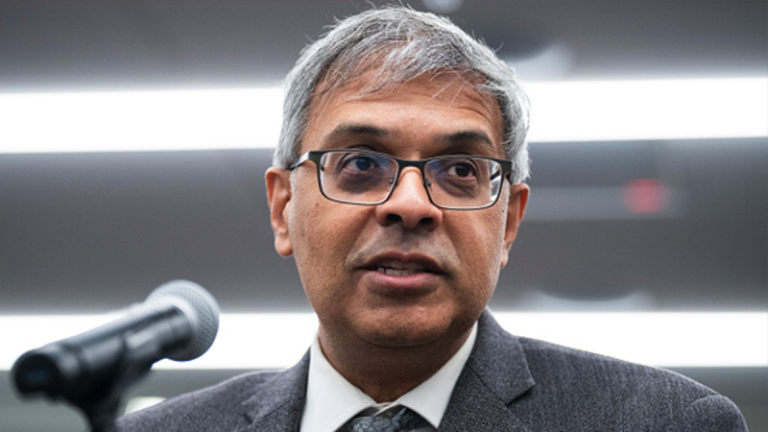
Stanford-trained physician and economist Jay Bhattacharya has officially been nominated by President-elect Donald Trump to serve as the next director of the National Institutes of Health (NIH).

Trump made the announcement in a Truth Social post, writing: ‘I am thrilled to nominate Jay Bhattacharya, MD, PhD, to serve as Director of the National Institutes of Health. Dr. Bhattacharya will work in cooperation with Robert F. Kennedy Jr. to direct the Nation’s Medical Research, and to make important discoveries that will improve Health, and save lives.’

Bhattacharya met this week with Robert F. Kennedy Jr., who was nominated by Trump to lead the Department of Health and Human Services, which oversees the NIH and other health agencies, and impressed the former presidential candidate with his ideas to overhaul the NIH, which oversees U.S. biomedical research, according to a report by The Washington Post.

The NIH also awards funding grants to hundreds of thousands of researchers, oversees clinical trials on its Maryland campus and supports a variety of efforts to develop drugs and therapeutics.

The nominee for the NIH director must be confirmed by the Senate, which will have a Republican majority beginning in January.

Bhattacharya has called for moving the NIH’s focus toward funding more innovative research and cutting the influence of some of its longest-serving officials.

Kennedy Jr. has played a central role in choosing top health care staff and deputies for Trump’s next administration, including Johns Hopkins surgeon Marty Makary, who Trump selected to lead the Food and Drug Administration, and internal medicine physician and former Republican congressman from Florida Dave Weldon, who Trump chose to head the Centers for Disease Control and Prevention, according to the report.

Bhattacharya and Makary worked together on a blueprint for a proposed commission to investigate the nation’s coronavirus response, the report noted.

Trump’s selections of Makary, Weldon and family and emergency medicine physician Janette Nesheiwat, who the president-elect nominated to serve as surgeon general, also must be confirmed by the Senate.

Bhattacharya was a prominent critic of the federal government’s COVID-19 response during the early days of the pandemic. He co-wrote an open letter in October 2020, during Trump’s first term, that called for the government to roll back pandemic shutdowns but maintain ‘focused protections’ for vulnerable populations, such as the elderly.

The suggestion was supported by Republican lawmakers and many Americans who were critical of shutdowns and wanted to return to pre-pandemic life. However, public health experts, including then-NIH Director Francis S. Collins, criticized the proposal as premature and dangerous amid the spread of COVID-19 at a time when vaccines were not yet available.

Bhattacharya has also called for rolling back the power of some of the 27 institutes and centers that make up the NIH, arguing that some career civil servants wrongly shaped national policies at the height of the pandemic and did not allow dissenting perspectives.

He, along with other critics of the agency, have criticized former Director of the National Institute of Allergy and Infectious Diseases Anthony Fauci, who helped shape the nation’s coronavirus response during the Trump and Biden administrations before leaving the federal government in December 2022.

The NIH has also been investigated by congressional lawmakers over the pandemic response, with Republicans charging that the agency’s leaders mismanaged the response to the virus and calling for the agency to be overhauled.

Current and former NIH officials, including Fauci, have defended the agency’s response, arguing that federal leaders generally did the best that they could to address the virus.

This post appeared first on FOX NEWS
Experts expect President-elect Donald Trump to take aim at federal agencies and Biden-era regulations after campaigning on deregulation of the administrative state. 

‘The first thing is that on day one of [Trump’s] presidency, we’ll see a lot of executive orders, which will order agencies to review the administration regulations to determine whether they should be retained, amended or repealed,’ Robert Glicksman, J.B. and Maurice C. Shapiro Professor of Environmental Law at George Washington University Law School, told Fox News Digital. 

Mark Chenoweth, president of the New Civil Liberties Alliance, particularly pointed to Biden-era regulations, saying they could be on the chopping block once Trump takes office, telling Fox News Digital, ‘the Biden administration did a lot of things that lacked statutory authority completely.’

Chenoweth noted that the Biden administration has already been the target of lawsuits over its regulations and said that if Trump were to take those regulations on, ‘I think they’ll enjoy a lot of success.’

Trump has already been vocal about his intentions of cutting back on federal agency power and slashing the flow of federal dollars. The president-elect has also announced he has tapped Elon Musk and Vivek Ramaswamy to head the Department of Government Efficiency (DOGE). 

The entity will act as an advisory panel, not a government agency, and will be aimed at suggesting ways to dismantle government bureaucracy and restructure federal agencies in order to save costs and improve efficiency, according to Trump’s transition team.

Regarding DOGE, Glicksman stated the Trump administration will ‘certainly take seriously’ DOGE’s guidance on ‘cutting back on regulations, streamlining executive agencies, possibly even eliminating some agencies.’ 

Both Chenoweth and Glicksman said they can foresee labor regulations becoming a target come January. Glicksman said climate change and environmental regulations could also come under fire.

‘In the labor area, because [the Biden administration has] been so radical, they really reached well beyond what the statutory authority that was given to NLRB or the Department of Labor with a lot of what they’ve done. So that’s one area that I could foresee,’ Chenoweth said. 

Likewise, the U.S. Supreme Court ruled to overturn the Chevron doctrine in June of this year in its Loper Bright decision. The doctrine previously gave deference to an agency’s interpretation of a federal regulation. In its holding, the Supreme Court effectively scaled back administrative power in holding that ‘Courts must exercise their independent judgment in deciding whether an agency has acted within its statutory authority.’

Chenoweth, whose organization litigated on the matter, applauded the Loper Bright ruling, saying it ‘goes back to empowering Congress rather than the administrative agencies.’

‘For the last 40 years, the administrative state has been burgeoning because of this ability to, kind of, write law and create law itself when there’s a gap or ambiguity in the statute,’ Chenoweth said. ‘Now, they’re not going to able to do that so much. And so it’s going to throw it back to Congress if we need to have reform in an area or new legislation.’

Glicksman, however, said Loper Bright could ‘boomerang’ on the Trump administration instead. 

‘Had Chevron remained in effect, it would be Trump administration initiatives that would get the benefit of Chevron deference, but that’s no longer the case,’ Glicksman said. ‘And so it’s possible that courts will look more rigorously or apply greater scrutiny to Trump administration initiatives in administrative law issues in administrative ones than they would have done had Loper Bright not been decided.’

Glicksman said he can foresee such legal challenges unfolding specifically in the Fifth Circuit Court of Appeals, which notably tends to lean conservative in its rulings. Likewise, Glicksman predicts Democrat-led challenges to appear in the Ninth and D.C. Circuits. 

‘I think you’ll see blue states led by California challenging those regulations, starting off probably in the Ninth Circuit and the D.C. Circuit, which are more friendly to agency authority than the Fifth Circuit and some other circuits. So you’ll see a skewing of litigation,’ Glicksman said. 

Chenoweth stated that because so many Biden-era regulations ‘are so lacking in authority,’ the circuit in which the lawsuit is started may very well not make much of a difference. 

This post appeared first on FOX NEWS
Spanish retailer Mango is embarking on a bold expansion plan in the U.S. as it looks to shed its fast-fashion image and position itself as a premium brand.  

The privately held company, headquartered in Barcelona, plans to open 42 new storefronts in the U.S. by the end of the year and aims to launch 20 more in 2025, primarily in the Sun Belt and Northeast, Mango CEO Toni Ruiz told CNBC in an interview. 

The $70 million expansion plan includes a new logistics center outside of Los Angeles and about 600 new jobs, bringing the company’s U.S. headcount to about 1,200 employees by next year. 

“This is a long-term commitment,” Ruiz said. “We have also the opportunity to have bigger stores in the U.S.,” he noted, adding Mango will open some multiline stores that feature men’s and kids’ items.

Mango’s sales grew more than 10% in the U.S. this year and the company expects to see double-digit growth again next year. 

Currently, Mango’s largest market is its home base in Spain. While the U.S. is among its top five markets, the company is aiming to grow sales in the region so it can breach the top three. The goal is part of a larger strategic plan at Mango focused on growing sales from about 3.1 billion euros annually to 4 billion euros by 2026.

Mango, known for its European chic basics, is looking to reposition itself as a premium brand and signal to consumers that it is not a fast-fashion label. Its design process takes between seven and eight months, and everything is designed in-house in Barcelona, Ruiz said. 

“Internally we have all the design, all the patterns, all the fittings — this is very important for us so 100% is done here. We also have 500 people taking care of the product from end to end,” said Ruiz. “We are trying to elevate. What does it mean, elevate? We think that our customer appreciates a lot this creativity, this design, this own style. So this is why we are pushing a lot, not only in terms of quality, design and also, why not prices? Because our proposal is getting better.” 

Ruiz said Mango’s U.S. growth plans are focused on stores because a physical presence will allow the company to get closer to its consumer and tell its story in a new way.

The company follows a string of other international competitors such as Sweden’s H&M, Spain’s Zara and Japan’s Uniqlo that have turned to the U.S. market for growth. They are all competing to win over the average American household, which spends on average about $2,000 annually on clothes, according to a Lending Tree study.

Mango has opened stores in Pennsylvania; Washington, D.C.; and Massachusetts, but has turned its sights to the Sun Belt for its next phase of growth, driven by insights from e-commerce.

Mango’s website now represents about 33% of overall sales and helps the retailer determine where its customers are shopping from and what they are buying, said Ruiz. 

“It’s a big challenge for us, because we have understood that every state in the U.S. is like a country in Europe, so because of the customer, because of the way of dressing,” said Ruiz. “It’s very important to understand the difference between the states. … So this is why we try to go step by step.” 

This post appeared first on NBC NEWS

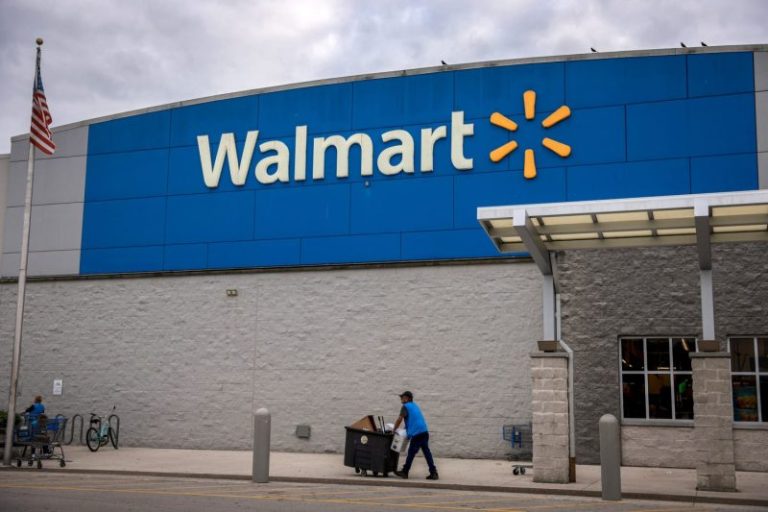
Walmart on Monday confirmed that it’s ending some of its diversity initiatives, removing some LGBTQ-related merchandise from its website and winding down a nonprofit that funded programs for minorities.

The nation’s largest employer, which has about 1.6 million U.S. workers, joined a growing list of companies that have stepped back from diversity, equity and inclusion efforts after feeling the heat from conservative activists.

Some have also attributed changes to the U.S. Supreme Court’s decision last year that struck down affirmative action programs at colleges.

Those companies include Tractor Supply, which said in June it was eliminating DEI roles and stopping sponsorship of Pride festivals. Lowe’s, Ford and Molson Coors have also walked back some of their equity and inclusion policies in recent months.

Others, such as Anheuser-Busch-owned Bud Light and Target, have faced sharp backlash and falling sales after marketing campaigns or merchandise focused on the LGBTQ community.

In a statement, Walmart said it is “willing to change alongside our associates and customers who represent all of America.”

“We’ve been on a journey and know we aren’t perfect, but every decision comes from a place of wanting to foster a sense of belonging, to open doors to opportunities for all our associates, customers and suppliers and to be a Walmart for everyone,” the statement said.

Walmart’s DEI changes were first reported by Bloomberg News.

Among the changes, Walmart will no longer allow third-party sellers to sell some LGBTQ-themed items on Walmart’s website, including items marketed to transgender youth like chest binders, company spokeswoman Molly Blakeman said.

She said it also recently decided to stop sharing data with the Human Rights Campaign, a nonprofit that tracks companies’ LGBTQ policies, or with other similar organizations.

Additionally, the big-box retailer is winding down the Center for Racial Equity, a nonprofit that Walmart started in 2020 after George Floyd’s murder sparked protests across the country. At the time, Walmart and the company’s foundation pledged $100 million over five years to fight systemic racism and create the center.

Over the past year, the company has phased out supplier diversity programs, which gave preferential financing to some groups, such as women and minorities, after the Supreme Court decision striking down affirmative action.

It’s also moved away from using the term “diversity, equity and inclusion” or DEI in company documents, employee titles and employee resource groups. For example, its former chief diversity officer role is now called the chief belonging officer.

Yet, Walmart will continue to award grants, disaster relief, and funding to events like Pride parades, but with more guidelines of how funding can be used, Blakeman said.

Some recent changes came on the heels of pressure from conservative activist Robby Starbuck, who threatened a consumer boycott of Walmart. Starbuck, a vocal DEI-opponent who had also put heat on Tractor Supply, touted Walmart’s changes in a post on X, describing them as “the biggest win yet for our movement to end wokeness in corporate America.”

Walmart had conversations with Starbuck over the last week and already had some DEI-related changes underway, Blakeman said.

Walmart’s DEI changes were first reported by Bloomberg News.

This post appeared first on NBC NEWS

Kohl’s is getting a new CEO, its third since 2018.

The off-mall department store’s current CEO Tom Kingsbury is stepping down effective Jan. 15. He will leave the position he held first on an interim basis starting in late 2022, and then permanently since early 2023.

Michaels CEO Ashley Buchanan will take over the top job at Kohl’s as Kingsbury departs, after leading the crafting retailer since 2020. Prior to his time at Michaels, Buchanan was at Walmart and its Sam’s Club division for 13 years.

Kohl’s shares fell about 3% in extended trading following the announcement.

At the world’s largest retailer, he held the roles of chief merchandising and chief operating officer for Walmart U.S. e-commerce and chief merchant at Sam’s Club before that. Buchanan is currently on the board of Macy’s, but will be stepping down from that role.

Kingsbury will remain with Kohl’s in an advisory role to Buchanan and stay on the board until he retires in May. Kohl’s doesn’t intend to replace Kingsbury and will reduce the board size by one seat.

Buchanan will step in just after the critical holidays end and as the retailer closes its fiscal year. There’s a lot of work to be done at a time when department stores are struggling to resonate with shoppers who have more options than ever before. While Kohl’s off-mall physical format has insulated it a bit more than other department stores, it has had a difficult several years.

Kohl’s shares fell 17% during Kingsbury’s interim period from Dec. 2, 2022 to Feb. 2, 2023 and then dropped a further 45% since. Kingsbury hasn’t been able to return sales to growth at Kohl’s. Its comparable store sales, a key metric for retailers, have fallen for the past 10 quarters.

Kingsbury took over as CEO after Michelle Gass left Kohl’s to become president and then eventual CEO of Levi Strauss. Kingsbury had been a member of the Kohl’s board since 2021. He previously served as CEO of Burlington Stores from 2008 to 2019.

This post appeared first on NBC NEWS