Author

admin

Browsing

Kenneth Leech, the former co-chief investment officer of Western Asset Management Co, was charged by U.S. authorities on Monday with running a fraudulent “cherry-picking” scheme where he improperly favored some clients’ accounts over others when allocating trades.

The U.S. Securities and Exchange Commission said that between January 2021 and October 2023, Leech disproportionately allocated better performing trades to favored portfolios, and worse performing trades to other portfolios.

Leech also faces related criminal charges from the U.S. Attorney’s office in Manhattan, the SEC said.

Lawyers for Leech did not immediately respond to requests for comment. The U.S. attorney’s office did not immediately respond to a similar request.

Western Asset Management, known as Wamco, is part of Franklin Resources, which acquired the business through its purchase of Legg Mason in 2020.

Clients have pulled tens of billions of dollars from Wamco in the last few months, after Franklin announced that authorities were investigating Leech.

This post appeared first on NBC NEWS

A British man has been taken prisoner while fighting for Ukraine in Russia’s Kursk region, Russian state media has reported.

Russian state media outlet TASS said the man was 22-year-old James Scott Rhys Andersen, a former British soldier, citing a military source.

The British Foreign Office confirmed it was “supporting the family of a British man following reports of his detention.”

In a video circulating on Russian media, a man identifies himself as James Scott Rhys Anderson and said had previously fought in the British Army before flying to Poland and taking a bus to the Ukrainian border. It is not clear whether he was speaking under duress.

The man says he was born in May 2002. He sits in front of a dark background and appears to respond to questions about his background and why he chose to fight for Ukraine. The video is heavily edited, with sharp cuts in various places.

People of various nationalities, often former soldiers, have fought against Russian forces in Ukraine’s International Legion, bolstering Kyiv’s armed forces in the conflict.

Kyiv launched an incursion into Russia’s Kursk region in August, taking Moscow and even its own allies by surprise. It said at the time that the operation was necessary because Russia had been planning to launch a new attack on Ukraine from the region. It said it was aiming to create a “buffer zone” to prevent future cross-border attacks.

The Kursk offensive was the first ground invasion of Russia by a foreign power since World War II.

This is a developing story. It will be updated.

This post appeared first on cnn.com

Israeli Prime Minister Benjamin Netanyahu approved the emerging ceasefire deal with Hezbollah “in principle” during a security consultation with Israeli officials Sunday night, a source familiar with the matter said.

Israel still has reservations over some details of the agreement, which were expected to be transmitted to the Lebanese government on Monday, the source said.

Those and other details are still being negotiated and multiple sources stressed that the agreement will not be final until all issues are resolved.

A ceasefire agreement will also need to be approved by the Israeli cabinet, which has not yet occurred.

Sources familiar with the negotiations said talks appear to be moving positively toward an agreement, but acknowledged that as Israel and Hezbollah continue to trade fire, one misstep could upend the talks.

United States envoy Amos Hochstein said in Beirut last week that a ceasefire deal between Israel and Lebanon was “within our grasp,” but that it was ultimately “the decision of the parties.”

He met Lebanese Prime Minister Najib Mikati and parliament speaker Nabih Berri, the interlocutor with Hezbollah in the talks and said there had been “constructive” and “very good discussions to narrow the gaps.”

“We have a real opportunity to bring conflict to an end,” he added last week. “The window is now.” He departed Lebanon for Israel on Wednesday to try to bring the negotiations “to a close.”

The US-backed proposal aims to achieve a 60-day cessation of hostilities that some hope could form the basis of a lasting ceasefire.

Hochstein’s trip to the region followed Beirut responding “positively” to a US-backed proposal to stop the war, Mikati said last week, adding that large parts of the draft agreement were resolved.

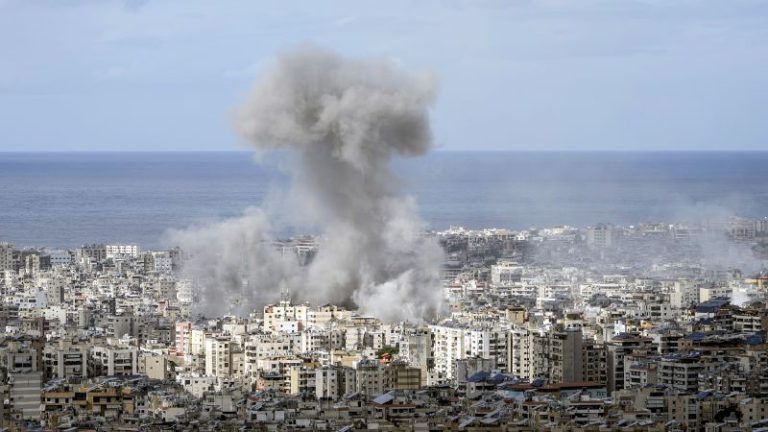
Israel launched a major military offensive in Lebanon in mid-September following months of tit-for-tat border attacks which started on October 8 last year when Hezbollah attacked Israeli controlled territory in solidarity with Hamas and Palestinians in Gaza.

Since then, Israel has launched a ground invasion, killed a string of Hezbollah leaders – including one of its founders, Hassan Nasrallah – and injured thousands of people in an attack featuring exploding pagers.

This post appeared first on cnn.com

At least 17 people are missing after a tourist yacht sank in the Red Sea following warnings about rough seas, Egyptian officials said Monday.

The governor of the Red Sea region, Amr Hanafy, said rescuers saved 28 people from the vessel south of the coastal town of Marsa Alam, and some were airlifted to receive medical treatment.

Hanafy said 31 tourists of various nationalities were on board, along with 14 crew.
The governorate received a report shortly before dawn Monday of a distress call made from the yacht, which had left Marsa Alam for a five-day journey.

It was not immediately clear what caused the four-deck, wooden-hulled motor yacht to sink. But the Egyptian Meteorological Authority on Saturday warned about turbulence and high waves on the Red Sea and advised against maritime activity for Sunday and Monday.

A person answering the phone at the company that operates the yacht, Dive Pro Liveaboard in Hurghada, Egypt, told The Associated Press they have “no information” and hung up.

According to their website, the Sea Story was built in 2022 and can hold 36 passengers.
The Egyptian military was coordinating rescue operations with the governorate.
Many tourist companies have stopped or limited traveling on the Red Sea due to the dangers from conflicts in the region.

This post appeared first on cnn.com

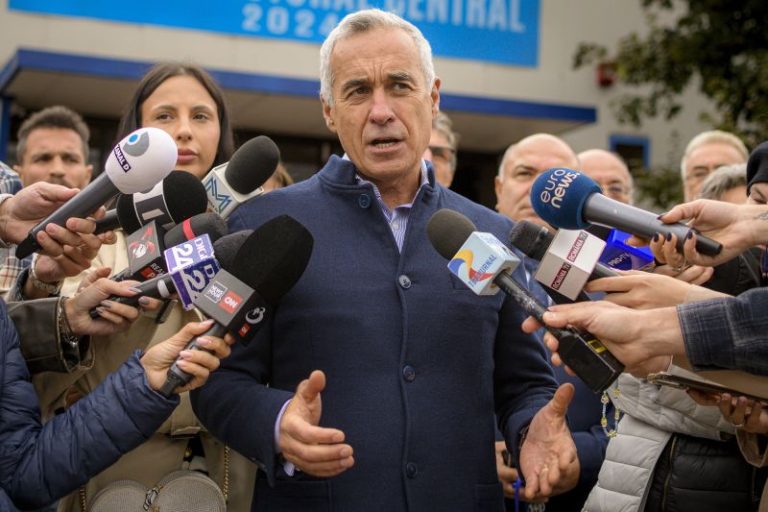
Romania’s political landscape is reeling after a little-known, far-right populist secured the first round in the presidential election, electoral data showed Monday, going from an obscure candidate to beating the incumbent prime minister.

Calin Georgescu, who ran independently, will face off against reformist Elena Lasconi in a runoff in two weeks.

Georgescu, 62, was ahead after nearly all ballots were counted with around 22.95% of the vote. Lasconi of the progressive Save Romania Union party, or USR, followed with 19.17%. She beat by a slim margin incumbent Prime Minister Marcel Ciolacu of the Social Democratic Party, or PSD, who stood at 19.15%. George Simion, the leader of the far-right Alliance for the Unity of Romanians, or AUR, took 13.87%.

It is the first time in Romania’s 35-year post-communist history for the PSD not to have a candidate in the second round of a presidential race, serving a huge blow to the country’s most powerful party and underscoring voters’ anti-establishment sentiment.

After polls closed on Sunday, 9.4 million people – about 52.5% of eligible voters – had cast ballots, according to the Central Election Bureau. The second round of the vote will be held on Dec. 8. Georgescu, 62, won 43.3% of the vote in Romania’s large diaspora, compared to Lasconi who got 26.8%.

Most local surveys predicted he would win less than 10% of the vote.

The president serves a five-year term in the European Union and NATO member country and has significant decision-making powers in areas such as national security, foreign policy and judicial appointments.

After casting his ballot on Sunday, Georgescu said in a post on Facebook that he voted “For the unjust, for the humiliated, for those who feel they do not matter and actually matter the most … the vote is a prayer for the nation.”

According to his website, Georgescu holds a doctorate in pedology, a branch of soil science, and held different positions in Romania’s environment ministry in the 1990s. Between 1999 and 2012, he was a representative for Romania on the national committee of the United Nations Environment Program.

Despite not having a clear political agenda, his videos on TikTok are popular, amassing 1.7 million likes.

But his rising popularity will be tested when he faces Lasconi.

Lasconi, a former journalist and the leader of the USR, has been running on an anti-corruption reformist agenda. She told The Associated Press ahead of the vote, that she saw corruption as one of the biggest problems Romania faces and expressed support toward increased defense spending and continued aid to Ukraine. If she wins the final vote, she will be the first female president in Romania’s history.

Romania will also hold parliamentary elections on Dec. 1 that will determine the country’s next government and prime minister.

This post appeared first on cnn.com

Where the high hills of the occupied West Bank tumble into the Jordan valley, half a dozen heavy Israeli diggers pound the ancient rocks around the Palestinian village of Bardala.

Low-scudding, rain-laden clouds threaten to soak a group of Palestinian farmers huddling around their ramshackle sheep sheds as the Israel Defense Forces troops drive up to serve them eviction notices.

Sixty-year-old farmer Khalid Sawafta, his head swaddled in a traditional red-and-white keffiyeh, has tears in his eyes. His Israeli orders state: Vacate the land by 9 a.m. on December 4 – just 16 days away – or lose everything.

Such evictions are common in the West Bank, according to the United Nations.

Similarly, according to activist group Peace Now, in the past year alone 227 Palestinian families in the territory have been evicted, as the Israeli government has authorized more than 8,600 new housing units for Israelis in the West Bank and increased funding for settler projects.

Since Hamas’s brutal attacks on Israel on October 7 last year, killing 1,200 Israelis and taking more than 250 others hostage, settler leaders in Prime Minister Benjamin Netanyahu’s government have been pushing for the annexation of the whole West Bank.

The new worry for Palestinians is that Donald Trump’s pick for US ambassador to Israel, Mike Huckabee, who has many fans among Israeli settlers, could accelerate their land losses.

During a visit to Israel in 2017, the former governor of Arkansas told reporters: “There is no such thing as a West Bank. It’s Judea and Samaria,” he said, using the Israeli term for the land.

“There’s no such thing as a settlement. They’re communities, they’re neighborhoods, they’re cities. There’s no such thing as an occupation.”

Israeli settler leader and activist Yishai Fleisher, who met Huckabee during several of his visits to Israel, said: “Mike recognizes our claim, (he is) not an anti-Arab, but he does recognize Jewish claim to this land.”

Fleisher thinks Huckabee, an evangelical Christian, could do even more than Trump’s last ambassador to Israel, David Friedman, who helped convince the then-president to declare Jerusalem Israel’s capital – a step that was hugely popular with Israelis.

Noting that Friedman is Jewish, Fleisher said: “David Friedman has legitimacy with Israelis and Jews. I think Huckabee will have legitimacy with millions of Bible-believing folks… He just knows their language and he knows how to talk to their heart. He’s a preacher.”

But Alon Pinkas – an Israeli diplomat and former adviser to Shimon Peres, the last Israeli prime minister to take significant steps towards peace with Palestinians – believes settlers are misguided and that Trump won’t sacrifice his interests in the broader region.

“If Israel unilaterally annexes large parts, large swath of the West Bank, this is not going to fly well in the Arab world.”

Pinkas believes Trump wants to secure what Biden failed to achieve: normalization of Israel’s relations with Arab countries, the holy grail of Middle East diplomacy.

“He’s going to want to build on the Abraham Accords,” Pinkas said, referring to an agreement that normalized Israel’s ties with the United Arab Emirates, Bahrain and Morocco. “He’s going to be pressured by the Saudis, the Qataris and the Emiratis to strike a bigger deal.”

But Israel’s war in Gaza and the killing of so many Palestinians has driven up the price of that grand bargain. Trump’s friend, the powerful Saudi Crown Prince Mohammed bin Salman, or MBS, has said normalization can only happen if Israel agrees to a Palestinian state.

Former Palestinian Authority Prime Minister Mohammad Shtayyeh thinks MBS will stick with this position. “Maybe there is an opportunity with Saudi Arabia for us, and that is why we’re closely coordinating with Saudi Arabia,” he said.

Ultimately, it’s Trump’s friends rather than Huckabee who’ll succeed in influencing the Israeli government, Shtayyeh believes. “This man is not the one who will be dictating the shots.”

Israel’s finance minister Belazel Smotrich, for his part, is hopeful that the West Bank will soon be part of his country. “The year 2025 will be, with God’s help, the year of sovereignty in Judea and Samaria,” he said in November.

Back in Bardala, Israeli officials claim a recent security threat triggered them to build the new barrier that will almost entirely encircle Bardala and two other villages, population about 4,000, effectively cutting them off from their agricultural livelihoods.

He shows documents he says prove Palestinian ownership of Wadi Salman, the tiny dirt valley that’s refuge to farmer Khalid’s sheep sheds, dating back 100 years.

Ibrahim said they’d appealed to Israeli officials to move the barrier, “but they refused entirely, claiming the road was already planned.”

Around Bardala, annexation is all too familiar.

Khalid, who just got his eviction notice, says he was evicted seven years ago too. “They came and demolished everything, leaving me with nothing,” he said.

The hard reality in Bardala, as elsewhere in the occupied West Bank, is that even before Trump’s approaching inauguration, the Palestinian state had become a distant dream.

This post appeared first on cnn.com

A South Korean man who ate to the point of obesity in an attempt to dodge the army has avoided prison after he pledged to take up his mandatory military service.

The man, who was not publicly identified, was sentenced to one year in prison, suspended for two years, by a court in Seoul for violating the country’s Military Service Act.

He was ruled out of active duty in June last year after he weighed in at 102 kilograms (225 pounds) with a body mass index classified as obese, six years after he was deemed fit to serve following an initial physical exam, according to the November 13 ruling.

“The defendant consumed high-calorie foods, approximately doubled his meal portions, refrained from physically demanding jobs such as parcel delivery work, and drank large amounts of water right before measurements to deliberately increase his weight,” the judge said in the ruling.

The man, whose age was not revealed by the court, has since “expressed his intention to fulfill his military duty sincerely,” the ruling said.

A friend who encouraged the man to take up his radical eating regime was handed a six-month prison sentence, suspended for one year, for aiding and abetting the offense, according to the ruling.

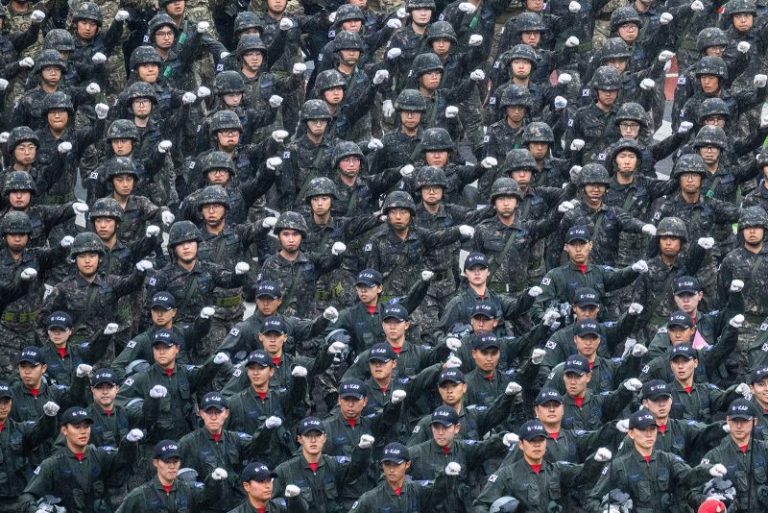
Since the Korean War, almost all able-bodied men in South Korea have been required to serve in the army for at least 18 months by the time they are 28 years old.

The requirement has long been a contentious topic – hundreds of conscientious objectors have been jailed over the years, according to Amnesty International, many of whom refused to serve on religious grounds.

It has also interrupted the careers of many prominent sports and music stars, including K-pop phenomenon BTS, which went on hiatus in 2022 to perform military service.

There have been dozens of cases of young men who intentionally gain or lose weight, feign mental illness, get full body tattoos, or self-harm to receive an exemption, the Yonhap news agency reported in 2018. The military have since become more tolerant of tattoos, cutting off that particular draft-dodging loophole.

The Constitutional Court ruled in 2018 that the government must provide alternative civilian roles for those who refuse to take up arms, due to religious or political reasons.

But the draft has remained controversial – even becoming a flash point in heated gender wars. Women are exempt from compulsory conscription, and volunteer females account for only 3.6% of the Korean military, according to the Defense Ministry.

That has angered many men, including a vocal “anti-feminist” bloc who argue the draft gives women an unfair advantage in the country’s hyper-competitive job market. Many point to statistics showing women attend university at a higher rate than men, arguing that young men should also be able to pursue their dreams and careers.

In a 2018 survey, 72% of Korean men in their 20s said they thought the draft was a form of gender discrimination, and almost 65% believed women should also be conscripted. Nearly 83% said it was better to dodge military service if possible, and 68% believed it was a waste of time.

This post appeared first on cnn.com

Lucknow, India (AP) — Authorities closed schools and suspended internet services in a northern Indian city on Monday, officials said, a day after four people were killed in clashes sparked by an official survey probing whether a 16th-century mosque was built on a Hindu temple.

Nearly 1,000 Muslim protesters gathered outside the Shahi Jama Masjid in Sambhal, in the northern state of Uttar Pradesh, on Sunday to prevent a team conducting a court-ordered survey after a petition from a Hindu lawyer that claimed the mosque was built on the site of a Hindu temple, officials said.

“All schools and colleges have been closed and public gatherings have been prohibited” in Sambhal, said a local administrator, Aunjaneya Kumar Singh. Authorities also banned outsiders, social organizations and public representatives from entering the city without official permission until Nov. 30, Singh said, as the government scrambled to contain the unrest.

What began as a standoff escalated into clashes when protesters threw stones at police, who responded by deploying tear gas, police said.

“Some miscreants in the crowd resorted to violence, forcing us to use minor force and tear gas to restore order,” said Krishna Kumar Vishnoi, a local police officer.

Videos circulating on social media showed scenes of stone-pelting and vehicles engulfed in flames as police used firearms.

Despite the unrest, the survey proceeded as planned.

As authorities brace for potential fallout, the incident has reignited tensions over religious disputes in India where historical grievances often fuel contemporary conflicts.

Hindu activist groups, mostly linked to Prime Minister Narendra Modi’s ruling party, have claimed that several mosques in India were built over Hindu temples centuries ago during the Muslim Mughal empire.

Experts say Hindu nationalists have been emboldened after Modi earlier this year inaugurated a controversial Hindu temple built on the ruins of a centuries-old mosque in the northern city of Ayodhya, in a political triumph for the populist leader who is seeking to transform the country from a secular democracy into a Hindu state.

The petitioner in Sambhal cites historical texts that the mosque was constructed over a Hindu temple allegedly destroyed by Mughal emperor Babur in 1529. The proponents of the survey argue it seeks to uncover historical truths while opponents condemn it as a violation of the Places of Worship Act, 1991, which maintains the religious status quo of sites as they were in 1947.

This post appeared first on cnn.com

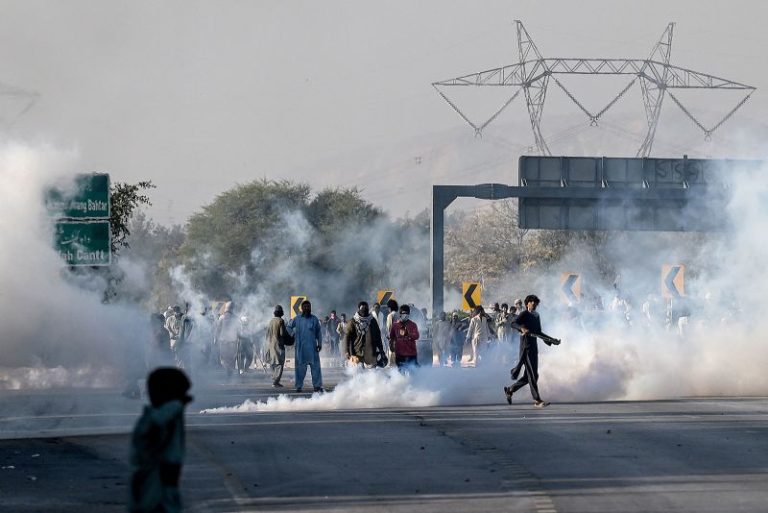
Pakistani police Monday fired tear gas canisters at supporters of imprisoned former Prime Minister Imran Khan to stop them from entering the capital, where they hoped to stage a sit-in to demand his release, officials said.

The firing of tear gas came shortly after demonstrators — who traveled 150 kilometers (93 miles) from the restive northwest — began arriving and gathering near Islamabad. They defied a lockdown, previous tear gas and widespread arrests despite a ban on rallies in the city.

The development came a day after the leadership of Khan’s party went ahead with the “long march” even as Belarusian President Alexander Lukashenko arrived for a three-day visit. He was received at an airport near the capital by Prime Minister Shehbaz Sharif on Monday evening.

Authorities said at least one police officer was killed and several officers and demonstrators were injured in clashes. The marchers appeared determined to enter Islamabad, where the lockdown, which has been in place for two days, has disrupted daily life.

The government was in talks with Khan’s party to avoid any further violence, officials said.

Interior Minister Mohsin Naqvi told reporters after midnight that the government is willing to allow Khan supporters to rally on the outskirts of Islamabad but he threatened extreme measures if they entered the city to protest.

Khan, who has been in jail for over a year and faces more than 150 criminal cases, remains popular. His party, Pakistan Tehreek-e-Insaf, or PTI, says the cases are politically motivated.

A convoy of vehicles carrying protesters was expected to enter the capital Monday night. Security officials say they expect between 9,000 and 11,000 demonstrators, while the PTI says the number will be much higher.

Video on social media showed Khan supporters donning gas masks and protective goggles.

Travel between Islamabad and other cities has become nearly impossible. Ambulances and cars were seen turning back from areas along the key Grand Trunk Road highway in Punjab province, where shipping containers were used to block roads.

Video circulating online showed some protesters operating heavy machinery to remove the containers.

“We are determined, and we will reach Islamabad, though police are using tear gas to stop our march,” PTI senior leader Kamran Bangash told The Associated Press. “We will overcome all hurdles one by one, and our supporters are removing shipping containers from roads.”

Bangash also said Khan’s wife, Bushra Bibi, who was recently released on bail in a graft case, will lead the march along with Ali Amin Gandapur, the chief minister in Khyber Pakhtunkhwa province, where Khan’s party remains in power.

Earlier, almost 50 kilometers (30 miles) from Islamabad, Bibi, wearing a white head-to-toe burqa, addressed protesters while sitting in a truck, urging them to remain determined to achieve their goal and free Khan. She then chanted, “God is great” and left.

Khan’s main political opponent, Sharif, heads the current government.

Sharif’s spokesperson, Attaullah Tarar, said on Sunday that whenever any high-profile foreign delegation comes to Pakistan, the PTI “begins the politics of long marches and onslaught on Islamabad to harm the economy.”

Some economists say protests cause billions of rupees in damages to the country’s fragile economy.

Protesters on Sunday night burned trees as police fired tear gas to disperse the crowds. Khan supporters retaliated by using slingshots and pelting security personnel with rocks.

In a bid to foil the protest, police have arrested more than 4,000 Khan supporters since Friday and suspended mobile and internet services “in areas with security concerns,” which the PTI said affected its call on social media for a protest. On Thursday, a court prohibited rallies in the capital and Naqvi said anyone violating the ban would be arrested.

Authorities say only courts can order the release of Khan, who was ousted in 2022 through a no-confidence vote in Parliament. He has been imprisoned since his first conviction in a graft case, in August 2023.

Khan has been sentenced in several cases. His convictions were later overturned on appeal but he cannot be freed due to other pending cases against him.

This post appeared first on cnn.com
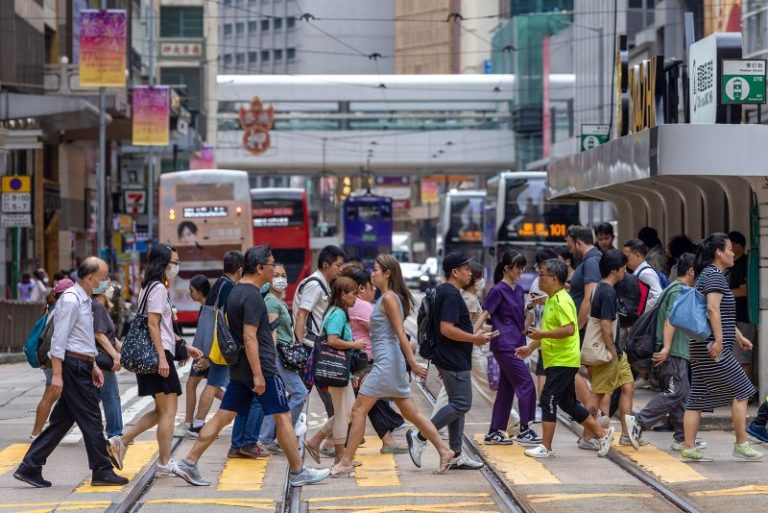
Hong Kong has become a center for money laundering and sanctions evasion under the tightening grip of Beijing, US lawmakers have warned, calling for a re-evaluation of America’s close business relationship with the Asian financial hub.

In a letter to US Treasury Secretary Janet Yellen Monday, bipartisan leaders of the House Select Committee on China demanded greater scrutiny from Washington of Hong Kong’s much prized financial sector, a pillar of the economy that’s home to many big US banks and accounts for more than one-fifth of the Chinese territory’s gross domestic product.

Hong Kong has become a “global leader” in illicit practices, it said, including in the export of controlled Western technology to Russia, the creation of front companies to buy Iranian oil and the managing of “ghost ships” that engage in illegal trade with North Korea.

Since Beijing imposed a national security law on the city in 2020, “Hong Kong has shifted from a trusted global financial center to a critical player in the deepening authoritarian axis of the People’s Republic of China, Iran, Russia, and North Korea,” the lawmakers said.

“We must now question whether longstanding US policy towards Hong Kong, particularly towards its financial and banking sector, is appropriate,” they added.

In 2020, then-President Donald Trump revoked the special treatment Hong Kong had long enjoyed under US law, to punish Beijing for imposing the national security law on the once-outspoken city. The executive order effectively ended the city’s separate customs treatment from mainland China by suspending a 1992 law granting Hong Kong special economic status.

Since then, dozens of Hong Kong-based companies have been hit by US sanctions for evading extensive measures imposed on Russia in response to its invasion of Ukraine, including the supply of critical dual‑use goods such as semiconductors.

Hong Kong officials have previously said the city has no obligation to implement unilateral sanctions imposed by other countries – including when a mega yacht linked to a Russian oligarch sanctioned by the US, the European Union and the United Kingdom dropped anchor in the city in October 2022.

The committee’s letter cited research published this year that shows nearly 40% of goods shipped from Hong Kong to Russia between August and December 2023 were high-priority items that are likely fueling Moscow’s production of military goods such as missiles and aircraft.

The lawmakers asked Treasury Department officials to brief the committee on “the current status of American banking relationships with Hong Kong banks, how our policies have shifted to account for the changes in Hong Kong’s status and posture, and the measures the Treasury plans to implement to address these risks.”

The letter, signed by Republican Rep. John Moolenaar, who chairs the committee, and Rep. Raja Krishnamoorthi, the panel’s top Democrat, highlights the growing scrutiny on Hong Kong in the escalating great power rivalry between the US and China.

It comes as Trump is poised to return to the White House with a cabinet stacked with China hawks, including Marco Rubio, who has been named secretary of state.

Rubio, a fierce critic of Beijing’s crackdown on Hong Kong, has sponsored legislation that sanctioned Chinese and Hong Kong officials for alleged human rights violations in the city. He has also proposed a bill now being considered in Congress to let the secretary of state strip certification from Hong Kong’s economic and trade offices in the US.

Trump has also named hedge fund executive Scott Bessent as his treasury secretary.

Isaac Stone Fish, CEO of Strategy Risks, a business intelligence firm that focuses on China, said even if Yellen declines to act upon the letter, Bessent – who in a recent interview described Beijing as a “despotic regime” – is expected to take a more hawkish approach to China.

“In fact, it appears like he’ll be the most hawkish Treasury Secretary since the 1970s. This has massive implications for US businesses with big exposure to Hong Kong,” Fish said.

“Sadly, the idea of Hong Kong as autonomous from China is now a farce … US companies need to understand that their Hong Kong operations will likely fall under increased scrutiny.”

This post appeared first on cnn.com