Author

admin

Browsing

A decision by the International Criminal Court to issue arrest warrants for Israeli officials was met with anger and annoyance at Jerusalem’s bustling Mahane Yehuda Market. But the most palpable sentiment was one of unity.

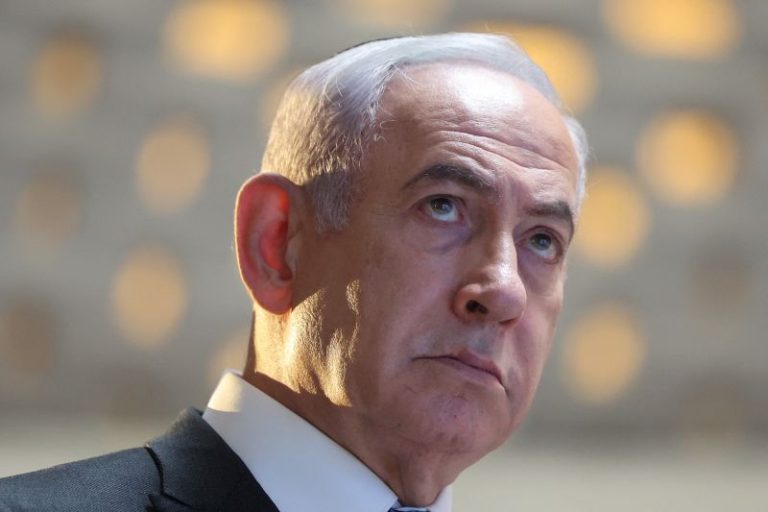
“I think it’s terrible. What about Putin? What about the real evil people?” Sarita Katzin Sarfati said about the court’s decision to call for the arrest of Israeli Prime Minister Benjamin Netanyahu and former Defense Minister Yoav Gallant for war crimes committed in Gaza after the October 7 attack on Israel last year.

“I’m against it. We’re a nation, we are independent, and we can take our own decision here. Nobody else can tell us to put someone in jail or anything else,” he said.

That sentiment is shared by many in Israel, according to experts.

Gil Siegal, a legal scholar at the Ono Academic College in Israel, said The Hague-based court’s decision has united Israelis.

Most Israelis still support the war in Gaza, he said, seeing it as a just fight and the only means to keep their country safe. And while many oppose Netanyahu – mass protests calling for his resignation are now happening weekly – most feel he has been targeted unfairly by the ICC.

The limited opposition to the war is motivated by the rising death toll of Israeli soldiers in Gaza and the hope that a ceasefire would secure the release of the 101 hostages still held there, with the suffering of Palestinians largely absent from the anti-war discourse.

This is partly because the shock of the brutal October 7 terror attack, during which Hamas-led militants killed more than 1,200 people, is still raw in the country. Many Israelis know someone who was directly impacted by the attack and most have family members or friends who are currently fighting in Gaza or are serving in the military in another capacity.

Portraits of the hostages are on display across Israel, along the sea promenade in Tel Aviv and in the arrivals hall at the country’s airport.

Some Israelis are also outraged that the ICC issued warrants for Netanyahu and Gallant alongside one for Mohammed Al-Masri, also known as Mohammed Deif, the Hamas leader who Israel claims was one of the masterminds of the October 7 attack.

The ICC “is saying that Gallant and Netanyahu are equal to Mohammed Deif… this is something that Israelis truly cannot comprehend, truly, truly cannot comprehend,” Siegal said.

Yael Vias Gvirsman represents the families of hundreds of Israeli victims of the October 7 attacks at the ICC and was in The Hague on Thursday when the warrants were issued. She said the warrant against Deif was an important recognition “that Hamas attacks consisted of extermination, torture, rape and other sexual crimes and inhumane treatment” and that it was good news for families she represents. “It’s the first step for recognition and the first step for them rebuilding their lives,” she said.

But she added that the simultaneous warrants against Netanyahu and Gallant were understandably met with “great shock” in Israel, “because it is a nation at its most difficult hour.”

The court said it found “reasonable grounds” to believe that Netanyahu bears criminal responsibility for war crimes including “starvation as a method of warfare” and “the crimes against humanity of murder, persecution, and other inhumane acts.”

More than 43,000 Palestinians have been killed since October 7 last year, according to the health ministry in Gaza.

Netanyahu denounced the ICC move on Thursday, calling it an “antisemitic decision” and “a modern Dreyfus trial,” referring to the 1894 wrongful conviction of Jewish-French soldier Alfred Dreyfus, an affair that has since come to symbolize antisemitic persecution.

The prime minister said the ICC judges were “motivated by antisemitic sentiments against the one and only Jewish state.”

Meanwhile, opposition leader Yair Lapid called the arrest warrants for Netanyahu and Gallant a “reward for terrorism.”

Implications for soldiers fighting in Gaza

While the ICC arrest warrants target only Netanyahu and Gallant, some are worried about the implications for the Israel Defense Forces and its soldiers.

Conscription is mandatory for most Jewish Israelis and some 300,000 reservists have been called up because of the war, on top of the estimated 170,000 active-duty soldiers.

The right-wing Israeli legal organization Shurat HaDin has warned about the arrest warrants “creating a dangerous precedent for the ICC to target other democratic armies and leaders.” The group has long warned about the ICC possibly opening a criminal investigation against Israeli soldiers.

Legal action at the ICC against Israeli soldiers, it said on its website, would “carry devastating effects” on Israel, and cause immediate personal risk to individuals “whose only blame is for serving their country and fighting terror.”

Refusals by potential recruits and reservists to serve are rare in Israel, but there are signs that they have been increasing amid the global outrage over the toll of the war in Gaza. Taking an unusually public stance, a group of more than 130 Israeli reservists signed an open letter to Netanyahu and Gallant last month, stating that they refuse to serve unless a deal is signed to end the war and bring back the hostages, saying that for some of them “the red line has already been crossed.”

Soul Behar Tsalik, an Israeli who intends to refuse his mandatory enlistment in the IDF next week, said the ICC warrant strengthens his commitment to refuse.

Breaking the Silence, an organization of Israeli veterans who oppose the war in Gaza and the occupation of the West Bank, was a rare voice of support for the ICC’s decision.

It said in a statement that the “flood of condemnations, an array of whataboutisms and countless allegations of antisemitism” was indicative of the Israeli “society’s insistence, even now, to not see what we are doing in Gaza.”

This post appeared first on cnn.com

The 27-year-old son of Norway’s crown princess has been accused of a second rape just days after he was arrested on suspicion of the same offense.

Following a detention hearing at Oslo District Court on Wednesday for the first alleged offense, police prosecutor Andreas Kruszewski said Oslo Police District had requested that Marius Borg Høiby be held in custody for two weeks as a second alleged rape had come to light.

Police said they are investigating the second alleged incident thoroughly.

“The case involves sexual activity, not intercourse, with a woman who was incapable of resisting the act. This means that we are now investigating two rape cases involving Marius Borg Høiby,” the police added.

A sexual assault of this kind carries a maximum prison term of 10 years, according to Norway’s penal code.

“For the other circumstances, he does not admit criminal guilt,” Bratlien said.

Høiby was first arrested on Monday night on suspicion of breaking the law relating to “sexual intercourse with someone who is unconscious or for other reasons is unable to resist the act,” police said Tuesday.

They specified at the time that this accusation involved carrying out a “sexual act without intercourse” on a victim “said to have been unable to resist the act.”

Norway’s Crown Prince Haakon told the country’s public broadcaster, NRK, that the situation is affecting everyone around Høiby. “These are serious accusations that Marius is now facing. Today, we are of course thinking of all those affected,” he said.

He added that the police and the judicial system must be given room to do their job. “I trust that they will do that in a good way,” he said.

Høiby was born before his mother, Mette-Marit, married Crown Prince Haakon and became a princess in 2001. He is outside Norway’s line of royal succession.

This post appeared first on cnn.com

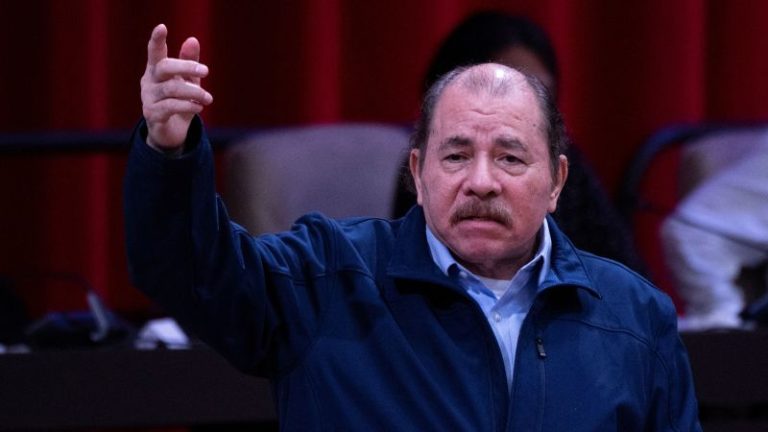
The Nicaraguan parliament, dominated by the ruling Sandinista Front, on Friday approved a constitutional reform that hands more power to President Daniel Ortega as well as the Central American nation’s police and military.

The reform increases the president’s control over the media, extends the presidential term to six years from five, and changes the roles of vice president and president to those of “co-presidents.”

Vice President Rosario Murillo, who is Ortega’s wife, will now become his co-president. The two have been married since 2005 and she was made vice president in 2017.

Ortega has cracked down on dissent over recent years. More than 200 political prisoners were freed early last year and expelled to the United States, including five former presidential hopefuls who had been jailed after seeking to challenge the increasingly authoritarian Ortega in a 2021 election.

Under the new reform, the co-presidents will have control over the legislature, judiciary and electoral, public administration, and oversight bodies as well as autonomous entities.

It also mandates that the state will ensure media are not “subject to foreign interests and do not spread false news.”

The reform must pass a second legislative vote next year before becoming law.

Government critics have said the reforms legalize the “absolute power” already exercised for years by Ortega and Murillo.

The Organization of American States, a regional diplomatic body, has said that through Ortega and Murillo intend to “increase their absolute control of the state and maintain their position in power.”

The reform, which 79-year-old Ortega sent to Congress on Tuesday “as a matter of urgency,” was approved unanimously by 91 lawmakers.

The head of the legislature, Gustavo Porras, confirmed during Friday’s session that the reform would be voted on and approved for a second time on January 10, following Nicaraguan law that says constitutional changes must be approved in two legislative periods.

Porras brushed off criticisms of the reform, calling them “a stupid way of carrying out opposition.”

UN High Commissioner for Human Rights Volker Turk said the changes marked a concerning further erosion of checks and balances on executive power.

“If adopted, these changes will sound the death knell for fundamental freedoms and rule of law in Nicaragua,” he said in a statement.

This post appeared first on cnn.com

Human error led to the death of a young gorilla in Alberta, Canada, according to officials at the Calgary Zoo.

Eyare, a 2-year-old western lowland gorilla, died last week after being struck in the head by a hydraulic door a staff member accidentally activated, the zoo said in a statement Wednesday. The worker was trying to separate Eyare from other members of the gorilla troop for a solo training session.

The gorilla died of traumatic head injuries, according to the statement.

“This tragedy has struck us all in the deepest way imaginable,” Colleen Baird, Calgary Zoo’s director of animal care, said at a news conference. “Eyare’s short but impactful life brought so much joy to our community, and she will be deeply missed by all. We will do everything we can to prevent future incidents.”

The staff member involved was immediately removed from the workplace and will be reassigned to another area of the zoo, Baird said.

The zoo said it will implement preventative measures – including specialized staff training and animal behavioral training – to avoid another incident like this in the future.

It’s not the first time an animal has died of something other than natural causes at the zoo. In 2016, an otter drowned after becoming tangled in an “unauthorized” pair of pants a zookeeper dropped in its enclosure. A penguin died in “a freak accident” when she swallowed a stick in 2013. And in 2009, a capybara was also accidentally crushed by a hydraulic door.

The Animal Justice Legislative Fund, a Canadian nonprofit that advocates for the humane treatment of animals, called for an independent investigation into animal safety and oversight at the Alberta facility.

“The Calgary Zoo appears to have a higher rate of animal deaths compared to other zoos, and in light of Eyare’s death there should be a systematic review of the zoo’s operations and practices, conducted transparently by the government or another outside party,” said Camille Labchuk, the nonprofit’s executive director.

The use of hydraulic doors is “common practice with accredited zoos,” Baird said in the news conference, but the facility will explore transitioning to alternative doors to improve safety.

The Calgary Zoo, which launched the conservation organization the Wilder Institute in 2021, cares for over 4,000 animals, including 6 other western lowland gorillas.

This post appeared first on cnn.com

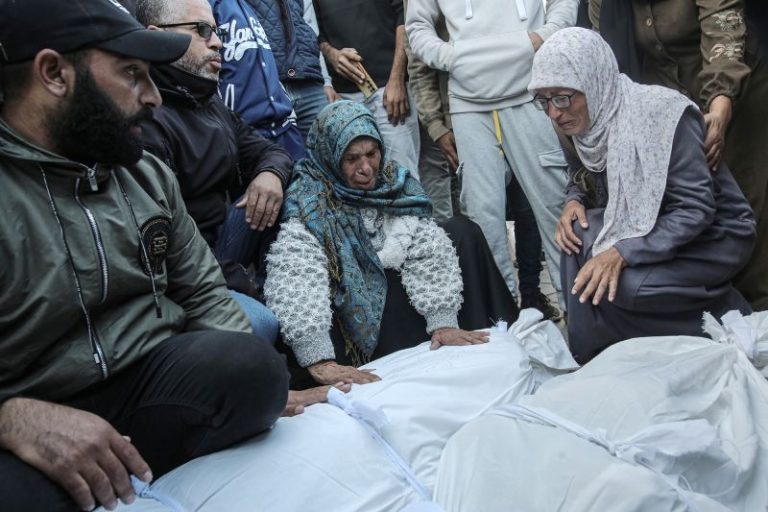
Israeli strikes on northern and central Gaza killed at least 87 Palestinians in 24 hours, local health authorities said, as the death toll in the enclave surpassed 44,000.

In an interview with Hamas’ Al-Aqsa TV, he said about 200 people were believed to have been at the site when the Israeli military struck.

“The hospital medical team retrieved 65 martyrs from under the rubble,” Abu Safiya said, adding that medical staff were recovering bodies from under the rubble “using their hands” due to the absence of rescue teams.

Safiya warned that the hospital “will turn into a mass grave if urgent intervention from international organizations does not occur and medical supplies are not brought in,” adding that “not a single ambulance” was available in northern Gaza.

In a separate strike on Wednesday, at least 22 people were killed, including 10 children, north of Gaza City in the center of the enclave, according to Dr. Muneer Alboursh, director general of the Ministry of Health in Gaza.

The airstrike hit a family home in the Sheikh Radwan neighborhood, Alboursh said in a statement on Thursday.

Gaza’s civil defense said that rescue teams were working to recover people from the rubble and that the death toll was expected to rise.

The strikes come as the death toll in Gaza climbs after Israel’s renewed offensive in the north of the territory.

At least 44,056 people have been killed and more than 104,000 injured in the enclave since the war began last year, according to the Health Ministry in Gaza.

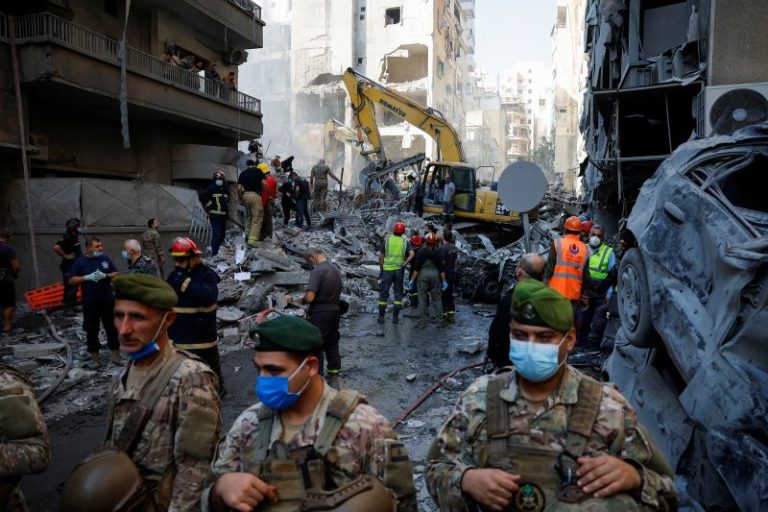
Meanwhile in Lebanon, Israel launched airstrikes on the southern suburb of Beirut early Thursday, according to Lebanon’s state-run National News Agency (NNA). The strikes were accompanied by low-altitude flights of hostile drones over the area, NNA said.

The airstrikes, targeting the Hezbollah stronghold of Haret Hreik, destroyed several buildings, NNA said.

Earlier on Thursday, Avichay Adraee, the Israel military’s spokesperson to Arabic media, posted evacuation warnings on X mapping three buildings in the area Haret Hreik, saying they were potential targets. He issued a similar evacuation warning for seven buildings in the historic southern city of Tyre.

Israel’s strikes came as US envoy Amos Hochstein engages in ceasefire negotiations between Lebanon and Israel. He arrived in Israel on Wednesday.

While in Lebanon on Tuesday, Hochstein said that a ceasefire deal is “within our grasp,” but added it was ultimately “the decision of the parties.”

This post appeared first on cnn.com

A kayaker’s leg was amputated during a dramatic, hours-long rescue operation to free him from between rocks on a river in Australia on Saturday, local police said.

The man, a foreign tourist in his 60s, was airlifted to a hospital in Tasmania’s state capital Hobart where he was in a critical condition, police said, adding they were contacting his family.

His 20-hour ordeal began at about 2:30pm on Friday when he became trapped while kayaking through rapids with a group on the Franklin River, police said in a statement.

Authorities received an emergency alert from the man’s smartwatch and dispatched rescue units and paramedics, police said, adding that the area’s remoteness added complexity to the rescue effort.

Set in the rugged landscape of the Franklin-Gordon Wild Rivers National Park in the island state, the powerful 129-kilometer- (80-mile-) long river is a popular spot for kayaking and rafting.

Rescuers made several unsuccessful attempts to extract the man between Friday evening and Saturday morning. When his condition deteriorated after so many hours partially submerged in the water, a decision was made in consultation with the man to amputate his leg, police said.

“This rescue was an extremely challenging and technical operation, and an incredible effort over many hours to save the man’s life,” said Tasmania Police Acting Assistant Commissioner Doug Oosterloo in the statement.

“Every effort was made to extract the man before the difficult decision to amputate his leg.”

Oosterloo also praised the emergency responders. “I’d like to thank everyone who contributed to this operation in the most difficult of circumstances,” he said.

This post appeared first on cnn.com

Ukraine has been hit by a surge in Russian ballistic missile attacks, about a third of which used North Korean weapons that can only fly because they run on Western circuitry, obtained despite sanctions, according to Ukrainian military officials.

August and September saw a spike in ballistic missile attacks, when Ukraine first publicly detailed the use of the KN-23.

These less-sophisticated missiles are part of North Korea’s growing support to Moscow, which also includes about 11,000 North Korean soldiers deployed to Russia’s Kursk region.

Crucial components used in the North Korean missiles are produced by nine Western manufacturers, including companies based in the United States, the Netherlands and the United Kingdom, according to a recent report by Ukraine’s Independent Anti-Corruption Commission (NAKO), a civil society organization. Some parts of the KN-23/24 missiles they analyzed were produced as recently as 2023, suggesting a swift delivery pipeline to North Korea.

The warehouse was full of damaged drones and burned missile parts. In different buildings, hundreds of microchips were carefully separated into folders named for various weapons used by Russia – “Shahed,” “Iskander,” and “KN-23.”

“Everything that works to guide the missile, to make it fly, is all foreign components. All the electronics are foreign. There is nothing Korean in it,” said Andriy Kulchytskyi, head of the Military Research Laboratory of Kyiv’s Scientific Research Institute of Forensic Expertise.

“The only thing Korean is the metal, which quickly rusts and corrodes,” he added.

A Ukrainian Defense Intelligence official, who spoke on the condition of anonymity, said their investigations are hampered by the damage to the missile fragments, but it’s still possible to determine that “the vast majority of components are Western components. Probably 70% are American, from well-known companies […] They also use components made in Germany and Switzerland.”

A report released earlier this year by the UK-based investigative organization Conflict Armament Research, or CAR, found that 75% of components in one of the first North Korean missiles used to attack Ukraine were from US-based companies.

Sanctioned goods move though China

There is no reliable information on how exactly the components make their way into North Korea, according to weapons-tracing experts. But all signs to point to China as the likely conduit, experts say.

“We have successfully traced some of those components, and the last known custodians are Chinese companies,” said Damien Spleeters, deputy director of operations at CAR, which works to independently document diverted weapons. That means Chinese firms bought the components from manufacturers and a series of intermediaries.

CAR has a policy of not “naming and shaming” specific manufacturers because there is no evidence the firms deliberately shipped the parts to North Korea.

“Some parts of these components may be actually fake and made in China,” said Victoria Vyshnivska, a senior researcher at NAKO. “But we cannot be 100% sure,” she added, as the companies in question often failed to respond to questions.

One manufacturer was able to provide NAKO with evidence that a low-value electronic component found in a North Korean missile was counterfeit.

CAR and others consider that middleman distribution companies – not manufacturers – are the primary issue.

There are more than 250 companies whose components have been identified in North Korean missiles, according to CAR. But the majority of those electronics are sold to five main distributors, which are all based in the United States and Canada. CAR is urging policymakers to focus more effort on regulating those distribution companies.

The US Commerce Department has already stepped up its targeting of entities and shell companies that have shipped sanctioned goods to Russia and Belarus.

Ukrainian officials argue the poor enforcement of the sanctions regime by Western nations is one major issue.

Vladyslav Vlasiuk, the Ukrainian president’s commissioner for sanctions policy, said he was hopeful the incoming Trump administration would seek greater control over the illicit trade.

That echoes the sentiment of the US Senate Permanent Subcommittee on Investigations, which earlier this year slammed US manufacturers for not doing enough to vet potential buyers, despite having adequate “resources, funding, and knowledge.”

“Our findings reveal a distinct disinterest in evaluating and improving corporate compliance practices and particularly, monitoring those distributors, the middlemen,” said Senator Richard Blumenthal (D-CT) in September.

Components also continue to be diverted to Iran and to Russia directly, according to the Ukrainian intelligence official.

This post appeared first on cnn.com

Venezuelan authorities are investigating opposition leader Maria Corina Machado for alleged treason after she expressed support for a US bipartisan bill that seeks to block Washington from doing business with any entity that has commercial ties with the government of Venezuela’s President Nicolas Maduro.

In a statement, the country’s Attorney General’s Office said Machado’s support is considered a “terrible criminal act against the Venezuelan people.” Machado is also being investigated for conspiracy with foreign countries and association to commit a crime.

Machado – one of the country’s key opposition leaders – was banned from running in Venezuela’s July presidential election, which was marred with allegations of foul play that saw opposition figures arrested, opposition witnesses allegedly denied access to the centralized vote count, and overseas Venezuelans largely unable to cast ballots.

The US bill – introduced by Florida Reps. Mike Waltz (R) and Debbie Wasserman Schultz (D) – was passed on Monday by the House of Representatives.

Waltz, who President-elect Donald Trump has asked to serve as his national security adviser, wrote on X Wednesday that Machado “remains a beacon of hope for Venezuelans who rejected Maduro and his socialist authoritarianism” as he announced the bill.

“I’m proud the House passed my bill, the BOLIVAR Act, to block the federal government from doing business with anyone who has commercial ties to Maduro’s regime,” Walz wrote.

Machado, who’s in hiding, later thanked Waltz and the House of Representatives for approving the initiative.“It is a crucial step to hold the Maduro regime accountable,” she wrote on X on Wednesday.

During a televised event on Wednesday, Maduro criticized the bill and said that the opposition’s actions against him will not be successful.

Venezuela has been in a state of crisis in its aftermath when the nation’s electoral authority – a body stacked with Maduro allies – declared him the winner with 51% of the vote against candidate Edmundo Gonzalez.

Even after Venezuela’s electoral and judicial authorities announced Maduro’s victory, they have not shown detailed results and electoral records to support it, prompting anger and concern across the country and abroad.

Several countries, including the US, have formally recognized Gonzalez as the country’s president-elect following the disputed election.

This post appeared first on cnn.com

At least 11 people have been killed and several others injured after an Israeli strike flattened a multi-story residential building in central Beirut overnight, Lebanese officials said.

Rescue workers in Lebanon were on Saturday morning searching for survivors under the rubble in the densely populated Basta area of the Lebanese capital, authorities said.

The attack left a “deep crater” in the area that it hit, the country’s state National News Agency (NNA) reported, blaming powerful “bunker busting” bombs.

At least 23 other people were injured in the strike, according to a toll provided by Lebanon’s Civil Defense.

The Israel Defense Forces (IDF) did not issue an evacuation order for the area ahead of the strikes, and has not yet commented on the attack.

Saturday’s attack marks the latest in a string of Israeli strikes on central Beirut in recent weeks, following the killing of a Hezbollah spokesperson in an airstrike last Sunday.

Most Israeli airstrikes have targeted the Lebanese militant group’s stronghold in Beirut’s southern suburbs since hostilities ramped up early last month.

On Friday, the director general of Dar Al Amal University Hospital near Baalbek in eastern Lebanon was killed along with six of his colleagues in an alleged Israeli strike, according to Lebanon’s Health Ministry. The IDF said it was looking into reports of the strike on the hospital.

This post appeared first on cnn.com

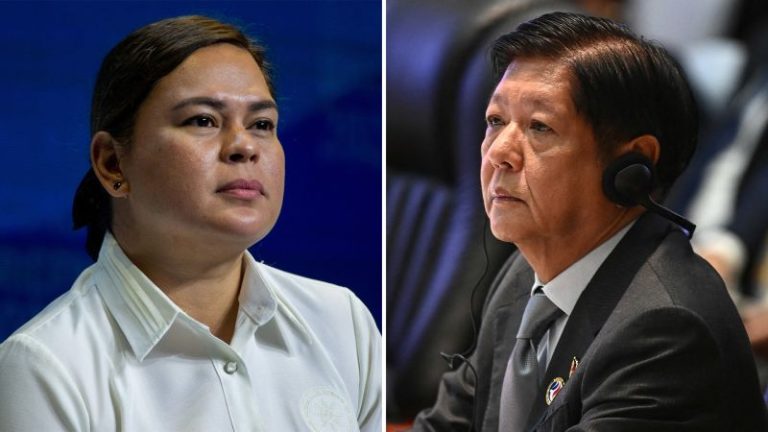
Philippine Vice President Sara Duterte said on Saturday she would have President Ferdinand Marcos Jr. assassinated if she herself were killed, prompting Marcos’ office to vow “immediate proper action.”

In a dramatic sign of a widening rift between the two most powerful political families in the Southeast Asian nation, Duterte told an early morning press conference that she had spoken to an assassin and instructed him to kill Marcos, his wife and the speaker of the Philippine House if she were to be killed.

“I have talked to a person. I said, if I get killed, go kill BBM (Marcos), (first lady) Liza Araneta, and (Speaker) Martin Romualdez. No joke. No joke,” Duterte said in the profanity-laden briefing. “I said, do not stop until you kill them and then he said yes.”

She was responding to an online commenter urging her to stay safe, saying she was in enemy territory as she was at the lower chamber of Congress overnight with her chief of staff. Duterte did not cite any alleged threat against herself.

The Presidential Communications Office responded with a statement saying: “Acting on the Vice President’s clear and unequivocal statement that she had contracted an assassin to kill the President if an alleged plot against her succeeds, the Executive Secretary has referred this active threat to the Presidential Security Command for immediate proper action.

“Any threat to the life of the President must always be taken seriously, more so that this threat has been publicly revealed in clear and certain terms,” it said.

Duterte’s office did not immediately respond to a request for comment on the presidential office’s statement.

“This country is going to hell because we are led by a person who doesn’t know how to be a president and who is a liar,” she said in the briefing.

Duterte, the daughter of Marcos’ predecessor, resigned from the cabinet in June while remaining vice president, signaling the collapse of a formidable political alliance that helped her and Marcos, son and namesake of the late authoritarian leader, secure their 2022 electoral victories by wide margins.

Speaker Romualdez, a cousin of Marcos, has slashed the vice presidential office’s budget by nearly two-thirds.

Duterte’s outburst is the latest in a series of startling signs of the feud at the top of Philippine politics. In October, she accused Marcos of incompetence and said she had imagined cutting the president’s head off.

The two families are at odds over foreign policy and former President Rodrigo Duterte’s deadly war on drugs, among others.

In the Philippines, the vice president is elected separately from the president and has no official duties. Many vice presidents have pursued social development activities, while some have been appointed to cabinet posts.

The nation is gearing up for mid-term elections in May, seen as a litmus test of Marcos’ popularity and a chance for him to consolidate power and groom a successor before his single six-year term ends in 2028.

Past political violence in the Philippines has included the assassination of Benigno Aquino, a senator who staunchly opposed the rule the elder Marcos, as he exited his plane upon arrival home from political exile in 1983.

This post appeared first on cnn.com